Prime
Mozambique declares 2 days of national mourning as Cyclone Chido kills over 70
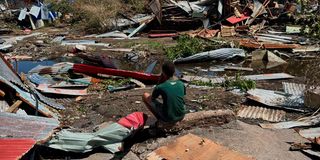
The aftermath of Cyclone Chido in Mayotte. The category 4 cyclone tore through northern Mozambique on December 15, 2024.

What you need to know:
- With its vast coastline and dependence on agriculture, Mozambique is one of the world's most climate-vulnerable countries.
- In recent years, the country has experienced a series of extreme weather events, from Cyclone Idai in 2019, which displaced thousands of people, to droughts in the southern and central regions this year.
Mozambique has declared two days of national mourning for the 73 people killed by Cyclone Chido in the north and centre of the country.
In a statement, the Council of Ministers said the days of national mourning would begin at midnight on Friday December 20.
The national flag will be flown at half-mast throughout the country and at the diplomatic and consular missions of the Republic of Mozambique.


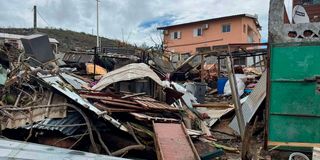
The aftermath of Cyclone Chido in Mayotte. The category 4 cyclone tore through northern Mozambique on December 15, 2024.
In the early hours of December 15, 2024, Cyclone Chido tore through northern Mozambique with sustained winds of over 200 km/h and more than 250 mm of rain in a single day.
It was classified as a Category 4 cyclone and caused significant destruction in the region.
Cyclone Chido's heavy rains and intense winds affected multiple districts in Cabo Delgado, Nampula and Niassa provinces, affecting an estimated 1.3 million people in Mozambique.
In his festive address to the nation on Thursday, President Filipe Nyusi lamented the loss of life and destruction of infrastructure caused by the storm.
President Nyusi, who also called for solidarity, added that his government would immediately prioritise support for the restoration of shelters, housing, food, energy, water and the distribution of seeds, in addition to the other assistance being provided.
According to the country's National Institute for Disaster Risk Reduction and Management (INGD), the number of injured has reached 600.
In terms of infrastructure, 36,207 houses, 48 hospital units, 13 places of worship, 186 electricity poles, nine water systems and 171 boats were destroyed, the INGD said, adding that 149 schools, 15,429 students and 224 teachers were affected by the bad weather.
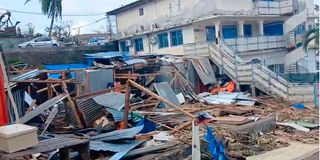
The aftermath of Cyclone Chido in Mayotte. The category 4 cyclone tore through northern Mozambique on December 15, 2024.
According to the UN, Cyclone Chido's destruction has exacerbated an already dire situation in northern Mozambique, where displaced communities face heightened vulnerability.
With damaged infrastructure, access to clean water and basic health services has been disrupted, raising concerns of a cholera outbreak in a region already battling an epidemic, according to the International Organization for Migration (IOM).
“The cyclone’s impact also underscores the growing threat of climate change,” the IOM added.
With its vast coastline and dependence on agriculture, Mozambique is one of the world's most climate-vulnerable countries.
In recent years, the country has experienced a series of extreme weather events, from Cyclone Idai in 2019, which displaced thousands of people, to droughts in the southern and central regions this year.


