Defying Trump with brief Iran fight, Israel seeks sway over peace talks
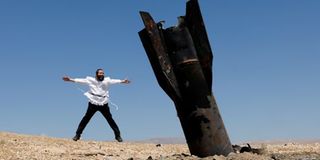
An Israeli ultra-Orthodox Jewish man reacts near a part of a missile protruding from the ground, following strikes from Iran, in the central Israeli-occupied West Bank, June 8, 2026. PHOTO | REUTERS
Jerusalem. Israel's decision to launch renewed strikes on Iran despite public calls for restraint from US President Donald Trump has underscored growing tensions over the direction of diplomatic efforts to end the conflict and highlighted Israel's determination to ensure its security concerns are reflected in any future agreement with Tehran.
The latest exchange of fire began after Iran launched missiles at Israel, describing the attack as retaliation for Israeli strikes on Lebanon's capital. Israel responded by targeting sites inside Iran on Monday, marking its first direct strike on Iranian territory since a ceasefire reached in April.
Although both sides agreed to halt hostilities later in the day following intervention by Trump, analysts say the brief escalation was as much about diplomacy as it was about military action.
According to Danny Orbach, a military historian at the Hebrew University of Jerusalem, Israel sought to send a clear message to Washington that any negotiated settlement with Iran cannot be concluded without taking Israeli interests into account.
"Because if it tramples too heavily on Israeli interests, Israel can overturn the table," Orbach said.
The exchange comes as Trump continues efforts to secure a broader agreement with Iran, while largely excluding Israel from direct participation in the negotiations.
The US president has repeatedly urged Israeli Prime Minister Benjamin Netanyahu to avoid military actions that could jeopardise diplomatic progress. In recent months, Trump has publicly and privately pressed Israel to exercise restraint, particularly in Lebanon, where Israeli forces launched operations against the Iran-backed Hezbollah movement after invading the country in March.
Iran has maintained that it will not support any agreement with Washington unless a ceasefire also remains in place in Lebanon, making developments there a key component of the broader negotiations.
Last week, Netanyahu reportedly called off planned air strikes on Beirut following a telephone conversation with Trump. The US president later confirmed that the discussion had been heated, though he also emphasised that relations between the two leaders remained strong.
The episode fuelled criticism from some of Netanyahu's domestic opponents, who accused him of limiting Israel's military options in order to preserve negotiations from which Israel itself has largely been excluded.
Against that backdrop, Sunday's Israeli strike on Lebanon and Iran's subsequent missile attack on Israel created a new test for the diplomatic process.
Trump sought to downplay the exchange and called for both sides to stop further military action.
"Each of them had their fun," Trump told Axios. "Israel had its strike and Iran had its strike. We don't need another one."
However, Israeli officials concluded that responding directly against Iran was necessary to establish a strategic principle that could influence future negotiations.
According to a senior Israeli defence official, Israel could not accept a situation in which Iranian attacks on Israeli territory were viewed as legitimate retaliation for Israeli military operations in Lebanon.
The official said Israeli leaders feared that such a precedent could eventually limit Israel's freedom to act against Hezbollah and other threats in the region.
Before authorising the strike, Netanyahu convened a meeting of senior security and defence officials to discuss the objectives of a limited escalation, according to the defence official and two other Israeli officials familiar with the discussions.
One of the key goals was to ensure that any future agreement between Washington and Tehran would not restrict Israel's ability to conduct military operations against Hezbollah in southern Lebanon or require the withdrawal of Israeli forces currently deployed there.
The defence official said Netanyahu raised these concerns during weekend telephone conversations with Trump.
Following the cessation of hostilities, Netanyahu reiterated Israel's position in a brief televised address.
He warned that Israel would respond forcefully to any future Iranian attacks while also expressing appreciation for his relationship with the US president.
"I say this to you," Netanyahu told Israelis, "as I say it with appreciation and respect in my good conversations with my friend President Trump."
The latest confrontation has exposed strains that have periodically emerged between Trump and Netanyahu despite their longstanding political alignment and close cooperation during the conflict.
While the two leaders have generally worked closely together, differences have become more visible as Washington prioritises diplomacy with Tehran and seeks to prevent a broader regional war.
Israeli officials have acknowledged privately that influencing Trump's decisions on Iran has become increasingly difficult. According to people familiar with the matter, Netanyahu has told aides that he has limited room to shape the US president's approach to the negotiations.
Military analysts note that although Israel possesses the capability to conduct strikes against Iran independently, its ability to sustain a prolonged air campaign would remain heavily dependent on American support.
Yehoshua Kalisky, a senior researcher at Israel's Institute for National Security Studies, said Israel could not maintain a long-term war effort against Iran on its own because military resources, including ammunition, would eventually need replenishment.
"There is no doubt that Israel cannot go alone in this war for a long, long time because ammunition is consumable," Kalisky said.
The brief resumption of hostilities therefore served as both a military response and a diplomatic signal. While the immediate confrontation appears to have ended, the underlying disagreements over Iran, Lebanon and the future shape of any peace agreement remain unresolved.
As Washington continues negotiations with Tehran, Israel's actions suggest it intends to ensure that its security priorities remain central to discussions, whether or not it has a formal seat at the negotiating table.