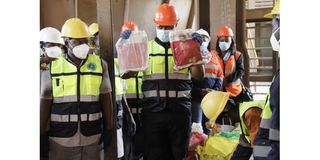
Mtwara. In a searing display of the government’s commitment to eradicating the narcotics trade, the Drug Control and Enforcement Authority (DCEA) has incinerated over 500 kilogrammes of heroin at the Dangote Cement factory kilns.
The exercise followed a landmark ruling by the High Court of Tanzania, Mtwara Sub-Registry, which saw a major international trafficker sentenced to three decades behind bars.
As the intense heat of the factory’s kilns, reaching temperatures exceeding 1,500 degrees Celsius, reduced the illicit cargo to ash, the DCEA leadership reaffirmed that Tanzania would no longer be a haven for drug cartels.
The incineration ensures that the chemicals are destroyed before they can interact with cement materials, thereby preventing the narcotics from being salvaged or reused.
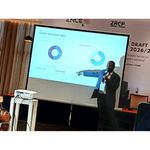
Speaking at the site on Saturday, May 23, 2026, the DCEA Director General, Mr Aretas Lyimo, emphasised that the destruction of the evidence marks a turning point in the regional fight against drug trafficking.
"Such legal actions are necessary to ensure Tanzania remains safe and eventually drug-free," said Mr Lyimo, noting that recent operations and the subsequent court victory have already caused a significant scarcity of drugs on the streets.
This scarcity, he said, has led to a surge in demand for treatment among addicts, announcing that the DCEA is scaling up its humanitarian efforts.
"The Authority will build a methadone clinic to treat those struggling with drug addiction in the Mtwara region, where services will be provided free of charge," confirmed Mr Lyimo.
Furthermore, Mr Lyimo unveiled active plans to encourage the establishment of sober houses to assist citizens in recovering and returning to the national workforce.
A high-seas operation
The fiery conclusion in Mtwara follows a protracted legal and investigative journey that began five years ago in the waters of the Indian Ocean.
The case centered on Mr Jan Mohamed Miran, a 51-year-old Iranian national who was identified as a key figure in a sophisticated drug trafficking network.
The background of the case dates back to between April 22 and 24, April 2021,b when the Tanzania People’s Defence Forces (TPDF) Naval Unit received actionable intelligence regarding a suspicious vessel.
A special patrol was launched within Tanzania’s exclusive economic zone in Kilwa District, Lindi Region.
The operation resulted in the seizure of a dhow and the arrest of Mr Miran along with six other Iranian nationals.
Upon searching the vessel, officers from the Police Force and the DCEA, in collaboration with other security organs, recovered a massive haul of narcotics.
The seized substances were transferred to Dar es Salaam and submitted to the Government Chemist Laboratory Authority.
The analysis confirmed a total of 859.26 kilogrammes of narcotics, comprising 504.36 kilogrammes of heroin and 355 kilogrammes of methamphetamine.
The trial and sentencing
The prosecution’s case, led by Senior State Attorney Tuhimanywa Majigo, detailed how the suspects allegedly confessed during investigations that the drugs were destined for Mozambique.
While Mr Miran eventually pleaded guilty to the charges, his six co-accused denied the allegations.
In a subsequent economic case (No. 12657/2025), the court acquitted the other six Iranians after the prosecution indicated it did not intend to proceed with charges against them.
Delivering the final judgment on Thursday, May 21, 2026, High Court Principal Judge Sylvester Kainda stated that the evidence proved beyond reasonable doubt that Mr Miran was directly involved in trafficking.
The offences were contrary to the Drug Control and Enforcement Act and the Economic and Organised Crime Control Act.
In mitigation, defence lawyer Rainery Songea urged the court for leniency, noting that Mr Miran had already spent five years in custody and was the sole provider for nine children in Iran.
However, Judge Kainda remained firm, citing the gravity of the crime.
"Without doubt, this court is satisfied that the accused... was directly involved in trafficking the seized drugs," Judge Kainda remarked.
He noted that while the convict was a first-time offender who saved the court's time by pleading guilty, the "large quantity of drugs involved posed a serious threat to society, the economy, and national security,” added Judge Kainda.
The court sentenced Mr Miran to 30 years in prison for each count, with the sentences to run concurrently.
Additionally, Judge Kainda ordered the forfeiture of the dhow to the government and the immediate destruction of the narcotics, leading to yesterday's incineration.
As the DCEA concludes this chapter, Mr Lyimo continues to call upon the public to provide information to identify those involved in the trade.
Meanwhile, the Dangote factory has reassured consumers that their cement remains safe for use, as the narcotics provide essential energy for the kilns while being entirely neutralised by the extreme heat.