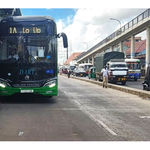
Dar es Salaam. Mofat, the operator of the Bus Rapid Transit (BRT) services along Kilwa Road, has recently called for the removal of minibuses (daladalas) from the route to increase demand. This situation highlights deeper structural and socio-economic issues in Mbagala that may create significant challenges for transport companies.
Experts have informed The Citizen that while Mofat's concerns are understandable, it is crucial to have a more nuanced understanding of Mbagala and its surrounding communities. This understanding is essential for policymakers aiming to design sustainable transport solutions that benefit all parties without discouraging major investors.
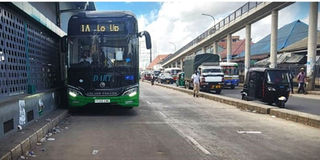
Mofat's Chief Operations Officer, Mr Mabrouk Masasi, shared with The Citizen's sister publication, Mwananchi, that the company has been incurring losses since it began operations in October of last year.
He stated that daladala, bajaji, and bodaboda vehicles were expected to be removed from the corridor but continue to operate. "By having these vehicles operate alongside ours, we share passengers and make no profit. This is why we have only 40 buses on the road while 160 remain idle. From a business perspective, this is not sustainable.
We have loans to repay for these buses and more than 187 drivers, not all of whom are fully utilized, yet salaries must be paid every month," he explained.
As a result, Mofat has written to the Land Transport Regulatory Authority (Latra) requesting the removal of daladala and bajaji from the route. Latra has confirmed the receipt of the letter and noted that the matter requires consultations with other stakeholders.
While acknowledging the challenges Mofat faces and the presence of competing transport options, analysts stress the importance of recognizing the unique characteristics of Mbagala in comparison to other BRT corridors, such as Morogoro Road and upcoming routes along Nyerere and Bagamoyo Roads.
"Understanding these differences is crucial if authorities wish to make decisions that ultimately benefit everyone and attract large-scale investors like Mofat," said Mr. Salim Mbonde, a resident of Mbagala Rangi Tatu.
He explained that Mbagala serves as a self-contained commercial hub where residents can find almost everything available in Kariakoo. As a result, many people who might typically travel to the city center conduct their business locally.
"You’re considering people from Toangoma, Kongowe, Mwandege, Vikindu, Kisemvule, Mkuranga, Charambe, Chamazi, Mbande, Kisewe, Kilungule, Msongola, Kitonga, and even Chanika and Gongolamboto,” he said.
Many residents carry out their daily activities within Mbagala before returning home, and some neighborhoods are home to a growing middle class, with many individuals opting to travel by private vehicle.
Ms Ashura Mchinjita, also from Mbagala Rangi Tatu, noted that residents frequently travel between Mbagala and other locations such as Chanika, Gongolamboto and Kawe, complicating the business case for a BRT operator whose service mainly covers the city centre route to Posta and Kariakoo/Gerezani.
She said authorities must appreciate these commuting patterns to design a system that works for both residents and investors.
Mbagala’s population is diverse, comprising working Tanzanians, bodaboda riders, petty traders, artisans, domestic workers and small-scale entrepreneurs living side by side in a tightly knit community.
Many residents are young families attracted by relatively affordable housing, while others are long-term settlers who have witnessed Mbagala’s transformation from a semi-rural settlement into a bustling urban neighbourhood.
Housing reflects this social mix, with modest concrete-block homes and multi-family compounds that remain affordable to low- and middle-income earners. The area also hosts a growing number of industries, attracting workers from surrounding communities.
A source familiar with the sector said Mbagala’s relatively low cost of living encourages many residents to seek employment beyond the neighbourhood. However, the source added that Mofat’s struggles also reflect some systematic weaknesses.
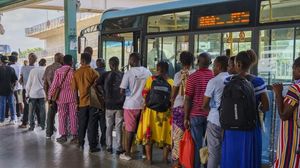
“Some people find it hard to adopt the system because they have to queue as they wait for the buses,” he said.
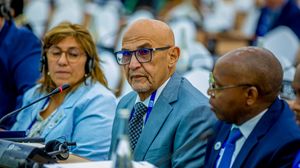
Latra director general Mr Habibu Suluo acknowledged that BRT Phase Two faces business-related challenges.
“Mofat, like Udart, is a service provider contracted by the Dar es Salaam Rapid Transit Agency (Dart) to operate specific corridors. Latra’s role is that of a regulator. Operators have exclusive rights along their routes,” he said.
Mr Suluo explained that Mofat wants bodaboda, bajaji and daladala removed, arguing that their presence contributes to financial losses. However, he said Dar es Salaam’s transport planning is based on an integrated route system that allows commuters to travel long distances using a single fare.
“For example, there are routes from Toangoma to Temeke, while the BRT runs from Mbagala to Gerezani. Someone travelling from Kisemvule to Gerezani, or Mbagala to Mwenge, uses one route and pays one fare,” he said.
From a commuter’s perspective, BRT fares are capped at Sh1,000, while daladala fares range from Sh600 to Sh800, sometimes dropping to Sh500 during off-peak hours.
“When passengers compare Sh1,000 on the BRT with Sh600 on a daladala to reach the same destination, the BRT seems less attractive. That is why BRT buses often carry few passengers while daladala, bodaboda and bajaji nearby are full,” he said.
He added that limited access to smart cards discourages potential users. Latra plans to engage Mofat to improve public awareness and align services more closely with market realities.
Mr Suluo said investors have been contracted to operate feeder routes integrating with the BRT, transporting passengers from areas such as Charambe and Kigamboni to BRT stations.
“This ensures passengers pay one fare from the feeder route and continue on the BRT to their final destination. Without fare integration, transport costs become too high for ordinary Tanzanians,” he said.
Currently, a passenger arriving in Mbagala by daladala must pay a feeder fare plus Sh1,000 to board the BRT—an expense many cannot afford.
He suggested that Mofat adopt flexible pricing strategies, including promotional fares as low as Sh500, to attract first-time users.
“These are clean-energy buses with lower operating costs than petrol or diesel vehicles. Offering affordable fares now will encourage adoption,” he said.
He also recommended wider distribution of smart cards and lower card prices to reduce queues and inconvenience. “If we remove daladala without addressing these issues, we risk penalising Mbagala residents by forcing them to pay higher fares than other areas,” he said. Mr Suluo stressed that longer routes are intended to benefit passengers, not burden them—a principle that must guide reforms as the BRT system expands.
Transport expert Mr Prosper Nyaki told The Citizen that Latra, as the regulator, should advise the government to support Mofat through subsidies to ensure the sustainability of the service.
“Running public transport is very expensive. During off-peak hours, nearly half of the buses operate without passengers, unlike daladala, which are not public transport in the formal sense and are owned by individuals,” he said.
Without proper government support, he warned, the system risks poor connectivity due to high operational costs.
Mr Nyaki said public transport in urban areas is challenging worldwide and should not be treated purely as a business venture, but as a public service.
“Globally, public transport is not operated mainly for profit, but to provide essential services. If you calculate the real cost of running public transport and then set fares accordingly, you will find that fares become too high for ordinary citizens,” he said.
He added that it is extremely difficult to operate public transport as a purely commercial enterprise.
According to him, effective public transport systems are guided by several key principles: services must operate on fixed schedules, fares must be regulated, operators should be organised as companies rather than individuals, and services must cover entire municipalities regardless of passenger volumes on specific routes.
Mr Nyaki noted that in many countries, BRT systems are operated by private companies under agreements with the government, which provides subsidies.
“In some cases, the government purchases service trips and operators are paid in instalments. The revenue collected from fares may go directly to the government, which then pays for the service,” he said.
He said such arrangements help ensure sustainability.
Mr Nyaki explained that this is why public transport falls under the President’s Office – Regional Administration and Local Government (PO-RALG), rather than the Ministry of Transport.
“This is because public transport primarily serves residents within a city or municipality. It also helps stimulate other economic activities,” he said.
Register to begin your journey to our premium contentSubscribe for full access to premium content