Dar es Salaam. Economists have welcomed Parliament’s approval of a new legal framework allowing movable assets to be used as collateral for loans, saying it could widen access to finance for Tanzanians who lack conventional assets such as land and houses.
They said the move could unlock capital for individuals and businesses with viable projects but limited access to formal financing, while creating a lending system that better reflects the types of assets owned by many Tanzanians.
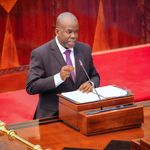
Parliament approved the Secured Transactions (Movable Property) Bill, 2026, which establishes a framework for using movable property to secure loans.
An economist at the University of Dar es Salaam, Mr Jehovaness, said improving access to finance was among the key measures needed to accelerate economic growth, particularly because many Tanzanians had viable and bankable projects but lacked capital to implement them.
“Many people have bankable projects and good ideas, but they do not have the financing or money to invest,” he said.
He said expanding access to finance was particularly important as Tanzania works towards the Development Vision 2050, which is expected to require significant investment from the private sector.
Mr Jehovaness said the new framework could allow people with valuable movable assets to use them to secure loans, including working capital to expand businesses and finance development.
He said an individual could own a movable asset worth substantially more than the amount they wanted to borrow, making it possible to use the asset as security for a relatively small loan.
“Why not make it easier for such a person to obtain a loan and finance development?” he said.
Independent economist Oscar Mkude said the legislation could help address a structural weakness in Tanzania’s financial system, which has traditionally favoured borrowers with formally recognised fixed assets.
He said many existing financial systems were developed in countries where property ownership, physical addresses and other formal structures were more established.
“In Tanzania, many people have different forms of assets. Someone may have 100 cattle, farms or other movable assets,” he said.
However, such people could still struggle to access formal credit because banks previously lacked a clear legal framework for accepting certain movable assets as collateral, he said.
Mr Mkude said the new law was intended to close that gap by providing financial institutions with clearer guidance on how movable assets could be recognised and used in lending.
“This is the reason for coming up with this law. It will provide guidance, and the regulations that follow will help banks and other financial institutions know how to lend to people using the movable assets they own,” he said.
The change could also benefit borrowers by potentially lowering the cost of credit where additional collateral improves their borrowing position, he said.
For instance, a salaried worker who owns livestock but does not have a title deed for their house could potentially use the livestock alongside their salary when applying for a loan.
Such additional security could strengthen a borrower’s position when negotiating lending terms with a financial institution, Mr Mkude said.
He said lower borrowing costs could have wider economic implications, particularly when credit was used to finance production.
“A loan is a cost of production if the borrower is using it to run a business,” he said.
When financing costs fall, businesses could retain more money for expansion and other productive activities. Lower production costs could also, depending on how widely the new lending framework was adopted, affect prices, he said.
Mr Mkude said concerns over loan defaults should not undermine the reform, noting that banks and other financial institutions would still be required to assess borrowers and the assets offered as security.
He said the legislation had been developed through consultations involving banks, financial institutions and the Bank of Tanzania.
While implementation could expose areas requiring improvement, as is often the case with new legislation, Mr Mkude said the framework represented a positive beginning.
“Perhaps it is not the best system yet, but it is a good start,” he said.
He said another important aspect of the legislation was its potential to move Tanzania towards financial solutions that reflected local economic realities rather than relying entirely on systems developed elsewhere.
Mr Mkude said conventional lending systems could exclude people whose wealth did not fit traditional definitions of collateral, despite owning assets that could support productive borrowing.
“Solutions that reflect our own reality are important because they are more likely to work for our people,” he said.
Register to begin your journey to our premium contentSubscribe for full access to premium content