How booming bodaboda industry is turning young riders into employers

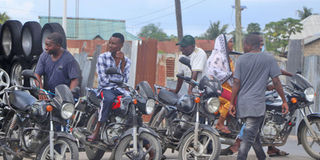
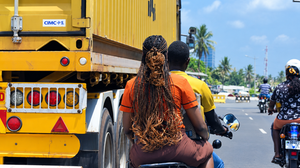
Some bodaboda riders who complete their first contracts enter new agreements for additional motorcycles while retaining those they have already acquired. PHOTO | FILE


Dar es Salaam. For years, riding a motorcycle taxi famously known as bodaboda was seen by many as a last resort for those who had failed to secure employment.

But that perception is changing as some young riders increasingly turn bodaboda riding into a pathway to asset ownership, entrepreneurship and employment creation.

What starts as a job to earn a daily income is increasingly becoming a business model in which riders acquire motorcycles through agreements with investors, complete repayment contracts and eventually become owners. Under the arrangement, a motorcycle owner buys a motorcycle and gives it to a young person under a contract that can run for between 10 months and one year.

The rider makes daily repayments, commonly between Sh8,000 and Sh10,000, depending on the agreement. Once the agreed amount has been fully paid, ownership of the motorcycle is transferred to the rider.

For some young people, the model has become more than a means of earning a living. It has become a way of accumulating motorcycles and creating employment for others.

Some riders who complete their first contracts enter new agreements for additional motorcycles while retaining those they have already acquired. They then employ other riders to operate the motorcycles, creating small fleets of commercial motorcycles.

The riders they employ are commonly referred to as ‘day-workers’ or, informally, ‘Day-waka’, because they operate the motorcycles and remit an agreed amount to the owner each day.

One of the bodaboda riders, John Chuwa from Tandale-Magharibi, who now owns three motorcycles, said he started riding after realising that the business could provide him with an opportunity to become financially independent.

He said his first motorcycle was obtained in 2022 through a contract with an investor, who bought it and allowed him to repay the cost through daily instalments. After completing the contract, he became the owner.

Instead of stopping there, he entered another agreement in December, 2023 for an additional motorcycle and repeated the process, eventually building a fleet of three motorcycles.

“I started this business because I needed a way of earning money, but after completing my first contract, I realised that I could use the same system to build my own business,” he said.

Today, he employs other riders to operate some of his motorcycles while he continues to manage the business.

He said the income has enabled him to meet his needs and invest in additional assets, adding that there are days when his earnings exceed those of some formally employed people in his family.

“That’s when they started to show some respect and consider it as a serious job,” he said.

Another young rider, Naseeb Athumani Mzinga, popularly known as ‘Chibu Mzinga’ from Sinza-Darajani, offers another example of how the model can grow beyond individual riding into a small business.

Now the owner of five motorcycles, he said completing his first contract showed him that the motorcycle could be more than a source of personal income—it could become an asset capable of generating income through other riders. Rather than using each new motorcycle to expand his own workload, he began putting them into operation under other young riders, allowing the business to grow while creating opportunities for others.

“I started with one motorcycle and, after completing the agreement, I decided not to stop. I took another one and continued with the same arrangement. Today I have five motorcycles and I have other young people working with me,” he said.

For Mzinga, the strength of the model lies in its ability to turn one income-generating asset into several, with each motorcycle creating an opportunity for another young person to earn a living.

The approach has also changed his role in the business. From earning directly from riding, he now manages an expanding operation in which other young people work under him.

The development has also created a new relationship between young people looking for work and individuals with capital but limited time to operate motorcycles themselves.

An entrepreneur, Barnabas Kiwango who buys motorcycles and gives them to young people under contracts said he adopted the arrangement after repeatedly meeting young people seeking his help to find employment.

“I have houses in different areas here in Dar. Many young people come to me asking for connections to get jobs. I thought that instead of looking for a job for every young person, I could buy a motorcycle and give it to them under an agreement,” he said.

Under the arrangement, the young person uses the motorcycle to generate income and repays the investor through agreed daily contributions. Once the contract is completed, the motorcycle becomes the rider’s property.

Mr Kiwango described the model as beneficial to both parties because he recovers the money used to purchase the motorcycle while the young person eventually becomes an asset owner.

The growth of the business is also being felt by motorcycle dealers.

For his part, a motorcycle seller in Magomeni, Salim Ahmed Salim, said demand had increased as more people with financial capacity bought motorcycles for young people to operate under contractual arrangements.

“Business has become very good. I can sell motorcycles quickly and then go and bring others because there are people (most of our customers) buying them specifically to give young people through these agreements,” he said.

He said the model had created a link between people with capital and young people looking for opportunities to earn a living.

Salim said the impact could also be seen in areas such as Tandale, Manzese, Mbagala and Mabibo, where he said some young people previously associated with disruptive behaviour had moved into bodaboda riding.

“Previously, there were places where you could even be afraid to pass through. But things have changed. Many young people who were involved in troublesome activities have moved into bodaboda and are now doing legitimate work,” he said.