Dar es Salaam. Tanzania’s push for clean cooking energy is rapidly reshaping the liquefied petroleum gas (LPG) market, triggering stiff competition among major gas firms as they race to capture millions of households shifting away from charcoal and firewood.
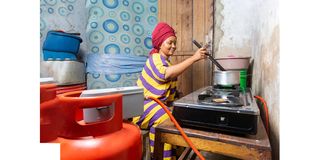
The government-backed clean cooking agenda seeks to reduce dependence on biomass energy, protect forests, improve public health and ease the burden on women who spend hours searching for firewood.
The government's target is for at least 80 percent of Tanzanians to use clean cooking energy by 2034. So far, adoption has risen to over 20 percent from just six percent before the campaign started in 2024. The shift is now transforming Tanzania’s energy business landscape, with LPG companies aggressively expanding distribution networks, retail outlets and cylinder accessibility in a battle for market dominance.
According to the Energy and Water Utilities Regulatory Authority (Ewura) Mid and Downstream Petroleum Sub-Sector Performance Report for 2023/24, Oryx Energies Tanzania remained the market leader with a 35.2 percent market share, followed by Taifa Gas at 32.1 percent, while Manjis Gas controlled 15.8 percent.
The figures reflect a sharp shift from 2020, when Oryx dominated the market with 46.6 percent, Taifa Gas held 22.2 percent and Manjis Gas accounted for about nine percent.
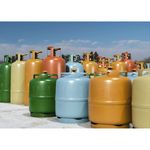
As competition intensifies, new firms continue to enter the market and reshape Tanzania’s LPG industry. During the financial year under review, LPG imports rose by 38 percent to 403,638 metric tonnes from 293,167 metric tonnes recorded previously, underlining rising demand driven by the clean cooking campaign.
The data suggests that over the past five years, the LPG market has become increasingly competitive as the clean cooking campaign expands gas consumption across urban and rural Tanzania.
While Oryx still leads the market, its share has declined by more than 11 percentage points, reflecting mounting pressure from rivals, particularly Taifa Gas, whose market share has risen by nearly 10 percentage points over the same period.
Regional consumption patterns also point to growing nationwide demand.
The Coastal Zone accounts for 34 percent of national LPG consumption, followed by the Northern Zone at 21 percent, Lake Zone at 20 percent, Central Zone at 15 percent and Southern Highlands at nine percent. Commenting on the trend, Ewura acting director general, Mr Gerald Maganga, said all LPG firms operate under the same regulatory framework and standards, with investment now becoming the key factor determining competitiveness.
“There has been significant growth over the past several years, which indicates that people have started to understand the importance of using LPG and are gradually moving away from firewood and charcoal, which essentially have serious health and environmental impacts,” he said.
Mr Maganga noted that the sector, which was once dominated by a few companies, has attracted more players over time, intensifying competition and signalling growing investor confidence in the market.
He said a company’s ability to expand depends largely on investments in gas cylinders, storage infrastructure and distribution networks.
Firms that fail to invest adequately, he added, struggle to distribute gas widely or attract distributors and consumers.
“At the moment, we assess companies within an environment of equal competition.
The regulations are the same for everyone, but the difference comes in investment levels and how a company operates. To remain in the market, you must invest at a level that enables you to reach more customers,” he said.
On the other hand, Ministry of Energy director of Clean Cooking, Mr Nolasco Mlay, said the use of LPG continues to grow rapidly, intensifying competition among companies seeking to capture a larger share of the market through pricing strategies and aggressive marketing.
“We have seen the market growing very fast as companies compete to attract customers through prices and other incentives.
We will continue encouraging the public to adopt clean cooking solutions, not only LPG,” he said.
However, he expressed concern over the rising cost of LPG, noting that Ewura should strengthen price regulation to ensure clean cooking energy remains affordable for consumers.
“In promoting clean cooking, the goal is to ensure the end user can access these products at affordable prices,” he said.
He added that LPG currently leads Tanzania’s clean cooking sector, followed by other energy sources such as electricity, biogas and modern cooking stoves, adding that the next major task is to continue educating the public on the availability and benefits of alternative cooking energy.
Register to begin your journey to our premium contentSubscribe for full access to premium content