Songwe. Smiles and renewed hope are emerging among sesame farmers in Momba District, Songwe Region, following the successful completion of the district’s first sesame auction conducted through a digital trading system.
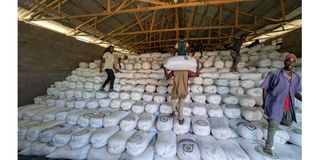
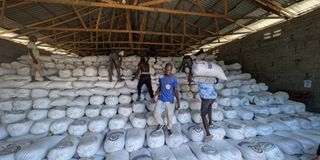
During the auction, a total of 928 tonnes of sesame were presented to the market and all were sold, with no stock remaining in storage. Farmers also welcomed the prices offered, with the highest price reaching Sh2,740 and the lowest Sh2,655, resulting in an average price of Sh2,714.90 per kilogramme.
A senior officer with the Tanzania Mercantile Exchange (TMX), Ms Justa Martini, said more than 10 companies participated in the auction, creating strong competition for the crop.
She said the results indicate positive prospects for farmers, particularly due to improved prices compared to previous auctions.
“We brought 928 tonnes to the market and all were sold. We are pleased to see prices improve compared to the previous auction. Price differences are often caused by the quality of crops in storage and how farmers prepare their consignments before taking them to market,” she said.
She added that crop quality, together with the volume of produce available on the market, plays a major role in determining prices.
The Cereals and Mixed Crops Regulatory Authority (Copra) head of public relations and communications unit, Ms Theresia Christian, said the auction demonstrated how digital technology can improve transparency by bringing farmers and buyers together directly.
“Today we witnessed farmers and buyers meeting digitally and participating in the first auction in this district. Through this auction, farmers agreed to sell their sesame at an average price of Sh2,714.90 per kilogramme,” she said.
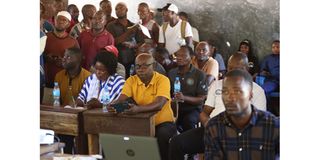
She explained that after the auction, officials held discussions with leaders of primary cooperative societies to strengthen their understanding of the market system, price trends and existing challenges.
“After the auction, we met leaders of primary societies to improve their understanding of price trends, how prices are determined and how the digital system operates. We also discussed market issues and crop quality, and the response has been very positive, with the education reaching farmers,” she said.
For farmers, the auction has been viewed as the beginning of significant changes in the sesame trade.
A sesame farmer in Momba District, Mr Jumapili Daudi said farmers were satisfied with the prices offered under the current market conditions.
“The prices are good compared to previous auctions. In the past, there was a huge gap between us and farmers in other areas, but now the difference has started to narrow. We have every reason to thank Copra for supervising crop quality,” he said.
He added that the auction system had eliminated longstanding challenges caused by middlemen who bought crops at low prices.
“In the past there were brokers. A farmer believed he was dealing with the right person but often ended up being cheated. This auction system allows farmers to sell directly without exploitation,” he said.
Another farmer, Ms Nesi Kalinga, said farmers previously incurred high production costs but lacked reliable markets, forcing them to depend on brokers.
“In the past we faced many difficulties. We cultivated sesame at high cost, but buyers were mainly brokers who used oversized containers for measurements, causing farmers to incur losses,” she said.
However, she said the introduction of the digital auction system through cooperation between Copra and TMX had transformed the sector.
“Now we are making profits. Our sesame has been sold at good prices and we are seeing the benefits. This system has helped us greatly,” she said.
Ms Kalinga also urged women to engage more actively in farming and join cooperative societies to benefit from collective markets.
“I encourage fellow women to join cooperative societies and avoid remaining at home because we now understand the value of this crop,” she said.
On his part, farmer Mr Shadrack Mgala said he was satisfied with the auction price, although he called for improvements in payment timelines.
“With today’s price, I am satisfied. I have calculated my figures and found it fair. What we ask is for payments to be made on time,” he said.
He recalled that in previous seasons farmers experienced delays in receiving payments after selling their crops.
Other farmers also said the new system had reduced fraud previously committed by some brokers using inaccurate measurements.
“In the past someone would come to your home with a bucket to buy sesame. The container could hold about 15 kilogrammes, but they would measure up to 16 kilogrammes, meaning one kilogramme was stolen from you. Now we use weighing scales and clearly see the exact weight of our produce,” said one farmer.
Farmers in Momba believe the digital trading system has introduced fairness and transparency into the sesame business, a development expected to boost production and improve livelihoods through agriculture.