Sh1 million exotic chickens, turkeys steal the show at Tanzanian trade fair

PRIZED POULTRY: Livestock keeper Solomon Kajula displays exotic Brahma and Orpington chicken breeds valued at Sh1 million each at the John Mwakangale grounds during the Southern Highlands Nane Nane exhibition in Mbeya on Tuesday, August 4, 2026. PHOTO | SADAM SADICK
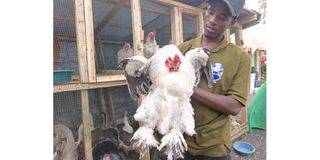

Mbeya. Livestock keeper Solomon Kajula has stated that despite many farmers focusing on standard poultry, turkeys represent a lucrative niche market, whilst explaining why exotic chickens are causing a stir at the Southern Highlands Nane Nane Agricultural Exhibition due to their steep price tag.

Those exotic birds, comprising Brahma breeds originating from India, as well as Light Sussex (Colombia), Cochin, and Orpington breeds from America, are selling for Sh1 million each, leaving citizens visiting the exhibition pavilion astounded.

Speaking at the ongoing exhibitions at the John Mwakangale grounds on Tuesday, August 4, 2026, Mr Kajula said turkey rearing is among the most profitable agricultural ventures due to the bird's high market value and guaranteed demand.

He noted that contrary to popular focus on cattle, goats, sheep, local chickens, and ducks, turkey farming offers far superior profit margins.

"First, keeping them incurs low operational costs; they are disease-resistant and capable of fending for themselves due to their physical strength, making predator attacks unlikely," he said.

"Furthermore, their meat is exceptionally delicious. An adult turkey can weigh up to 20 kilogrammes, commands a guaranteed market, and fetches up to Sh250,000. Many people do not realise how lucrative turkey farming is," stated Mr Kajula.

He added that turkeys naturally prefer a solitary lifestyle, often isolating themselves from other birds because of their independent nature.

Why exotic chickens cost Sh1 million

Regarding the chickens selling for Sh1 million that have stolen the spotlight at the agricultural fair, Mr Kajula explained that because the breeds are rare imports, their eggs and breeding stock are exceptionally difficult to obtain.

He highlighted that the birds possess built-in theft deterrence mechanisms, as any thief attempting to sell them on the open market would be identified immediately.

"There is an identification tag inside the bird, making theft and illegal reselling nearly impossible. A thief could only slaughter and eat it secretly, but selling it openly is impossible; they will be caught," explained Mr Kajula.

"Visually, they look nothing like local breeds. Their feathered legs, distinctive build, and overall size are in a class of their own, and their meat quality is distinctly superior," he added.

LUCRATIVE VENTURE: Turkeys on display at the Nane Nane agricultural fair in Mbeya on Tuesday, August 4, 2026, where farmers were urged to adopt turkey rearing to maximize agricultural profits. PHOTO | SADAM SADICK

Addressing government support, the livestock keeper noted that he has never received official financial backing or loans despite several attempts, urging authorities to create credit facilities for the poultry sector.

Fairgoers react

A fairgoer, Ms Amina Mwampashi, expressed amazement at the exotic breeds, noting that the price of a single bird equals the total capital of many small-scale entrepreneurs.

"I have never seen international chickens like these. Selling a chicken for Sh1 million is truly astonishing; their shape shocked me; they look like they are wearing trousers! I plan to buy eggs to attempt breeding them," she said.

Another visitor, Mr Thomas James, emphasized that specialized livestock keeping requires significant capital investment, calling on the government to extend technical and financial support to local breeders.

"Government’s youth and women empowerment funds, such as the 10 percent local council loans, should reach these innovative farmers alongside proper technical training. This will help Tanzania boost its livestock profile internationally and secure broader markets," noted Mr James.