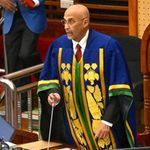
Dar es Salaam. National Assembly Speaker, Mussa Azan Zungu, has issued firm directives aimed at unlocking stalled public-private partnership (PPP) projects.
The Speaker's move is seen as critical to Tanzania’s Vision 2050 financing agenda as the country prepares to implement the Fourth Five-Year Development Plan (FYDP IV) covering 2026 to 2031.
The financing requirements under FYDP IV are estimated at Sh477 trillion, with about 70 percent, equivalent to roughly Sh334 trillion, expected to be mobilised from the private sector.
Within this framework, PPP projects are projected to generate more than Sh170 trillion over the next five years, making them central to the country’s development strategy.
Addressing Parliament on Monday, Speaker Zungu directed urgent action to remove long-standing bottlenecks delaying major investment partnerships.
He instructed the Public-Private Partnership Centre (PPPC) executive director to submit a comprehensive list of all stalled PPP projects during a meeting with the Parliamentary Budget Committee scheduled for June 25, 2026.
He said several projects had remained inactive for extended periods, affecting government revenue and slowing infrastructure development. “All relevant stakeholders should attend this meeting to ensure accountability and accelerate the resolution of implementation challenges,” directed Speaker Zungu.
He also called on the Attorney General to review and amend investment laws considered unfriendly to investors, stressing the need to balance national interests with a regulatory framework that encourages rather than discourages private sector participation.
He said shifting the financing burden of major infrastructure projects to the private sector would allow government resources to be redirected towards essential services such as health, education and housing, while maintaining fiscal stability.
The urgency of the directive is reflected in the expanding pipeline of PPP projects under the PPPC, which officials say are critical to achieving Vision 2050 targets.
However, concerns remain over implementation capacity, regulatory efficiency, and coordination among key institutions.
In an interview with The Citizen yesterday, PPPC executive director, Mr David Kafulila, said government resources alone are insufficient to finance Tanzania’s infrastructure ambitions, making private sector participation indispensable.
He highlighted major transport projects, including the proposed Kibaha–Chalinze–Morogoro Expressway, noting that the Kibaha–Chalinze section alone is estimated at more than $500 million, while the full corridor is expected to exceed $1 billion.
Other priority road projects include the Igawa–Tunduma highway and the Dar es Salaam inner and outer ring roads, are all aimed at easing congestion and improving regional connectivity.
In the rail sector, he said plans include metropolitan railway systems for Dar es Salaam and Dodoma to reduce urban congestion, alongside strategic lines such as the Tanga–Musoma and Mtwara–Bamba Bay railways.
Mr Kafulila said these projects are vital for the Southern Economic Corridor, particularly for transporting iron ore and coal from resource-rich regions.
“The energy sector is also expected to expand significantly, with plans to increase generation capacity from 5,000MW to 15,000MW by 2030 through hydropower, solar, and wind projects,” he said.
“These include transmission infrastructure linking the Julius Nyerere hydropower project to Lindi to strengthen grid stability and support industrial growth,” he added.
Furthermore, he said the government is also seeking private investments in a national water grid and the development of Bagamoyo Port, both considered strategic for long-term economic transformation and regional trade.
“To manage the growing PPP portfolio, which has expanded from Sh2.5 trillion in 2021 to more than Sh8.5 trillion today, institutional and legal reforms are necessary to improve efficiency and reduce delays,” he stressed.
He proposed transforming the PPPC into a one-stop centre to streamline approvals and eliminate multiple layers of clearance that slow project execution, saying reducing bureaucracy is key to sustaining investor confidence.
He welcomed Speaker Zungu’s call for enhanced parliamentary oversight, saying it would improve accountability and help identify implementation gaps.
Economists and lawmakers have also supported the Speaker’s intervention, describing it as a timely step towards bridging the gap between planning and execution in infrastructure financing.
World Bank-certified PPP expert, Dr Bravious Kahyoza, said the move could help align FYDP IV financing with implementation realities, noting a persistent disconnect between planning assumptions and budget allocations.
“While FYDP IV requires about Sh170 trillion to be mobilised through PPPs, the national budget does not sufficiently reflect this reliance, creating a coordination gap among key institutions,” he said.
Tunduru North MP, Mr Ado Shaibu, also emphasised the importance of strong parliamentary oversight, saying sustained political commitment is essential for effective implementation of PPP reforms.
Stakeholders say the June 25 meeting in Dodoma will be crucial in identifying stalled projects and accelerating reforms needed to achieve Vision 2050 financing targets.
They caution that without legal and institutional reforms, the goal of mobilising Sh334 trillion from the private sector may remain out of reach, despite strong policy ambition and growing investor interest in Tanzania’s infrastructure sector.
Register to begin your journey to our premium contentSubscribe for full access to premium content