Dar es Salaam. Stakeholders in Tanzania’s avocado value chain have called for improved farming practices, reliable irrigation, proper harvesting and stronger compliance with food-safety standards to increase the country’s avocado exports.
They say Tanzania has significant potential to expand its presence in international markets, but production volumes and the quality of fruit available for export need to improve to meet growing demand.
The recommendations were made during training on food safety standards and certification systems for small and medium-sized enterprises in Tanzania’s avocado value chain, organised by the Food and Agriculture Organisation (FAO) and the Ministry of Agriculture.
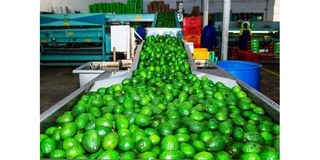
Managing Director of exporting company Fresh Agro Tanzania Limited, Mr Joseph Muita, said improving farming practices was essential, noting that only about 40 percent of the fresh fruit handled by his company currently qualifies for export.
The remainder is directed to other uses, including oil production.
“We still need to improve our farming practices so that we can move beyond the current level. We have a much greater potential than what we are currently achieving,” he said.
Mr Muita said the company sources avocados from Kagera, Tarime, Lindi, Njombe, Mbeya and Songwe, but variations in farming practices and soil conditions affect the quality of fruit supplied to exporters.
He said Tanzania needed to focus on increasing production alongside efforts to open new markets.
“Demand is much greater than what we can currently produce,” he said, adding that the country had the potential to become one of Africa’s leading avocado producers because of its land and favourable growing conditions.
India is currently the company’s largest market, while other exports go to Turkey, Dubai and Oman.
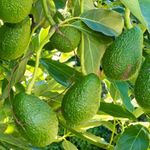
For farmers, one of the immediate steps towards improving export quality is harvesting fruit at the correct stage of maturity.
Avocado farmer from Rungwe District in Mbeya, Mr Ezekiel Mwakota, said premature harvesting remained one of the challenges undermining the quality of fruit destined for international markets.
“The challenge is that many farmers are being tempted to harvest avocados while they are still immature,” he said.
Mr Mwakota, who has nearly two decades of farming experience and has grown avocados for six years, said mature fruit was better suited to transportation and more capable of withstanding long journeys to overseas markets.
He currently sells to India, China and Europe, according to him.
“As long as the avocado has reached the required maturity, markets are available. Demand is very high,” he said.
Mr Mwakota also identified irrigation as an important area for investment, saying reliable water supplies could improve fruit quality and enable farmers to keep mature fruit on trees for longer while waiting for favourable market conditions.
In Makambako, agriculture officer Weisy Wikedzi said increasing production and improving access to water and electricity could help the area respond to growing demand.
“We are moving in the right direction, but we have not yet reached the very high standards required for the crop,” he said.
Mr Wikedzi said some farmers had yet to adopt avocado production, while others lacked the capital needed to establish larger farms.
Although the Ministry of Agriculture has started supporting the drilling of boreholes, he said more water infrastructure was needed.
“We therefore need more boreholes or water infrastructure in general,” he said.
He added that some farmers with boreholes still faced electricity challenges, forcing them to draw water manually instead of using electric pumps.
Makambako currently produces at least 4,000 tonnes of avocados annually, according to Mr Wikedzi. Some of the produce is exported, while some is supplied to processing factories for food and cosmetic oil.
“Even if we increased production tenfold or more based on the buyers we have seen in Makambako, the avocados would still not be enough,” he said.
Stakeholders also identified compliance with food-safety requirements as another area that needs greater attention if Tanzania is to expand its export markets.
Food safety and nutrition expert Stella Kimambo said entrepreneurs in the avocado value chain needed to strengthen their understanding of food safety, good agricultural practices, hygiene and international requirements.
She said the training covered hazard analysis and critical control points (HACCP), food-safety management and product traceability.
“The main objective is to build the capacity of these entrepreneurs so they can meet the standards required to access international markets,” she said.
Ms Kimambo said Tanzania’s avocado export data remained below Kenya’s, while some Tanzanian farmers were selling their produce into the neighbouring country.
Assistant director in the Department of Small and Medium Industries and Small Entrepreneurs at the Ministry of Industry and Trade, Ms Constancia Akaro, said the training was part of an FAO project supported by the African Development Bank and involving five East African countries.
She said the programme sought to strengthen food safety throughout the value chain, from production on farms to the final consumer.
Prof Jamal Kussaga, an associate professor at Sokoine University of Agriculture and an FAO consultant, said the training was part of a regional project running from 2024 to 2026 in Tanzania, Kenya, Uganda, Rwanda and South Sudan.
He said the initiative should not be viewed as an indication that Tanzania was performing poorly on food safety, but as part of efforts to keep farmers, processors and extension officers abreast of changing international market requirements.
“Training is a continuous process. Farmers, processors and extension officers all need to continually update their knowledge,” he said.
Register to begin your journey to our premium contentSubscribe for full access to premium content