Tanzania courts Japanese infrastructure investment

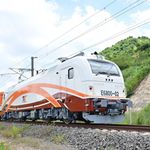
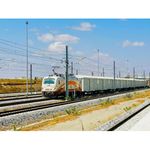
Dar es Salaam. Tanzania has invited Japanese investors to participate in major infrastructure projects, including the Standard Gauge Railway (SGR), ports, airports and urban transport, as it seeks to shift economic ties with Japan from development assistance to investment and industrialisation.

Minister of State in the President’s Office—Planning and Investment, Prof Kitila Mkumbo, made the call during meetings with Japan’s Parliamentary Vice-Minister for Land, Infrastructure, Transport and Tourism, Mr Manabu Nagai, and a member of the Japan-Africa (Japan-AU) Interparliamentary Friendship League, Ms Inoguchi Kuniko, in Tokyo on Tuesday.

Prof Mkumbo is in Japan from September 7 to 18 as part of an investment promotion tour aimed at attracting Japanese capital and technology to Tanzania.

He said the country wanted to build on its longstanding relationship with Japan by expanding cooperation in investment, industrialisation, technology transfer and economic co-creation.

“Tanzania therefore welcomes Japanese companies not simply to trade with Tanzania, but to invest, manufacture, process and add value locally, including in infrastructure such as the SGR,” Prof Mkumbo said.

He said Tanzania’s Development Vision 2050 offered opportunities for Japanese companies in infrastructure, manufacturing and agro-processing, agriculture, energy, minerals and value addition, ICT, tourism and the blue economy.

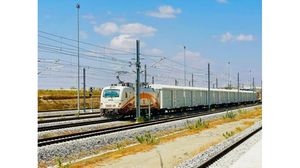
On infrastructure, Prof Mkumbo invited Japanese companies to participate in the SGR, strategic highways and bridges, ports, airports and urban transport projects.

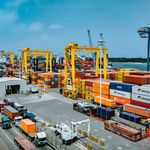
He singled out the ports of Dar es Salaam, Tanga and Mtwara, alongside railway and road corridors, logistics and urban mobility projects, saying they could strengthen Tanzania’s position as a gateway between the Indian Ocean and land-linked countries in East, Central and Southern Africa. “We therefore invite Japan to view Tanzania as a strategic logistics and infrastructure gateway to the wider African market,” he said.

The Government is seeking Japanese participation through public-private partnerships, concessional financing, direct investment and engineering services, as well as technologies covering railway systems, smart transport, port logistics, resilient bridges and intelligent traffic management.

Prof Mkumbo also called for the implementation of a construction-sector memorandum of cooperation signed between Tanzania and Japan’s Ministry of Land, Infrastructure, Transport and Tourism during the ninth Tokyo International Conference on African Development (TICAD 9) in 2025.

The agreement provides for training of engineers, technicians and construction workers, exchange of expertise and adoption of Japanese construction standards and technologies.

Prof Mkumbo said Japanese companies, including Fujita Corporation, Shimizu Corporation, Toyota Tsusho and TOYO Engineering, had shown growing interest in Tanzania, but urged that this be translated into concrete investments and projects.

He also called on the Japan-AU Interparliamentary Friendship League to advocate for increased Japanese private-sector investment and financing through institutions such as the Japan International Cooperation Agency (JICA), Japan Bank for International Cooperation (JBIC), Japan External Trade Organisation (JETRO) and Nippon Export and Investment Insurance (NEXI).

He cited Tanzania’s strategic location, political stability, natural resources and access to the African Continental Free Trade Area market as factors that could make the country an attractive base for Japanese companies seeking to expand across Africa.

Tanzania is also participating in Tourism EXPO Japan 2026, where about 15 Tanzanian tourism companies are seeking business and investment partnerships in the Japanese market.

“Our message is simple: let us move from friendship to investment, from development cooperation to economic co-creation, and from shared vision to concrete projects and shared prosperity,” Prof Mkumbo said.