Tanzania told to speed up trade law to boost economy
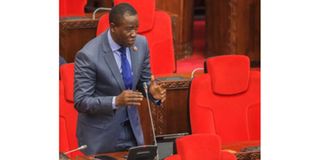
Mr Deo Mwanyika
By Katare Mbashiru
Dodoma. Tanzania’s Parliamentary Committee on Industries, Trade, Agriculture and Livestock has directed the government to expedite the drafting of a dedicated business law, warning that further delays could undermine efforts to streamline and modernise the country’s fast-growing trade sector.
The directive was issued in Dodoma on Wednesday, February 11, 2026, by the committee’s chairperson, Mr Deo Mwanyika, during a training session for committee members following a presentation by the Ministry of Industry and Trade on the 2003 National Trade Policy (2023 Edition).
Mr Mwanyika underscored the urgency of completing the ongoing review process for the proposed legislation, saying it is critical to determine whether the recommendations put forward will enable the ministry to effectively achieve its objectives of strengthening trade in the country.
With Parliament now pressing for swift legislative action, attention shifts to how quickly the government can table and pass the proposed law, seen by lawmakers as a crucial step toward creating a more predictable, transparent, and growth-oriented business landscape in Tanzania.
“It is imperative that the evaluation is conducted on time and that the right decisions are made. We must not delay this matter because it directly affects the well-being of the trade sector and the national economy as a whole,” said Mr Mwanyika.
He stressed that the trade sector remains a key pillar of Tanzania’s economy and requires a robust legal framework to guide its growth, coordination, and oversight.
The Ministry of Industry and Trade acknowledged that the absence of a specific law governing trade operations remains one of the biggest obstacles to fully implementing the 2023 National Trade Policy.
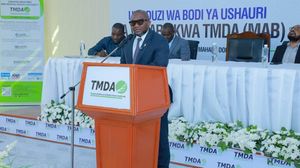
Presenting the ministry’s report, Director of Policy and Planning, Mr Needpeace Wambuya, said the absence of a comprehensive legal framework has hindered the ministry’s ability to effectively coordinate and regulate the rapidly expanding business sector.
“To address this gap, the ministry has proposed either enacting a new trade law or amending existing legislation to align it with current market demands,” said Mr Wambuya.
He noted that an initial analysis has already been completed, and the government is now expanding stakeholder consultations before moving to the next stage of the legislative process.
As part of broader reforms to strengthen the business environment, Mr Wambuya revealed that the ministry has prepared a draft e-commerce strategy aimed at curbing fraud by some online traders and enhancing consumer protection.
In addition, a draft export promotion strategy has been finalised and is in its final stages to boost the competitiveness of Tanzanian products in international markets.
“These steps are expected to improve the business environment, enhance transparency and stimulate national economic growth,” he emphasised.
The revised 2003 National Trade Policy seeks to promote trade through improved efficiency and competitiveness to accelerate socio-economic transformation.
Early achievements between July 2023 and December 2025 include the expansion of e-commerce and the establishment of special units to coordinate and address traders’ challenges.