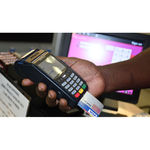
Dar es Salaam. In recent years, the use of cheques as a payment method in Tanzania has declined significantly.
This shift has been driven by the expansion of financial technologies and the growing convenience of digital payment systems, including mobile money services, electronic payments, and bank cards.
Many users now prefer these alternatives to cash and cheques because they are faster, safer, and more cost-effective than traditional cheque payments.
The Bank of Tanzania (BoT) 2024/2025 report shows that during the period under review, the number of cheques issued in Tanzanian shillings declined by 18.8 percent, while their value fell by 8.5 percent.
This means the number of cheques issued dropped to 374,984, with a total value of Sh1.693 trillion.
Similarly, cheques denominated in US dollars (USD) declined in both number and value by 18.87 percent and 7.30 percent, respectively, to 56,366 cheques worth $136.40 million.
The decline in the use of US dollar cheques has been attributed to increased use of the Tanzanian shilling in domestic transactions.
Commenting on the trend, economist Dr Eliaza Mkuna, said that in the past, cheques were viewed as a secure method that allowed people to move without carrying large amounts of cash.
This made cheques a preferred option for settling high-value transactions such as projects, contracts, and other payments involving substantial sums of money.
“However, payment convenience has now shifted to electronic methods, and the use of cheques is seen as outdated because it takes a long time to access funds, you have to go to the bank, have the cheque received and verified, make calls, and only then is the money transferred,” said Dr Mkuna.
He added that this shift has positive effects on money usage, as it enhances financial inclusion across society.
Economist and business expert Dr Goodhome Mkaro said the decline in cheque usage reflects the establishment of a strong digital infrastructure that enables payments between individuals and companies.
“People have reduced visits to banks when making payments; they simply transfer money using available systems. This has been driven by growing awareness of digital services and their ease of use,” he said.
He noted that reduced cheque usage is positive for the economy, as it speeds up payments while eliminating inconveniences such as errors in cheque writing and bounced cheques.
Growth of digital payments
Dr Mkaro further noted that the report also shows growth in digital transactions through the Tanzania Instant Payment System (TIPS) during the 2024/25 financial year.
The number and value of recorded digital transactions reached 554.2 million worth Sh40.5 trillion, representing annual increases of 53 percent in transaction volumes and 98 percent in value.
During the same period, the number of transactions conducted in Tanzanian shillings through the Tanzania Interbank Settlement System (TISS) increased by 3.2 percent to 4,114,826.
The value of these transactions rose by 28.1 percent to Sh340.464 billion.
In addition, the number and value of transactions in US dollars also increased, mainly due to government debt repayments related to major public infrastructure projects, imports, and fund transfers.
Economist Prof Samwel Wangwe said the decline in cheque usage indicates that digital payments have filled a previous gap, a trend he described as being in the right direction.
He said digital payments reduce the time required to complete transactions that previously forced people to leave their work to visit banks.
“I still have a cheque book, but it is unused because we now pay digitally. Within a minute, you complete a payment and move on with other activities. We are heading in the right direction,” said Prof Wangwe.
He added that online payments have reduced inconveniences such as minor writing errors that previously caused problems with cheques.
“And it’s not just cheques, even cash payments have declined significantly. These days, many people choose to pay using other methods such as mobile phones or cards,” he said.
Prof Wangwe emphasised the need to strengthen security in digital payment systems further as the number of users continues to grow.
While mobile payment services are highlighted in the report, analysis shows that their growth is linked to economic expansion, the availability of mobile money agents, and innovation in service delivery.
The increase has also been supported by the presence of modern and effective regulations, which have boosted user confidence and encouraged wider adoption of these systems.
Mobile financial services have expanded beyond simple money transfers to include international remittances and merchant payments.
As a result, the number of active mobile money users has reached 66.8 million, an increase of 22.4 percent compared to the 2023/24 financial year.
Likewise, the number and value of mobile money transactions rose by 27.5 percent and 27.1 percent, respectively, reaching 5.670 billion transactions worth Sh177.107 trillion.
With the improvement of digital services, some traders say they are pleased with the ease these systems provide, allowing customers to purchase goods from different locations without the need for a physical visit.
Things have become easier; you display clothes online, a customer views them, asks about quality and size, and then you agree on how the payment will be made.
“Even if the customer is upcountry or abroad, they receive their goods with ease,” said Zubeda Msasanuri.
Her remarks were echoed by Ms Sabrina Mwangi, who, despite being based in China, can monitor the operations of her businesses in Tanzania as all payments are made digitally.
“We do not accept cash. If you want a product, you pay through your phone. We send you a payment request, and you simply enter your PIN. This has made it easier to track sales and eliminate opportunities for theft that many businesses previously faced,” said Ms Mwangi.
Register to begin your journey to our premium contentSubscribe for full access to premium content