Josephine Christopher is a senior business journalist for The Citizen and Mwananchi newspapers
Mwananchi Communications Limitted
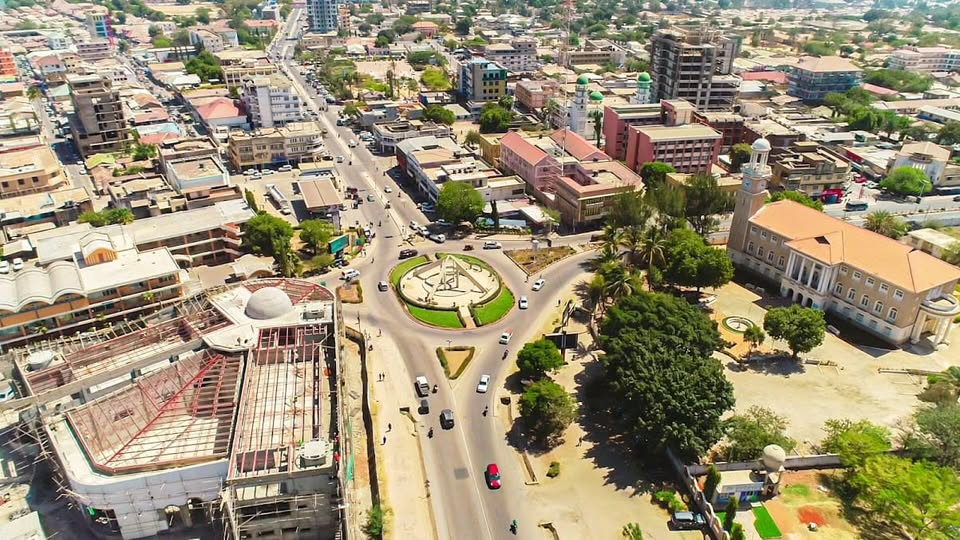
Dar es Salaam. Dodoma, Tanzania’s administrative capital, is rapidly transitioning into the country's most competitive commercial property frontier.
Fresh macroeconomic data reveals a market defined by surging rental premiums, absolute occupancy saturation, and a structural supply deficit that is fundamentally rewriting the risk-and-return calculus for East African real estate investors.
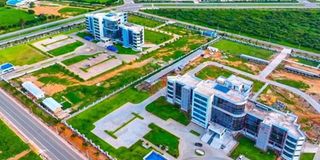
According to the Bank of Tanzania’s Financial Stability Report for December 2025, average office rental prices in Dodoma have ascended to between Sh30,000 and Sh35,000 per square metre.
This premium cements the capital as the most expensive office market in the United Republic, eclipsing the historic commercial hub of Dar es Salaam, where prime space commands a lower Sh25,000 to Sh30,000 per square metre.
The secondary regional nodes of Arusha and Mwanza trail further behind at Sh20,000 to Sh25,000, while Mbeya anchors the baseline at Sh10,000 per square metre.
This price inversion is accompanied by an acute compression of vacancy rates across Tanzania's primary urban centres.
While Dar es Salaam exhibits a mature, variable occupancy band fluctuating between 80 percent and 100 percent depending on localized micro-markets, Dodoma and Mbeya have hit statutory capacity, operating at near-total occupancy.
The central bank notes that ongoing capital expenditures on infrastructure, specifically road networks, port expansions, and aviation assets, have dramatically enhanced connectivity to these emerging commercial nodes, rendering commercial portfolios increasingly attractive to corporate occupiers.
For institutional funds, this synthesis of maximum occupancy and premium rental pricing marks a pivotal transition: Dodoma has evolved from a speculative government relocation site into a structurally sound, demand-driven commercial frontier.
For decades, Dar es Salaam enjoyed an unchallenged monopoly on premium real estate investment, sustained by an ecosystem of multinational corporations, diplomatic missions, and blue-chip firms such as telecoms and financial institutions.
Dodoma’s ascent does not cannibalize Dar es Salaam’s status as the financial engine of the state. It rather introduces an entirely separate asset class anchored in state administration and the private ancillary services that feed off public expenditure.
Managing Partner at Hello Africa Consults, Emmanuel Njavike, observes that while Dar es Salaam retains its multi-sectoral dominance, the demand structures across Tanzania’s urban economies are diversifying.
“Dar es Salaam remains Tanzania’s undisputed commercial hub, but demand structures across cities are evolving rapidly,” he notes.
While Dar es Salaam continues to host blue-chip firms and diplomatic missions, Mr Njavike observes that Dodoma is increasingly absorbing administrative and service-driven demand tied to government activity.
This transition has been heavily greased by large-scale infrastructure delivery, notably the Standard Gauge Railway (SGR), the expanded Dodoma Airport, and the sprawling Mtumba Government City precinct.
However, Mr Njavike says the capital still lacks the sophisticated secondary ecosystem found in Dar es Salaam, such as premium office clusters, lifestyle amenities, and advanced business infrastructure.
This exact deficit constitutes the primary alpha opportunity for forward-thinking developers.
“Dodoma is structurally still developing, but that is exactly why it presents strong investment potential in areas such as shopping malls, high-end hotels, serviced apartments, and conference facilities,” Mr Njavike argues.
This supply lag reflects a classic real estate phenomenon where physical infrastructure cannot keep pace with rapid demographic shifts.
Managing Director of Faammo Real Estate, Mr Fadhil Mkwachu, explains that real estate is fundamentally demand-driven, and in Dodoma, that demand has been accelerated by the movement of government functions and related economic activity.
“People move to where the green pastures are,” Mkwachu observes, pointing out that the concentration of civil servants, state contractors, and ancillary service providers has created an aggressive economic pull factor toward the capital.
Yet, the supply side of real estate remains notoriously inelastic in the short term. “Demand in real estate is highly inelastic in the short term. It rises quickly, but supply takes years to develop,” he explains.
Consequently, Dodoma finds itself caught in an acute supply squeeze.
The limited pool of available commercial stock faces intense competition from high-credit tenants, driving capital values upward despite the city's relatively nascent commercial footprint.
Property manager, Magreth Ngombale, concurs that current market conditions are being driven by this sustained high occupancy and lack of new inventory.
She explains that real estate development takes time, while demand in an administrative capital can rise unexpectedly due to policy decisions and institutional relocation.
This mismatch has resulted in persistent pressure on available office and commercial space, pushing occupancy rates to near full capacity.
Ms Ngombale draws a clear structural distinction between Tanzania’s two major urban economies, noting that their inherent differences shape the very nature of tenancy within each city.
Register to begin your journey to our premium contentSubscribe for full access to premium content