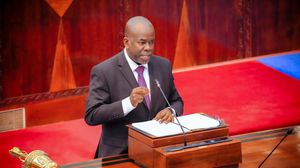
It’s been decades since some of these Tanzanians settled on the British Isles; a new generation born there has sprung up, and the once-young have since aged
“Tragically, there have been incidents where, when a Tanzanian dies here in the UK, the body lies in the mortuary for months, in the cold, with no relatives to come and collect it,” said Nuru Mwandoro, Secretary General for an association of Tanzanians living in the United Kingdom called Umoja Wetu.
The United Kingdom has been home to one of the largest numbers of Tanzanian diaspora in the world.
It’s been decades since some of these Tanzanians settled on the British Isles; a new generation born there has sprung up and the once-young have aged.
The world revolves, but one thing that remains is the need for these Tanzanians to unify as a community and there is no better time to show unity than during bereavement, something that other African and Asian communities of immigrants in the West have mastered so well.
Tanzanians in the UK have formed an association specifically to give an honourable and respectful funeral when one of their own dies.
Though this subject seems taboo in many African cultures, including Tanzania, it’s a reality of life that many people have come to realise the importance of setting conditions that will help their grieving family cope with their absence.
Formalised life insurance policies, wills and estate planning are a norm in the UK where these diasporans live, while in Tanzania, a funeral is approached as a communal event and families rely on a harambee-style of contribution, which is gradually changing.
“We had our second anniversary on the 11th of July in Coventry and Umoja Wetu is really a Tanzanian community association. We decided to pull together to help each other because we had been having problems pulling in resources when a Tanzanian person died,” said Nuru.
“So we consolidated our resources and we now raise £10,000 for each funeral, paying our members within seven days. We hope to recruit more members and reduce the waiting period further; this will be especially valuable for our Muslim members, who bury their loved ones sooner,” she mentioned.
“Whether they’re burying the person here or they’re repatriating the body back home to Tanzania. And so far, we’ve had about 13 burials. Successfully, we’ve raised £10,000 for each one of them. With 4,903 members, the second anniversary was about celebrating life, more importantly, a celebration of their unity.”
Patrick Mwakalobo, a senior official from Tanzanian embassy in the UK, was the guest of honour; people danced, dined, speeches were delivered and milestones were honoured.
In the backdrop of the gala, there are still underlying challenges the Tanzanian community faces.
Some members are still hesitant to join; there have been organisations in the past that have failed and they do not want to see the repetition.
Nuru understands this so well, hence their continual communication with the diaspora.
She recently had an interview with social media sensation Bongo Zozo, a UK man married to a Tanzanian lady.
The interview helped reach and educate more potential members.
During the second anniversary, more than 400 new members joined and inactive members reactivated their accounts.
Between 50,000 and 100,000 persons of Tanzanian origin are estimated to live in the UK and Nuru is determined to have Umoja Wetu reach out to as many of them as possible; it’s about dignity and unity.
Some of the members have become more than just friends; they have become family.
The bond among Tanzanians has grown, something they didn’t visualise as a possibility just two years ago.
Umoja Wetu has representation across 12 regions with departments dedicated to discipline and Ethics, verification and even a youth department, catering to a growing young diaspora population.
The young people, unlike their elders, are mostly UK-born; their connection to their motherland has to be constantly reinforced through oral and written education.
It remains key to increase their knowledge of home.
Online Kiswahili classes have also increased.
“We are also trying to organise some trips where they can all meet up together, know each other, because they’re living in different cities; it’s not easy to get to know each other. Next year, summer, we’ll have a football event where they can come in and merge” she explained.
Tanzanian corporations have taken note and some have even joined in to sponsor some of their events, counting on their burgeoning population as potential clientele.
NMB Bank, Nala, UTT and many other companies have engaged with the association.
Nuru said most of the diaspora yearn to have services that are rendered to Tanzanians back home available to them as well.
“People here want to have access to mobile money that fellow Tanzanians enjoy, because we have relatives back home; we also want to send money too,” she mentioned.
She hopes Mobile network operators in Tanzania would work with them.
She tried to reach out to some of them and she hopes they will respond.
For now, Umoja Wetu is essentially for bereavement support, but they envision expanding beyond that in the future, with business ventures in Tanzania and community development in their communities.
“First, we needed to establish ourselves, get to know each other and build trust. And a starting point,” she chimed in.
They are looking at buying community centres and more; all those plans are in the pipeline.
“Next meeting, we will take it to our members. We have to get their consent, because this is a community organisation,” she added.
For now, eligible members to join are UK residents only.
One has to have permanent residence in the UK and be actively living there.
The need for proof of residence is key to joining.
This doesn’t eliminate diaspora members who occasionally travel back home for personal or business visits.
Solidarity is the bedrock that keeps this association operating seamlessly; that also means avoiding tense subjects that might cause division, such as politics and religion.
“We have people with different political affiliations and religions; some members are from the Mainland and Zanzibar. We are all one family and we treat each other as such, so we prohibit topics that will cause tension; we aim to live as one family,” she explained.
“Since we started Umoja Wetu, I have personally gained more than 70 new relatives, friends who have become my relatives. They built relationships and came together as communities in times of need, when their fellow Tanzanian gets sick, injured, or require assistance.”
Nuru used to envy seeing how Nigerians, Kenyans and Ugandans work together as a tight-knit community, but now they have achieved that as Tanzanians.