The Ministry of Education, Science and Technology has unveiled plans to develop a national strategy to bring medical researchers and traditional medicine practitioners into closer scientific collaboration.
The aim is to transform centuries of indigenous knowledge into evidence-based healthcare solutions that can improve public health while creating new opportunities for scientific innovation and economic growth.
As the world continues to grapple with emerging and re-emerging infectious diseases, the search for new, affordable, and locally available treatments has taken on renewed urgency. For Tanzania, that challenge is prompting an ambitious rethink of how modern science and traditional medicine can work together.
In response, the Ministry of Education, Science, and Technology has unveiled plans to develop a national strategy that will bring medical researchers and traditional medicine practitioners into closer scientific collaboration. The goal is to transform centuries of indigenous knowledge into evidence-based healthcare solutions capable of improving public health while creating new opportunities for scientific innovation and economic growth.
The initiative, championed by the Minister for Education, Science and Technology, Prof Adolf Mkenda, represents more than a policy shift. It reflects a broader vision of positioning traditional medicine as a scientifically validated component of Tanzania's healthcare system rather than an alternative that exists outside mainstream medicine.
At the heart of this vision is Prof Mkenda's belief that science should serve as the bridge between traditional knowledge and modern biomedicine.
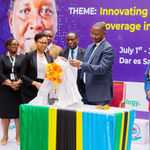
Speaking at the 14th Scientific Conference of the Muhimbili University of Health and Allied Sciences (MUHAS), Prof Mkenda challenged researchers to move beyond dismissing herbal remedies and instead explore what he described as the "frontier of scientific knowledge."
"We have so many cases where people say, 'I used this herb, and I got better.' Science exists for a good reason," he said, arguing that whenever credible anecdotal evidence emerges, it is the responsibility of researchers to determine whether those claims can be validated through rigorous scientific investigation.
His vision is straightforward: Tanzania should neither accept nor dismiss traditional medicine on faith alone. Instead, herbal remedies should undergo chemical analysis, laboratory testing, and clinical trials to establish their safety, efficacy, and appropriate dosage.
Such an approach would help standardise what is currently a fragmented system, giving Tanzanians greater confidence that traditional remedies meet the same scientific standards of quality, safety and effectiveness expected of conventional medicines.
Tanzania's ambitions also reflect a broader international trend. Countries including Thailand and Indonesia have increasingly invested in scientific research to modernise traditional medicine, with Indonesia's Jamu system serving as one of the most prominent examples of how indigenous remedies can be integrated into national healthcare and commercialised through evidence-based research.
These nations have used modern technology to transform cultural heritage into mainstream healthcare.
By applying Structure-Based Drug Design and computational techniques, researchers can now identify how herbal compounds interact with specific medical target proteins.
Prof Mkenda’s plan to convene a national workshop involving universities, hospitals, traditional practitioners, and legal experts aims to replicate this rigour.
A critical component of this plan is the inclusion of legal experts to safeguard the intellectual property of traditional healers.
This addresses a long-standing barrier where practitioners kept their knowledge secret for fear of losing their "power" or facing exploitation.
By protecting their innovations through patents and formal frameworks, the government intends to foster a collaborative environment where traditional knowledge can be safely shared and scaled.
Tanzania as a global medicine hub
The implications for Tanzania’s status as a regional medical hub are profound. Currently, up to 80 percent of the population in some African countries relies on traditional medicine for primary healthcare.
By scientifically validating these local resources, Tanzania can reduce its heavy dependence on expensive imported drugs.
The World Health Organisation (WHO) has noted that traditional medicine could be a pathway for countries to become more self-reliant.
If Tanzania can successfully transform its indigenous plants into approved, standardised phytomedicines, it stands to benefit from a burgeoning trillion-dollar global wellness industry.
The Science Director at the Ifakara Health Institute (IHI), Dr Ally Olotu, has confirmed the institute's readiness to pivot its world-class clinical trial infrastructure toward domestic herbal resources.
"It has reached a time to direct our efforts into research on medicines derived from Tanzania’s own resources," Dr Olotu stated, highlighting a shift from merely testing foreign-made drugs to innovating home-grown solutions.
The ministry's plan is grounded in the harsh lessons of the Covid-19 pandemic. When conventional antivirals were scarce, the world saw a surge in the use of traditional remedies, often without scientific backing.
In Nigeria, multidisciplinary "health outcomes teams" comprising clinicians, pharmacologists, and biostatisticians worked under the oversight of NAFDAC to evaluate indigenous remedies like the IHP Detox Tea.
This Nigerian case study provides a benchmark for Tanzania. The IHP Detox Tea, which contains Garcinia kola (bitter kola), was subjected to pilot randomised controlled trials.
Mechanistic studies revealed that Garcinia kola could significantly reduce pro-inflammatory cytokines, providing a biological explanation for its ability to blunt the "cytokine storm" associated with severe Covid-19.
Tanzania aims to adopt this "bench-to-bedside" approach. By understanding the molecular pathways of local herbs, Tanzanian researchers can provide the biological plausibility required for global scientific acceptance.
This level of evidence is essential; as WHO officials have stressed, even centuries-old practices must be established through clinical trials before being recommended broadly.
Technological interventions
Modern technology is finally providing the tools to validate what was once dismissed as unscientific.
Lead of the WHO Global Traditional Medicine Centre, Dr Shyama Kuruvilla, notes that technologies like genomics, artificial intelligence, and functional magnetic resonance imaging (fMRI) are changing the game.
For instance, “fMRI can now trace the specific brain pathways affected by meditation, transforming it from 'woo-woo stuff' into a validated neuroscience-based intervention.”
In Tanzania, the launch of Next Generation Sequencing at MUHAS is a prime example of this technological leap. These tools will allow researchers to authenticate plant identities through DNA barcoding, preventing the use of adulterated materials and ensuring the safety of herbal products.
Furthermore, nanotechnology offers the potential to enhance the bioavailability of local phytochemicals, ensuring they are absorbed effectively by the body, a common hurdle for natural compounds.
The ultimate goal of linking researchers with traditional medicine is to accelerate Tanzania’s journey towards Universal Health Coverage.
In rural communities where herbal medicine is often the first point of care, integrating validated remedies into primary health centres can strengthen the entire healthcare system.
“This is not merely about treating minor ailments. Scientific validation is currently being applied to traditional plants for neurological disorders like Alzheimer’s and Parkinson’s, where modern synthetic drugs often fall short,” said an expert, Dr Maurine Kija.
By targeting multiple pathogenic pathways simultaneously, such as oxidative stress and neuroinflammation, plant-derived compounds offer a "multi-targeted" approach that single-target synthetic drugs cannot match.
For Tanzania, this initiative also addresses the rising burden of non-communicable diseases and antimicrobial resistance.
For example, IHI is already using research to monitor malaria drug resistance, and the same rigour can be applied to finding new antimalarial compounds within the local flora.
A new era of scientific respect
The education ministry's plan signals a new era of "respectful co-existence" between two different but potentially harmonious systems of medicine.
By allowing science to determine where the two meet, Tanzania is not just preserving its cultural heritage; it is weaponising it against the disease burdens of the 21st century.
As Prof Mkenda aptly summarised, Tanzanian scientists are capable of making discoveries that could benefit the entire world.
"We can develop solutions from our own traditional knowledge if we apply science," he asserted.
If this strategy is implemented with the promised transparency, legal protection, and technological rigour, Tanzania may soon find itself at the heart of a new, evidence-based African medical revolution.