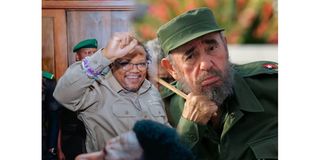
Before three judges and 100-armed soldiers, the room fell quiet as Fidel Castro defended himself in Case No. 37 of 1953, concerning the attack and bombing of a military barracks.
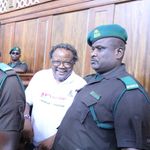
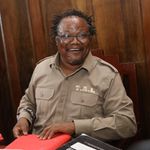
Currently, the Chadema National Chairman, Mr Tundu Lissu, is presenting his defence in treason Case No. 19605/2025 before a three-judge panel of the High Court, led by Judge Dunstan Ndunguru, alongside Judges James Karayemaha and Ferdinand Kiwonde.
A review of the proceedings, specifically Mr Lissu’s choice to represent himself as counsel and use the courtroom to deliver addresses, reveals a striking resemblance to events in Cuba in 1953, when Castro commanded the Palacio de Justicia for nearly four hours.
Mr Castro, a disciple of Cuban independence hero José Martí, embraced the philosophies of global communist icons Karl Marx and Vladimir Lenin.
Courageous and devoted to his country, he neither feared nor wavered in standing up for his beliefs.
On October 16, 1953, Mr Castro’s courtroom defence transformed into a historic address.
It was a 240-minute (four-hour) speech entitled History Will Absolve Me. Although it did not spare Mr Castro a 15-year prison sentence, he served only two years due to a presidential pardon.
Delivering that address as a 27-year-old, Mr Castro declared Cuba's then-President, Mr Fulgencio Batista, a traitor and a puppet of the United States.
Following Marxist-Leninist principles, Mr Castro stood opposed to the capitalist United States and detested Batista.
After being convicted of leading 137 youths to attack Cuba’s second-largest military facility, the Moncada Barracks, Mr Castro was imprisoned at Presidio Modelo.
Beyond that conviction, the attack sparked the revolutionary movement that eventually ousted Mr Batista on January 3, 1959.
Mr Batista served as Cuba’s elected President from October 10, 1940, until October 10, 1944, when he constitutionally left office, initially backed by the Communist Party.
On March 10, 1952, as the nation prepared for elections, Mr Batista returned and ousted the sitting President, Mr Carlos Prío Socarrás.
Mr Batista went further, cancelling scheduled elections. Mr Castro was enraged as Mr Batista transformed Cuba into a capitalist state, supported by US military backing to crush communist influence.
When Mr Castro eventually overthrew Mr Batista, it became the primary trigger for American hostility towards him.
Enmity deepened when Mr Castro declared all economic assets state-owned, aligned with left-wing communist ideology.
The primary parallel between Mr Castro and Mr Lissu lies in how both deployed their legal education and mastery in self-defence.
Both are lawyers by profession. Mr Castro had 137 co-defendants and requested that all defence counsel represent the others while he represented himself.
Furthermore, Mr Castro’s trial was held in a separate chamber, whereas his co-defendants were tried together.
By choosing self-representation, Mr Castro gained extended periods to deliver addresses; had he retained counsel, his testimony would have been extracted through standard questioning.
Self-representation offers latitude to address matters beyond the narrow scope of a case.
Similarly, Mr Lissu is representing himself, having dismissed his initial legal team.
His style of argument occasionally prompts judges to remind him to stick to relevant facts.
On August 21, 2026, Mr Lissu was found with a case to answer, moving the trial to the defence stage.
His decision to represent himself leaves him alone in the courtroom against a prosecution team before three judges, mirroring Mr Castro against the Cuban state prosecutor before a three-judge panel.
Mr Castro used the courtroom to articulate his vision regarding Mr Batista’s regime, arguing that Mr Batista’s alliance with the United States contradicted Mr José Martí’s vision.
Similarly, self-representation enables Mr Lissu to recount narratives outside the formal charge sheet.
For instance, discussions regarding political reconciliation, or his self-imposed exile alongside fellow politicians Godbless Lema and Ezekiah Wenje during Dr John Magufuli’s administration, are not contained in the formal charges, yet provide him a platform to address the public.
These strategies produce similar outcomes. Whether Mr Lissu is adopting Mr Castro’s tactic intentionally or arriving at it independently, proceedings at the High Court’s Dar es Salaam registry mirror what transpired at the Palacio de Justicia: two accomplished lawyers-turned-politicians utilising criminal proceedings as an opportunity for political expression.
Witnessing Mr Lissu navigate his trial brings to mind Mr Castro and his enduring address: History Will Absolve Me.
Register to begin your journey to our premium contentSubscribe for full access to premium content