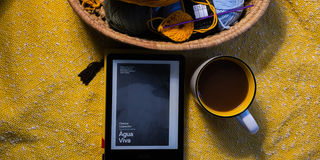
‘Água Viva’ by Clarice Lispector: What it means to be alive

What you need to know:

  • The narrator thinks about God. About art. About what it means to be unapologetically human, with fear, doubt, hope and courage. It is a book about nature as a phenomenon and the nature of being human.

I am an overthinker who also enjoys living in the moment. This is especially evident in my love for nature. To experience nature, you have to be fully present. Not a second later. You can only notice how tree branches dance to the tune of the wind as it happens, never otherwise.

In Água Viva, the narrator calls this the instant. The now, if you will. The narrator opens up her consciousness, sharing her thoughts and life as she experiences it. Throughout the book, we are invited into the narrator's life and her inner thoughts. She speaks of death. Joy. Good. Evil. God. And the interconnectedness of living things.

As I said, this book requires you to read it while fully present because Lispector's writing demands that. The funny thing is that, in most cases, this is how I write. I observe and write life as it happens. And I find that this kind of writing forces you to hold on to an instant before it disappears.

There are times when I feel as though I am not living to my potential, and this happens quite a lot, as I imagine it does for many dreamers like me. The narrator wonders how she can feel so alive and still feel that she hasn't reached her limits yet, that she is not doing all that there is to do. And it made me wonder: how does one know they have reached the limit of their potential? Is it when one has achieved all that they dream of? But life doesn't give one everything they want. I guess that's how life makes living fun?

But I love what she says to herself, almost in the same breath: “But I take risks. I live taking risks.” There is no other way to live this life except by taking risks day in, day out. Because you can only realise your potential by taking action, and action requires risk.

At one point, her thoughts lead her to question who she is at her core. Her train of thought in this aspect comforted me because it put my experience into words so much better than I could have myself.

“But what am I? The answer is just: what I am. Though I sometimes scream: I no longer want to be I. But I stick to myself and inexorably there forms a tessitura of life.”

This is exactly what it means to be human: asking yourself who you are time and again.

Life is fleeting by the second. It waits for no one. As you keep living, death is approaching and just waiting for your time to come so he can claim you for himself without a second thought about how it will turn the lives of your loved ones upside down when he takes you with him.

The narrator introduces death to us as she thinks about how alive she feels. “I am really alive; I am leaving – says death, without adding that he's taking me along. Death takes place in my very being – how can I explain to you?”

The question of freedom has been on my mind a lot recently, and I wrote about it while reflecting on Epictetus' Of Human Freedom. The narrator in Água Viva also grapples with it as she pours herself onto the page and on the canvas as she paints.

She asks: “Am I free? There is something still holding me. Or am I holding it? It is also this: I'm not entirely unbound because I am in union with everything.”

This resonated deeply because I am realising that I might never be fully free for as long as I am human. Something will always have a hold of me, and I a hold of it.

You will care about something, and when you do, you will never be free.

Água Viva is a book that requires you to be in the instant. To read it with your full heart to appreciate it. Because at the heart of it are the mundane thoughts that are also profoundly necessary for life to make sense. The narrator thinks about God. About art. About what it means to be unapologetically human, with fear, doubt, hope and courage. It is a book about nature as a phenomenon and the nature of human beings.

As you finish reading this review, pay attention to your thoughts and what is happening around you in this instant. Because this instant won't be there a second later; once the wind settles, so do the tree branches.

Jane Shussa is a digital communication specialist with a love for books, coffee, nature, and travel. She can be reached at [email protected]