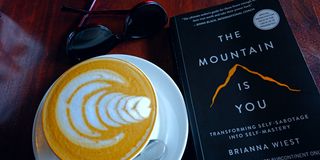
The Mountain Is You is written as a series of short reflections. Wiest revisits the same themes repeatedly, approaching them from different emotional angles and experiences. It makes the book easy to read, but it needs patience from the reader.
The repetition is noticeable, but it reflects the book’s central argument: unresolved patterns do not disappear simply because they have been named once.
Do you practice self-care? What is self-care to you? How does it look, and what purpose does it serve? For me, self-care is showing up for myself, even when it doesn't feel good. It is keeping the promises I make to myself.
For Brianna Wiest, in The Mountain Is You, self-care is the most fundamental way to meet your needs. Meeting your innermost, actual needs, she argues, is also the antidote to the self-sabotaging tendencies that hold you back from living the life you want.
According to Wiest, self-sabotage occurs when we refuse to consciously meet those needs, often because we do not believe we are capable of handling them. There are moments in life when you feel so happy that you begin to wonder what is wrong with you to feel that way. That suspicion comes from a belief that you cannot sustain happiness unless some unseen tragedy follows it.
So you begin to search for problems in your own mind, trying to predict the disaster your thoughts have convinced you is coming. This is how self-sabotage begins to take shape. “Sometimes, our most sabotaging behaviours are really a result of long-held and unexamined fears we have about the world and ourselves,” she writes.
The Mountain Is You is written as a series of short reflections. Wiest revisits the same themes repeatedly, approaching them from different emotional angles and experiences. It makes the book easy to read, but it needs patience from the reader. The repetition is noticeable, but it reflects the book’s central argument: unresolved patterns do not disappear simply because they have been named once.
Wiest explains how self-sabotage shows up in everyday life. It appears in our behaviours, in the emotions we work hard to suppress, and in how we resist specific changes. These responses are often shaped by deeply held beliefs formed early in life, where upbringing begins to matter.
She gives the example of money. If you grow up in a family that believes people with cash are terrible, you may move through life avoiding wealth altogether. You may resist opportunities that could bring financial stability because you fear being seen as a horrible person yourself. Having internalised that belief, you do everything you can to keep money at a distance.
“Your anxiety around the issue you are self-sabotaging is usually a reflection of your limiting beliefs,” she writes. To reconcile with such behaviour, Wiest suggests feeding the mind new information. Having money does not inherently make someone a bad person, any more than lacking it makes someone virtuous.
Central to the book is the idea that triggers are not setbacks. They are guides that reveal where self-sabotage is operating. Each so-called negative emotion carries information that can free you rather than keep you stuck. Anger, sadness, jealousy, embarrassment, guilt, and resentment all play a role. You do not need to get rid of these emotions. You need to listen to them.
Anger, for example, is described as a transformative emotion. It points to what you care about, where your boundaries lie, and what you find unfair. Anger helps you recognise how much disrespect you are willing to tolerate or how long you can remain in unhealthy situations. It mobilises you to take action and change your circumstances.
For many people, trauma leads to overcompensation. We work harder, achieve more, and strive to be “good enough” to avoid reliving the same pain. Wiest challenges this response. Healing, she suggests, requires restoring a sense of safety in the exact area of life where the trauma occurred.
“If we are traumatised by a relationship, we restore the feeling of safety by building other healthy, safe relationships,” she writes. “If we are traumatised by money, we restore the feeling of safety by ensuring we have enough and by saving for emergency expenses.”
This is not a book for readers seeking quick solutions. Its value lies in sustained self-observation and emotional honesty. Readers looking for immediate breakthroughs may feel frustrated and will find it repetitive, but those open to gradual internal shifts may find it helpful.
Developing emotional intelligence, Wiest suggests, is central to self-mastery. It begins with understanding your emotions and changing behaviours one day at a time. Small, consistent actions such as reading a page or writing a paragraph help rewire habitual responses. The discomfort that comes with change is often the reason the mind resists it.
The Mountain Is You may feel repetitive at times, but repetition is part of its method. The book encourages readers to understand their inner needs and emotional patterns, while reminding them that not every feeling reflects the whole reality of their lives. Often, a feeling is just that: a moment. And moments pass.
Jane Shussa is a digital communication specialist with a love for books, coffee, nature, and travel. She can be reached at [email protected].