When silence hides struggle: The unseen crisis shaping inclusive education in Tanzania

What you need to know:

  • Across the country, children with hearing impairments, learning disabilities, autism spectrum conditions, speech delays, vision challenges or behavioural difficulties often pass through early schooling unnoticed.
  • Without timely assessment, many are labelled “slow learners,” disciplined unfairly, or eventually drop out altogether.

For many children in Tanzania, the classroom is far from a place of equal opportunity. Instead, it is often a space where undetected learning, developmental or sensory challenges quietly shape their educational outcomes.

Long before examinations begin, thousands of pupils are already at risk of exclusion simply because their needs were never identified.
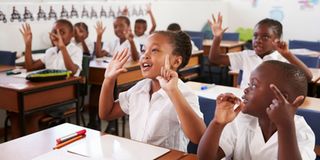
Across the country, children with hearing impairments, learning disabilities, autism spectrum conditions, speech delays, vision challenges or behavioural difficulties often pass through early schooling unnoticed.

Without timely assessment, many are labelled “slow learners,” disciplined unfairly, or eventually drop out altogether.

As Tanzania advances its inclusive education agenda, experts say the biggest barrier is no longer policy design, but early detection capacitywhat one education specialist calls “the missing first step in inclusion.”

In Mbeya Region, 34-year-old Amina Juma has lived this reality for years. Her eight-year-old son, whom she describes as “bright but silent in class,” stopped progressing in school shortly after enrolment. Teachers complained he was unable to follow instructions or communicate clearly.

At home, however, Amina noticed something different; her son responded to gestures, showed strong memory for visual patterns, and could complete tasks when shown rather than told.

“But every time I took him to school, they said maybe he is just stubborn or not ready for learning,” she says quietly. “I kept him at home because I didn’t know what was wrong. I feared taking him back would only bring more pain.”

Like many parents, Amina had no access to early diagnostic services that could have identified her child’s condition earlier and guided both schooling and care. Her story reflects a wider national challenge: many children with hidden disabilities remain unidentified until it is too late for timely intervention.

A system still catching up

Tanzania introduced guidelines in 2022 for the establishment of Early Screening, Recognition, Assessment and Care Centres (ESRACs) at council level. The goal was to decentralise diagnostic services and ensure early intervention before children fall behind academically.

However, implementation has been slow. According to figures shared during the recent National Campaign to Promote ESRACs held in Mbeya region, only 36 out of 184 councils have established functioning centres. Many of those that exist face shortages of trained personnel, diagnostic tools, and infrastructure.

Education stakeholders warn that this gap is leaving thousands of children without support.

“Early identification is the foundation of inclusive education. Without it, inclusion becomes theoretical,” says an education researcher familiar with special needs education systems in East Africa, Dr Ayub Timbe.

He adds that delays in diagnosis often result in long-term educational exclusion, reduced employment opportunities later in life, and increased social stigma.

From policy to practice: the Mbeya model

At Mwenge Primary School in Mbeya, a functioning ESRAC centre is offering a glimpse of what implementation can look like. The centre provides screening, assessment and referral services for children with diverse learning and developmental needs.

Between January and April this year alone, it reportedly assessed 190 childrenan indication of both rising demand and growing awareness among parents and teachers. The school also supports 115 learners with special needs through tailored learning support, including visual, hearing and cognitive assistance.

According to ESRAC Centre Head, Aida Mwakalukwa, early intervention remains the most critical factor.

“Many children face developmental and learning challenges that are not noticed early enough. By the time they are identified, they are already behind,” she explains.

“ESRACs ensure early identification so that children can receive timely support, referrals and care.” She adds that collaboration between parents, teachers, health professionals and local authorities is essential for success.

The launch of the National Campaign on ESRAC strengthening in Mbeya has brought together education advocates, government officials and civil society organisations, including HakiElimu (who leads the campaign) and a local NGO, Child Support Tanzania.

These organisations’ involvement reflects a growing multi-stakeholder push to bridge the implementation gap.

HakiElimu Executive Director, Mary Ndaro, said the challenge is no longer awareness but execution.

“We are talking about children whose learning needs go undetected for years. Nearly five years after the guidelines, only 36 councils have functional centres. This is a systems issue that requires coordinated action, not isolated efforts.”

She emphasised that inclusive education policies already exist under Tanzania’s education frameworks, including the Education and Training Policy (2014, revised edition) and Vision 2050, but implementation remains uneven.

“This is why we decided to put our efforts here. We believe through this national campaign, we together will be able to mobilise the establishment of more ESRACs to ensure no child is left behind when it comes to access to quality education,” Ndaro stressed.

Experts warn of long-term consequences

Education and disability experts argue that failure to scale early screening systems could undermine Tanzania’s inclusive education ambitions.

A Dar es Salaam-based child development specialist, Maryline Kombe, says early identification is not just an education issue, but a public health and economic one.

“When children are not assessed early, they miss critical intervention windows. Some conditions can be improved significantly with early therapy or teaching adjustments,” she explains. “Without that, the system pushes them into exclusion.”

A health systems expert, Juma Tabu, says Tanzania risks perpetuating inequality if diagnostic services remain urban-centred.

“Councils without ESRACs are effectively operating blind when it comes to special needs education. That creates a structural gap in equity,” he says.

For Amina in Mbeya, awareness of ESRAC services has given her renewed hope. She recently learnt about assessment services available at Mwenge Primary School and is considering taking her son for evaluation.

“If I had known earlier, maybe things would be different,” she says. “But now I just want him to get help so he can go back to school like other children.”

Her experience underscores what experts say is the most urgent need: not just building centres, but ensuring communities know they exist and how to access them.

The initiative will also advocate for the expansion and strengthening of ESRACs, which provide specialised assessment and support services for children with developmental and learning challenges.

Towards truly inclusive education

As Tanzania works to strengthen inclusive education, stakeholders agree that early screening is the gateway to meaningful inclusion.

Without it, children with invisible disabilities will continue to slip through the cracks—misunderstood, mislabelled and left behind.

With it, experts believe the country can begin to transform classrooms into genuinely inclusive spaces where every child, regardless of ability, has a fair chance to learn and succeed.

The challenge now, they say, is not policy design, but scaling what already works, reaching families like Amina’s, and ensuring that no child is left unseen.