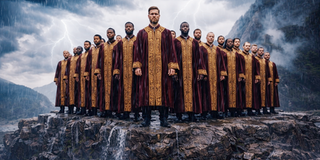
While IT opens new doors for experimentation, it also brings challenges around originality, royalties and the human connection that makes music meaningful
Anyone can sound like Diamond Platnumz, Alikiba, Harmonize or Nandy today, not because talent no longer matters, but because artificial intelligence has fundamentally altered who can create, reimagine and distribute music at scale.
With a laptop, carefully written prompts and the right AI tools, creators are now producing sounds that once required major studios, global record labels and years of industry access.
Some of the most viral songs circulating online today are either fully generated by AI or heavily shaped by it.
Familiar hits are resurfacing in unexpected forms: hip-hop anthems reborn as orchestral scores, pop classics transformed into jazz arrangements, and club records reimagined as cinematic film soundtracks.
The result is a listening culture where the line between original works, remixes and machine-made music is increasingly blurred.
For decades, superstardom followed a familiar formula: discovery, studio investment, radio play and touring. That pathway still exists, but it is no longer the only route.
Generative AI models analyse vast libraries of existing music, learning patterns of melody, rhythm, harmony and vocal texture. With minimal input, these systems can now generate full songs or reinterpret existing tracks across entirely new genres.
Tanzanian producer Jay Drama says the change has been immediate and far-reaching.
“Artificial intelligence has changed music creation completely,” he says. “Today, an idea can move from concept to finished sound without the traditional limits of studios, budgets or geography.”
He adds that AI has removed many technical barriers from the creative process.
“What matters now is imagination. If you can think of it, you can create it.”
This does not eliminate the artiste; it reshapes the process. AI has become a creative amplifier, enabling experimentation across styles and eras.
One of AI’s most visible impacts is its treatment of iconic songs. Tracks that defined entire eras are now being algorithmically reshaped, often going viral precisely because they sound both familiar and foreign.
Take In Da Club by 50 Cent. Originally built for hip-hop club culture, the song has appeared online in AI-generated versions recast as cinematic orchestral pieces, sometimes jazz, blues or even Afrobeat-inspired.
The hook remains instantly recognizable, but the emotional register shifts completely.
Similarly, Mirrors by Justin Timberlake has been transformed into gospel, jazz and ambient interpretations, its reflective themes lending themselves naturally to choir-backed arrangements.
Lose Yourself by Eminem, meanwhile, has been stripped of raw aggression and rebuilt as sweeping soundtrack-style compositions.
Even early-2000s staples such as Thong Song, Candy Shop and Get Low now circulate online as jazz lounge pieces, choral arrangements or minimalist piano scores.
AI allows creators to extract the melodic DNA of a song and transplant it into an entirely different musical body.
When genre becomes fluid
Traditionally, genres were shaped by culture, geography and lived experience.
Hip-hop emerged from specific urban realities. Jazz grew from African American history and improvisation. Pop reflected mass appeal and commercial structures.
AI does not understand those histories. It understands patterns.
“As a result, genres are no longer fixed,” says Jay Drama. “With AI, a hip-hop song can easily become jazz, choral, orchestral or cinematic. Music is no longer locked into one identity.”
He adds that producers can now explore multiple versions of the same idea before committing. “You can hear one idea across five genres and then choose what best communicates the emotion.”
For artistes, AI presents both opportunity and risk. While it offers new tools and faster workflows, it also raises difficult questions around ownership, originality and compensation.
Artist manager Bob Abel warns that the industry’s systems are struggling to keep pace.
“The industry is moving very fast because of AI, but systems around copyright, ownership and regulation are still slow,” he says. “That gap will create serious challenges if it is not addressed.”
He notes that tracking royalties has become increasingly difficult.
“A song can be reworked into several versions, spread across dozens of playlists, and the original creator may never see a meaningful return,” he shares
Bob further adds that When a playlist with millions of followers pushes a reimagined version, the original recording loses visibility and with it, royalties.
“The algorithm doesn’t care who created the song first. It only cares about engagement,” he adds.
What machines can’t replace
For working musicians, the debate is deeply personal. Tanzanian bassist Bon Mkanyia says AI can imitate sound but not experience.
“Some musicians are scared of AI, and I understand why,” he says. “When you hear a machine play something close to your sound, it makes you question your place.”
“But AI doesn’t have a story,” he adds. “It doesn’t have years of mistakes, gigs or live moments. When the crowd reacts, you react back. That feedback loop is human, not digital.”
Music educator and drummer Jafary Bandukine echoes that concern from a teaching perspective.
“AI is giving artistes many ideas, but ideas are not the same as skill,” he says. “If young musicians rely only on AI, they may miss the foundation that makes music meaningful.”
He believes live performance will always need human musicians. “On stage, you respond to dancers, singers and the audience. Technology should assist creativity, not replace thinking.”
Africa at the centre
As sounds from Tanzania, Nigeria and South Africa continue to influence global charts, AI increasingly interacts with African rhythms, melodies and languages.
That creates new opportunities but also risks of cultural extraction without credit.
Encouragingly, more African musicians and producers are beginning to engage AI deliberately, using it to expand creativity rather than replace it.
Artiste Manager Jayzow believes the distinction is crucial.
“I see AI as a tool that is changing how music is made, but not what makes music meaningful,” he says. “At its core, music is still about human emotion, real-life experiences and storytelling.”
“AI works best as a creative partner,” he adds. “It can inspire ideas and speed up the process, but the artist must remain the soul of the music.”
When anyone can generate a song that sounds like Diamond Platnumz, Alikiba, Jux or Marioo, the definition of artistry shifts.
Star power alone is no longer enough. Identity, storytelling and authenticity matter more than ever.
AI is not ending music. It is multiplying it, reshaping classics, blending genres and changing how audiences listen.
The challenge ahead is not whether AI belongs in music, but how responsibly it is used.