Congo's confirmed Ebola cases surpass 3,000 as death toll rises
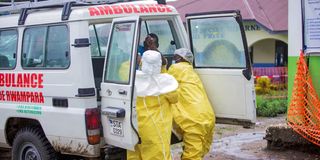
Congolese health workers receive a patient at the Rwampara General Hospital as authorities intensify efforts to contain a new Ebola outbreak involving the Bundibugyo strain outbreak in Rwampara outside Bunia, Ituri province, Democratic Republic of Congo, May 21, 2026. PHOTO | REUTERS
Kinshasa. The Democratic Republic of Congo has recorded more than 3,000 confirmed Ebola cases as the country's worst outbreak of the disease continues to spread, according to the latest government figures.
Official data released on Saturday showed that confirmed infections have reached 3,075, while the death toll has risen to 1,354.
The latest figures come just a day after health authorities revised case numbers following a review of surveillance data in the worst-affected eastern provinces, adding more than 300 previously uncounted infections.
The outbreak, Congo's 17th and the largest involving the rare Bundibugyo strain of the Ebola virus, was officially declared in May, although experts believe transmission began several weeks earlier. Unlike the more common Zaire strain, there is currently no approved vaccine or treatment specifically for the Bundibugyo variant.
The epidemic has been concentrated in the eastern provinces of Ituri, North Kivu and South Kivu, where insecurity, population displacement and weak health systems have complicated efforts to contain the virus.
Health workers have warned that armed conflict, attacks on medical facilities and community mistrust are hampering contact tracing and treatment, allowing the virus to spread more rapidly. The World Health Organization (WHO) has previously said the actual number of infections could be significantly higher than official figures because many cases are going undetected.
The outbreak response has also been disrupted by industrial action. On Saturday, doctors, nurses and other staff at the Elikya Ebola Treatment Centre in Bunia went on strike over unpaid performance bonuses, temporarily affecting patient care in one of the hardest-hit areas. Congolese authorities said they were working to resolve the payment dispute.
According to health officials, 540 patients have recovered, while 766 remain hospitalised.
Despite the rapid rise in cases, the WHO has maintained that the risk of international spread remains low because Ebola is transmitted through direct contact with the bodily fluids of an infected person rather than through the air.
Researchers have begun clinical trials of two experimental treatments in Ituri province, offering hope that more effective therapies could become available as authorities intensify efforts to contain the outbreak.