DR Congo begins Ebola vaccinations as outbreak death toll nears 2,800

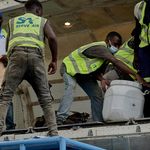
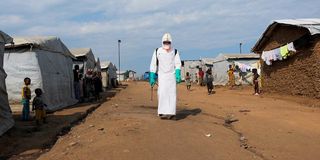
Displaced people watch a health worker in full personal protective equipment (PPE) preparing to disinfect the area during the burial of suspected Ebola victims at the Kigonze displaced persons camp in Bunia, eastern Democratic Republic of Congo, on June 18, 2026, one month after the outbreak was declared. PHOTO | REUTERS
Kinshasa. The Democratic Republic of Congo (DRC) has begun vaccinating frontline health workers against Ebola as authorities step up efforts to contain the country’s largest and deadliest Ebola outbreak on record.

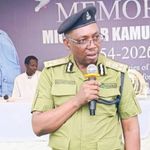
Health Minister Samuel-Roger Kamba said more than 50,000 doses of the Ervebo vaccine had been received, with health workers and other frontline personnel among those being prioritised.

The vaccination campaign was launched on Thursday in Kisangani, the capital of Tshopo province, one of six provinces affected by the outbreak. Mr Kamba said the campaign would initially focus on provinces surrounding Ituri, where the outbreak was first detected and remains most concentrated, before expanding to other affected areas.

“We have decided to use the Ervebo vaccine to protect first those who are on the frontline,” Mr Kamba said, adding that people who had been in contact with Ebola patients would also be targeted.

However, Ervebo is licensed for Ebola virus disease caused by the Zaire species, not the Bundibugyo virus responsible for the current outbreak. There is currently no licensed vaccine or specific treatment for Bundibugyo virus disease.

The World Health Organisation (WHO) and Africa Centres for Disease Control and Prevention have allocated 70,000 Ervebo doses to the DRC. Of these, 50,000 are intended for frontline and health workers, while 20,000 will be used in a Phase 3 clinical trial to determine whether the vaccine provides protection against Bundibugyo.

WHO says early laboratory and animal studies indicate Ervebo could potentially provide some cross-protection, but there is currently insufficient evidence to determine whether it works against Bundibugyo in humans. The organisation therefore recommends that its use against the virus be evaluated through controlled research rather than routine vaccination.

Several vaccines specifically targeting Bundibugyo are also under development, including candidates being developed by the University of Oxford and the International AIDS Vaccine Initiative (IAVI), according to Reuters.

The outbreak was declared on May 15 after Bundibugyo virus was detected in Ituri province. The latest government figures show that 5,794 confirmed cases and 2,786 deaths have been recorded, making it the second-deadliest Ebola epidemic globally after the 2014–16 West Africa outbreak.

The epidemic has now spread to 60 health zones across six provinces, with authorities warning that transmission is continuing to outpace efforts to track and contain the virus.

WHO has classified the outbreak as a public health emergency of international concern, citing its severity and potential for international spread.

For the DRC, the immediate challenge is to protect health workers and other people at highest risk while generating evidence on whether Ervebo can offer meaningful protection against a virus for which the world still has no approved vaccine.