Museveni’s son tightens grip on Uganda’s political future
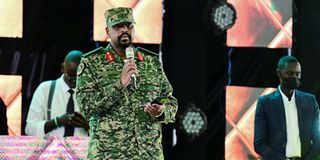
General Muhoozi Kainerugaba, the son of Uganda's President Yoweri Museveni, who leads the Ugandan army's land forces, speaks during a past event. PHOTO | REUTERS
Kampala. As Uganda’s 81-year-old President Yoweri Museveni begins his seventh term in office, his son and army chief, General Muhoozi Kainerugaba, is increasingly seen as the frontrunner to succeed him after consolidating his influence within the security forces and sidelining critics.
Known for his outspoken social media posts, Gen Kainerugaba is said by sources familiar with the matter to have played a key role in securing his father’s recent election victory, including directing a crackdown on opposition supporters and ordering an internet shutdown during the polls.
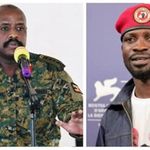
The army chief has repeatedly issued threats against opposition leader Robert Kyagulanyi, popularly known as Bobi Wine, who rejected the election outcome, citing irregularities, and has since gone into hiding.
In social media posts last week, Gen Kainerugaba claimed that 30 supporters of the opposition National Unity Platform (NUP) had been killed and about 2,000 arrested. The opposition has not independently confirmed the figures, while government officials have declined to comment.
Security forces disrupted several opposition rallies ahead of the vote, detaining supporters and in some cases firing live ammunition, according to rights groups.
Political commentator Andrew Mwenda, a close ally of Gen Kainerugaba, told Reuters that the army chief was instrumental in organising the four-day internet blackout, saying it was intended to prevent sabotage.
“He is effectively the number one security authority in this country,” Mr Mwenda said.
Attempts to reach Gen Kainerugaba for comment were unsuccessful. Government and military spokespersons also declined to respond to questions regarding the crackdown and succession plans.
Presidential ambitions
Gen Kainerugaba, who trained at Britain’s Sandhurst military academy, publicly declared his presidential ambitions in 2023, saying he was tired of waiting for power.
Since then, he has reportedly retired rival officers, increased soldiers’ pay and strengthened his support base within the military. President Museveni has never publicly indicated who will succeed him, saying the ruling party would make the decision.
Analysts say Gen Kainerugaba’s prominent role in the election has strengthened his position within the ruling establishment, although a father-to-son succession could face resistance in the East African nation.
The general has previously sparked controversy through late-night social media posts, including threats against opposition figures and remarks about neighbouring countries, some of which later prompted official apologies.
While his online persona has unsettled parts of Uganda’s political and military elite, sources who have interacted with him privately describe him as calm and strategic in person.
Gen Kainerugaba grew up in exile in Tanzania, Kenya and Sweden before returning to Uganda after his father took power in 1986. He later rose rapidly through the ranks to head the elite Special Forces Command.
Some analysts argue that his swift rise and political involvement would not be tolerated for other military officers.
“There appears to be one set of rules for ordinary officers and another for the president’s son,” said Ugandan political analyst Frederick Golooba-Mutebi.
If President Museveni were to leave office unexpectedly, Uganda’s constitution provides that the vice president would assume power temporarily before elections are held. Observers believe members of the president’s family would play a key role in shaping any transition.
On the streets of Kampala, however, some citizens express concern over the prospect of dynastic succession.
“Uganda is not a monarchy. Leadership should not be inherited,” said Fahad, a 23-year-old resident of the capital.