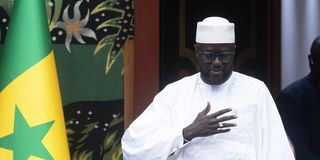
Dakar. Senegal’s political crisis has deepened after the Speaker of the National Assembly, El Malick Ndiaye, announced his resignation just two days after President Bassirou Diomaye Faye dismissed Prime Minister Ousmane Sonko and dissolved the government.
The resignation, confirmed on Monday, comes amid escalating tensions in the administration following Sonko’s sudden removal and last week’s dissolution of the cabinet. The Speaker’s departure adds to concerns over stability in a country already facing growing political and economic pressures.
President Faye sacked Prime Minister Sonko on Friday, ending a once-close political alliance that helped bring both leaders to power in 2024. The decision, announced on national television, was followed by the dismissal of all cabinet ministers, effectively resetting the government structure.
The fallout has triggered uncertainty within parliament, where the governing coalition still holds influence but is increasingly divided over policy direction and leadership disputes. Analysts say the rapid succession of resignations and dismissals reflects a widening rift at the top of the state.
Sonko, a dominant political figure and former opposition leader, had become increasingly at odds with Faye over economic policy and governance issues. His dismissal was widely seen as the culmination of months of internal friction.
The Speaker’s resignation now raises fresh questions about the functioning of the National Assembly and whether further political realignments could follow.
The crisis comes at a sensitive time for Senegal, which is grappling with fiscal strain and ongoing negotiations with international financial institutions.