Africa warned over dangerous dependence on imported medicines

Arusha. African countries have been warned that their dependence on imported medicines and medical supplies is putting health systems at risk.

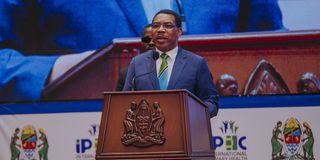
Prime Minister, Dr Mwigulu Nchemba, called for urgent investment in local manufacturing to safeguard access to essential healthcare products during global crises.

Dr Nchemba said the Covid-19 pandemic, geopolitical conflicts and other international disruptions had exposed the vulnerability of countries that depend on foreign markets for medicines and medical equipment.

He said Africa must treat the experience as a wake-up call and move away from excessive reliance on aid and imported health commodities by building domestic production capacity and mobilising local resources.

“This should be a lesson for African countries that we now need to move away from excessive dependence on aid, build our own capacity and rely more on our own resources to achieve our national health goals,” he said.

Dr Nchemba made the remarks on Wednesday, September 9, 2026, while opening the Second International Primary Health Care Conference (IPHCC 2026) in Arusha, which has attracted more than 2,700 participants from 27 countries.

He said Tanzania was already taking steps towards greater self-reliance in healthcare by increasing investment in health infrastructure, human resources, medicines and medical supplies.

“We want to move away from excessive dependence on imported medicines and medical supplies and direct government investment, together with development partners, towards building and strengthening pharmaceutical industries,” said Dr Nchemba.

He said increasing local production was critical to ensuring that countries could maintain access to essential medicines during pandemics, conflicts and other events capable of disrupting global supply chains.

“The events of recent years, including Covid-19 and various conflicts around the world, have shown us how countries can be affected when the supply chains of essential products are disrupted. These are things we must not allow to happen again,” he said.

Dr Nchemba said investment in local pharmaceutical production should therefore be viewed not only as an economic opportunity but also as a critical component of national and regional health security.

The call comes as African countries intensify efforts to achieve universal health coverage, with primary healthcare regarded as the foundation for reaching the majority of their populations.

Dr Nchemba said Tanzania had made progress in expanding access to healthcare but acknowledged that improving the quality of services remained a major priority.

“We have made significant progress in ensuring that health services reach citizens. However, there is still much work to be done in improving the quality of those services,” he said.

He said the government would continue increasing investment in the health sector while ensuring that public funds allocated to healthcare translated into measurable improvements in people’s lives.

The government would also continue implementing the Universal Health Insurance Act to ensure that all citizens, particularly low-income households, can access quality healthcare at affordable costs regardless of their financial circumstances.

Dr Nchemba said Tanzania would continue recruiting health workers, constructing and upgrading health facilities and providing accommodation for medical personnel.

More than 430 houses for health workers have been constructed over the past four years, while about 2,000 additional houses are expected to be built by 2030.

WHO Regional Director for Africa, Prof Mohamed Janabi said the pandemic had demonstrated the importance of resilient primary healthcare systems in maintaining essential services during emergencies.

He urged African countries to strengthen community disease surveillance, laboratory capacity, contact tracing and infection-prevention systems to enable early detection and rapid responses to outbreaks.

“Strong primary healthcare does not simply mean having more health facilities. It means having the capacity to treat illness, absorb shocks, protect essential services and build resilient health systems,” said Prof Janabi.

East, Central and Southern Africa Health Community (ECSA) director general, Dr Ntuli Kapologwe, said investment in primary healthcare was essential to achieving universal health coverage and building resilient health systems capable of meeting the 2030 targets.

"African countries could benefit by sharing experiences and successful approaches, including those developed in Tanzania, Kenya and Rwanda," he said.

Minister of State in the Prime Minister’s Office responsible for Regional Administration and Local Government (PMO-RALG), Prof Riziki Shemdoe, said greater investment in primary healthcare was necessary because it serves the overwhelming majority of Tanzania’s population.

He said 95.6 percent of the 2.9 million women who delivered in Tanzania did so at primary healthcare facilities.

Similarly, 86 percent of the country’s 32.3 million outpatient visits at public health facilities were handled at primary healthcare level.

Of the 8,288 government health facilities in Tanzania, 7,947, equivalent to 95.8 percent, are primary healthcare facilities managed by local government authorities.

“Therefore, increasing investment in primary healthcare means investing in the majority of Tanzanians and the majority of Africans,” said Prof Shemdoe.

The three-day conference, which runs from September 9 to 11, brings together government leaders, health experts, development partners and other stakeholders in Africa.

They are expected to discuss sustainable financing, health security, efficiency and quality improvement in primary healthcare as countries pursue universal health coverage.