Josephine Christopher is a senior business journalist for The Citizen and Mwananchi newspapers
Mwananchi Communications Limitted
When Dr Mbiki Msumi speaks about beauty, she does not speak about crowns. She speaks about discipline.
Born in July 1981, she first entered the public eye as the first Miss Dar City Centre, later Miss Ilala, and eventually First Runner-Up at Miss Tanzania 2002.
But even at the height of that visibility, she had already made a private decision: pageantry would not define her destiny.
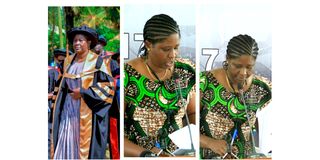
Today, she is Head of the Department of Public Law and a lecturer in the Faculty of Law at the Open University of Tanzania. She is a government-employed legal scholar since 2010, a church leader, a mentor, an agribusiness entrepreneur operating in Kibaha and Bagamoyo, and a co-director of Mwanawa Afrika Investment Company as well as co-CEO of Kilimo Roundtable Africa Limited, distributing fertilisers.
Her life is not a transition from beauty to seriousness. It is a study in alignment.
Negotiating permission
After completing Form Six, Msumi began exploring whether she could advance in modelling and beauty competitions. The idea unsettled her family. Her mother, originally from Musoma, was deeply skeptical. In her worldview, pageantry was dangerously close to impropriety.
“She was totally against it,” Msumi recalls. “She needed assurance that beauty was not moral decay.”
The organisers eventually visited her parents in person to explain the structure and intent of the competition. After long conversations, her mother consented.
Encouraged by mentors such as Millen Magese and Madam Ritha Paulsen, she entered the competitions and excelled. Yet her internal compass never shifted.
“After that, the passion for beauty competitions reduced,” she says. “I had already planned that once it was done, I would return to school. I had passion for education.”
For Msumi, pageantry was never an escape from academia. It was an adjunct education — one that sharpened public speaking, composure, social navigation and the ability to carry oneself as a representative of something larger than self.
“It taught me how to handle myself, how to engage, how to be a mirror of society,” she reflects.
A closed door, a different route
Following her pageant chapter, she secured admission to a university in the United States. It appeared to be the next logical step. But when she returned to process her visa, it was denied.
The setback was abrupt. For many, it might have been destabilising.
“I told myself this is not the end of the world,” she says quietly. “And my mother told me the same.”
Rather than interpret rejection as finality, she recalibrated. She enrolled at Mzumbe University to pursue a Diploma in Law.
The transition required mental adjustment. Fame had preceded her into lecture halls. There were questions — sometimes silent, sometimes explicit — about whether a former beauty queen could withstand the rigours of legal study.
“At first it was difficult. People were not used to celebrities in that environment,” she says. “I had to put popularity aside.”
The strategy was simple: outperform expectation. She graduated as the best student in her diploma class.
From there, she enrolled for a law degree at Tumaini University, again finishing top of her class. She proceeded to Law School, passed on her first sitting — a demanding accomplishment in Tanzania’s legal training ecosystem — and continued directly to complete her master’s degree.
Commitment and discipline became structural pillars.
Public Law as calling
In 2010, she entered formal government employment. Over time, she gravitated toward public law — the branch that governs the relationship between state authority and citizen rights.
Her leadership style is procedural rather than charismatic. Authority, she believes, is earned through consistency.
“To be a firm leader, you must stand by the rules,” she says. “If I say something will be done on a particular day, I stand by it.”
Operating within ab— a patriarchal context that often scrutinises women in authority — she understands that leadership requires both resilience and precision. In many African settings, women leaders must prove competence repeatedly.
“Sometimes it is difficult to allow women to lead,” she notes. “But if you are clear, disciplined and consistent, the results speak.”
Her background in pageantry, she admits, unexpectedly strengthened her academic leadership. Exposure to diverse social settings early in life made it easier to engage different calibres of people — from students to policymakers.
“Probably if I had not been Miss, I would not be here,” she says. “It shaped me.”
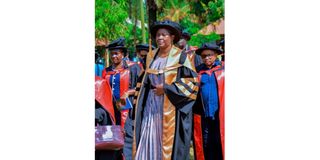
Dr Mbiki Msumi
Reforming beauty, not rejecting it
Although she chose academia over continued public life, Msumi does not dismiss pageantry. Instead, she critiques its fragility.
The industry, she says, lacks sufficient institutional guardrails. Without oversight and structure, young women may become vulnerable. Families, wary of instability, sometimes prevent capable daughters from participating which can push some into unregulated and risky spaces.
Her proposal is institutional: stronger government and ministerial supervision, possibly through a specialised unit to enforce discipline and strategic direction. Beauty platforms, in her view, should be aligned with national development priorities.
“If guided well, these platforms can build confidence and change mindsets,” she explains.
“They can contribute economically through branding, partnerships and structured engagement.”
The key is purpose. Without it, visibility evaporates. With it, visibility multiplies value.
Enterprise and soil
Beyond lecture halls, Msumi’s investments are grounded — literally. She engages in farming and livestock keeping in Kibaha and Bagamoyo, merging agricultural production with entrepreneurship. Through Kilimo Roundtable Africa Limited, she participates in fertiliser distribution, linking policy literacy with agribusiness execution.
For her, law and agriculture are not contradictions. They are complementary. One shapes frameworks; the other feeds communities.
She is also deeply involved in church leadership, conducting workshops for women and youth. Mentorship is not peripheral to her work; it is central. Young girls seeking consultation about academic pathways or career direction are welcome to approach her.
At home, she is mother to one daughter — a role she protects fiercely. In an era where professional ambition often consumes personal space, she insists on intentional presence.
“Many people now forget to sit with their children,” she says. “I love spending time with mine.”
Her parenting philosophy mirrors her professional one: prepare for reality.
“I am teaching her to be tough,” she says. “The world needs you to be tough. Life is not easy.”
The book yet to be written
Among her future aspirations is writing a book — a synthesis of lessons from beauty stages, lecture halls and boardrooms. It would not be memoir alone. It would be instruction.
Because ultimately, her story is not about pageantry or academia in isolation. It is about architecture — how one constructs a life deliberately, even when doors close unexpectedly.
Beauty, in Msumi’s philosophy, is not ornamental. It is preparatory. It exposes one to scrutiny, demands composure, and tests character under light. Education then builds structure around that exposure. Discipline stabilises it. Purpose directs it.
Beauty, when anchored in purpose, becomes more than appearance. It becomes capacity. And in Dr Mbiki Msumi’s life, it has become design.