Cabinet ministers face anxious wait over likely changes
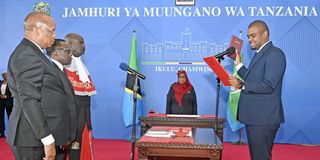
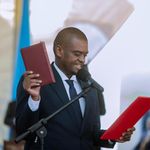
Deogratius Ndejembi takes the oath of office as Vice-President of the United Republic of Tanzania during a ceremony held at Chamwino State House in Dodoma on August 29, 2026. PHOTO | STATE HOUSE
Dar es Salaam. The resignation of Dr Emmanuel Nchimbi and the appointment of Deogratius Ndejembi as Tanzania’s new Vice President have renewed uncertainty among Cabinet ministers, permanent secretaries and other senior government appointees over further changes that could touch their positions, according to sources privy to the issue.
While President Samia Suluhu Hassan must fill the vacancy of the Minister of Energy, previously held by Mr Ndejembi, indications are that she may not stop there, sources say. The change could trigger a wider reshuffle extending to district commissioners (DCs), district executive directors (DEDs) and district administrative secretaries (DASs).
A senior government leader, who requested anonymity, said the changes could bring promotions, removals and new faces into the Cabinet and permanent secretary positions.
“The Ndejembi appointment may trigger changes. But if you recall in Prime Minister Dr Mwigulu Nchemba’s recent countrywide tours, many complaints were raised by the public. That suggests some leaders are not delivering,” he noted.
He added that there are ministers, deputy ministers, permanent secretaries and their deputies who may no longer be suitable for their positions. “At this stage, we should expect anything,” the source said.
After she was sworn in on November 3, 2025 after the October 29 General Election, many observers expected President Hassan to make far-reaching changes to her team across government. However, she opted against a major shake-up and largely retained her Cabinet, which she announced on November 17, 2025. She also urged regional and district leaders, regional administrative secretaries and council directors to focus on their responsibilities rather than worry about possible changes.
Signs that changes could be on the horizon emerged on August 27, 2026, when President Hassan announced minor changes involving regional commissioners (RCs) and regional administrative secretaries (RASs). The changes followed the retirement of three appointees.
According to a statement issued by Chief Secretary Moses Kusiluka, Lindi Regional Commissioner Zainab Taleck and Simiyu Regional Commissioner Anamringi Macha retired. Former MPs and deputy ministers Stanslaus Nyongo, Alexander Mnyeti and Jumanne Sagini were appointed regional commissioners for Pwani, Geita and Mbeya respectively. Jabir Makame, who had been Songwe Regional Commissioner, was assigned other duties.
These minor changes came two days after Dr Nchimbi resigned. His departure was followed by his expulsion from the ruling Chama Cha Mapinduzi (CCM) by the party’s Central Committee and National Executive Committee (NEC). NEC subsequently endorsed Mr Ndejembi as Vice President.
Reactions
Analysts are divided over the extent of changes President Hassan may make. They agree, however, that the developments could extend beyond filling Mr Ndejembi’s former post to other levels of government. A political adviser at a diplomatic mission, Dr Hamisi Mwakalinga, said there was a possibility of far-reaching changes. “Whenever there is a major leadership change, there is often an assessment of the entire network of influence surrounding the departing leader. If differences in outlook or performance contributed to Dr Nchimbi’s departure, his network, particularly those holding leadership positions, could also be affected,” he said.
Dr Mwakalinga, however, said this did not mean everyone associated with Dr Nchimbi would be removed.
“Some people who were part of the group or network close to the departing leader could be reassigned or left out altogether,” he said. Political and social affairs analyst Thomas Kibwana said the developments could result in limited changes. “Whenever we experience a situation like this and get a new Vice President, changes have to be made, even in areas where there were no vacancies,” he said.
Political analyst Dr Baraka Mfinanga said Mr Ndejembi’s appointment could affect the wider government structure.
“When one senior position changes, it often creates a need to reassess the political, operational and administrative balance within government,” he said. He said filling the vacancy of the Minister of Energy could provide an opportunity for broader adjustments.
“Rather than simply filling one vacancy, the President may use the opportunity to make broader adjustments and strengthen the pace of implementing her priorities,” he said. Political analyst Dr Selemani Ngalinda said the appointment was unlikely to be an isolated event. “The government will have to fill the vacancy left behind, and doing so could create other positions requiring new appointments,” he said. Dr Rehema Kasola said the changes could form part of a broader assessment of government performance.
“I do not see this ending with one position. There is a possibility of looking more broadly at how to strengthen the performance of the entire government team,” she said.
She added that the changes could inject new energy into government while maintaining the administration’s overall policy direction. Uncertainty comes as the administration enters a period when continuity and performance are to face scrutiny.
Register to begin your journey to our premium contentSubscribe for full access to premium content