Calls mount for government action to soften blow of fuel price spike
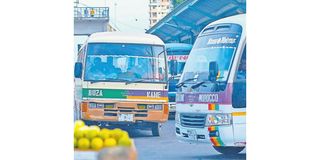
Commuter buses, popularly known as daladalas, seen in Dar es Salaam. The transport sector has been hit hard by this week’s record increase in fuel prices. The Land Transport Regulatory Authority has cautioned bus operators against unilaterally raising fares, saying they risk having their licences revoked. PHOTO | FILE
Dar es Salaam. A wave of anxiety and public outcry has swept across Tanzania following a historic surge in fuel prices, with citizens calling on the government to intervene urgently to prevent a total cost-of-living meltdown.
The price of petrol and diesel rose by an average of over Sh900 per litre effective April 1, a sharp increase described as the highest seen in over two decades.
The hike, announced by the Energy and Water Utilities Regulatory Authority (Ewura), has been attributed to the escalating international crisis involving the United States, Israel and Iran, which has severely disrupted global oil production and logistics.
From the bustling streets of Dar es Salaam to the highland farms of Njombe and the lakeside markets of Kigoma, the impact was immediate.
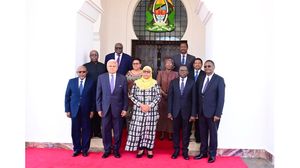
Citizens are now urging President Samia Suluhu Hassan to emulate regional neighbours, such as Zambia, Namibia and South Africa, by removing Value Added Tax (VAT) and various levies to cushion the blow for ordinary Tanzanians and the transport sector.
Voices from the ground
The weight of the increase is being felt most acutely by those in the informal transport sector and small-scale traders.
In Tanga, a driver from Kange, Mr Ayubu Limo, expressed deep concern over the ripple effect on the broader economy.
"Even if we raise fares, the impact will still be felt in other businesses because transport costs will increase," said Mr Limo.
He noted that the burden is not just the fuel itself, but the rising costs of maintenance and tyres, making it nearly impossible for vehicle owners to operate effectively.
Similar sentiments were echoed in Dodoma, where Mr Wiliam Mussolin recounted his shock at the sudden jump in transport costs.
He reported that a trip from the city centre to Isanga prison, which previously cost Sh3,000, had jumped to Sh5,000.
"I argued but remembered it was true that fuel had risen, so I had to accept, but fares have increased too much," he said.
For bodaboda and bajaji operators, who serve as the backbone of urban transport, the price hike is a matter of survival.
A bodaboda rider, Mr Yusuph Nondo, explained that they were forced to hike a Sh2,000 trip to between Sh3,000 and Sh4,000 just to maintain a margin.
"If I buy fuel at Sh3,900 per litre, how much profit can I make?" he asked.
In Kigoma, the situation is equally dire. A resident of Mjimwema, Mr Juma Selemani, noted that the Sh500 fare for bajajis has effectively disappeared, replaced by a Sh1,000 minimum per stop.
This has forced many low-income residents to walk long distances because they can no longer afford daily transport.
The agricultural sector is also on edge. Njombe Regional Agricultural Inputs Traders Chairperson Abusalum Magoma warned that the spike in fuel would inevitably lead to a rise in the price of fertilisers and other inputs.
He suggested the government should consider establishing a fuel reserve for at least three years, similar to the National Food Reserve Agency (NFRA), to protect citizens from such shocks.
Transport strikes and regulatory warnings
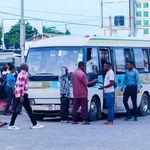
The immediate fallout of the price hike was most visible in Mbeya, where daladala operators launched a strike on Wednesday demanding fare increases to offset the Sh900 jump.
The strike caused significant disruption before services resumed following negotiations between the government and transport stakeholders.
Mbeya District Commissioner Solomon Itunda confirmed that order had been restored, urging residents to remain calm while awaiting a formal national decision.
However, the Land Transport Regulatory Authority (Latra) has taken a firm stance against arbitrary fare hikes.
Latra Director General Habibu Suluo warned that any operator who stops providing services or increases fares without following official procedures risks having their transport licence revoked.
He urged stakeholders to wait for a high-level meeting scheduled for April 8, 2026, in Dar es Salaam, which is expected to deliberate on the fare structure.
The global context
The domestic price surge is a direct consequence of geopolitical volatility. Ewura reported that the US-Israel conflict with Iran, which began on February 28, has choked the Hormuz Strait, a vital artery carrying approximately 20 percent of the world’s oil.
Targeted attacks on refineries, storage depots and oil wells have further constricted supply, leading to a shortage of shipping vessels and a subsequent spike in transportation costs for importing nations like Tanzania.
Government response and Parliamentary debate
As the public outcry intensified, the matter took centre stage in Parliament. Prime Minister Mwigulu Nchemba, responding to a query from Mr Ado Shaibu (Tunduru North-ACT-Wazalendo) Ado Shaibu, acknowledged that "Tanzania is not an island" and must face the global economic shock head-on.
The Prime Minister outlined a two-pronged strategy to mitigate the crisis: strengthening the mining sector and tightening government expenditure.
He noted that mining, particularly from small-scale miners, could provide a necessary revenue cushion if managed effectively.
However, it was the call for "tightening the belt" that resonated most with lawmakers.
Several MPs urged the government to lead by example by cutting non-essential spending, particularly regarding the use of high-end official vehicles.
Mr John Nchimbi (Nyasa-CCM)criticised the continued use of expensive V8 vehicles for local tasks.
"You find a director using a Sh480 million car unnecessarily... when the journey is short," he said, adding that many drivers keep engines running all day just to keep the air conditioning on for waiting officials.
"You wonder if they realise this fuel is purchased in dollars? But it is government cost," he added, calling for leaders to be the first to implement control measures.
Mr Eric Shigogo (Buchosa-CCM) also weighed in, stating that the nation cannot continue to operate as if there is no economic challenge.
"Even in a normal family, during hard times, some things must be reduced," he said, requesting that the government manage life by tightening its own expenditure according to the current situation.
What happens next?
The focus now shifts to the Energy and Mining Committee, which was directed by Speaker Mussa Zungu to meet with Energy Minister Deogratius Ndejembi to assess the fuel situation.
As citizens await the outcome of the April 8 stakeholder meeting, the pressure remains on the government to provide more than just long-term strategies.
For traders like Asha Ramadhani in Kigoma, who is already seeing her profits vanish as food prices rise to cover transport costs, the need for immediate relief is paramount.
The government has indicated that it has conducted "sufficient assessments" to understand the impact, but for many Tanzanians, the only assessment that matters is the one at the fuel pump.
Reported by Bakari Kiango (Dar), Rachel Chibwete (Dodoma), Happiness Tesha (Kigoma), Mbonea Herman (Tanga), Yese Tunuka (Moshi), Sadam Sadick (Mbeya), Seif Jumanne (Njombe), Habel Chidawali (Dodoma) and Hellen Nachilongo (Coast).
Register to begin your journey to our premium contentSubscribe for full access to premium content