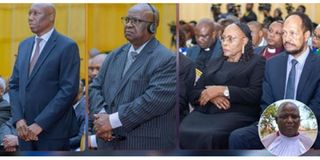
Dar es Salaam. The appointment of Namibian Deputy Chief Justice and High Court President, Mr Petrus Damaseb, to a six-member commission investigating the perpetrators of October 2025 election violence has sparked intense domestic and regional debate.
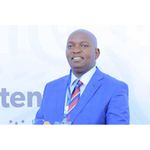
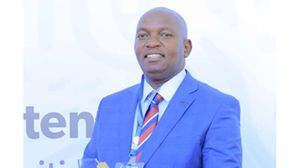
Alongside Justice Damaseb, Ugandan Court of Appeal Judge Cheborion Barishaki was appointed to serve on the five-month inquiry.
The Tanzanian contingent comprises retired judges Shabani Lila (Chairman), Gad Mjemmas, Awadh Bawazir, and Aishieli Sumari.
Two Namibian opposition parties: Affirmative Repositioning (AR) and the Landless People's Movement (LPM), ignited controversy, arguing that Justice Damaseb’s inclusion could compromise the perceived independence of Namibia's judiciary.
Several local opposition figures have aligned with their Namibian counterparts in criticising the inclusion of foreign jurists.
Responding to the criticism, Chief Government Spokesperson Gerson Msigwa stated that President Samia Suluhu Hassan selected the commissioners based on their individual qualifications and the specific mandate required.
"The commission will establish its own operational procedures based on its terms of reference, independent of their home judicial systems," said Mr Msigwa, emphasising that proceedings will be guided strictly by Tanzanian law.
On August 7, 2026, President Hassan formally launched the initiative, officially named the Presidential Commission of Inquiry into Perpetrators of Violence and Law Violations during and after the October 2025 General Election.
Speaking during the inauguration, President Hassan explained that foreign judges were brought in to ensure a broader, deeper investigation into events that resulted in 518 deaths, according to the earlier findings of the Judge Chande Commission.
“We decided to involve our regional colleagues to gain a broader perspective and thoroughly identify those who incited, financed, or participated in these acts,” stated President Hassan.
“We deemed it fit to involve jurists from East Africa and SADC. I am deeply grateful to Presidents Yoweri Museveni and Netumbo Nandi-Ndaitwah of Namibia for releasing these judges to assist us,” she added.
Namibian criticism following the swearing-in, statements issued on August 5 and 6 from Windhoek expressed concern over the appointment process between Dodoma and Windhoek.
The opposition parties claimed that the request stemmed from bilateral discussions following Namibian President Netumbo Nandi-Ndaitwah’s visit to Tanzania in June.
Citing the Namibian Judiciary, the parties noted that Tanzania requested a serving or retired High Court judge.
Justice Damaseb was subsequently nominated by Chief Justice Peter Shivute and approved by Namibia's Judicial Service Commission (JSC).
AR questioned the separation of powers, arguing that inter-state communications regarding judicial officers should occur strictly through judicial channels rather than executive government.
AR called on Justice Damaseb to step down voluntarily to preserve the Namibian judiciary's standing, demanding that the JSC clarify the legal framework used to endorse the deployment.
Concurrently, LPM urged Windhoek to leverage diplomatic engagements with Tanzania to address broader political and human rights issues, including the legal case facing Chadema Chairman Tundu Lissu.
Diplomatic perspectives
Addressing a public rally in Rorya, Mara Region, Chadema Vice-Chairman John Heche questioned the selection of a judge from Uganda, citing concerns over its judicial standing.
“They want to create an impression within the international community that an independent investigation is underway by including foreign jurists. Is Uganda the benchmark?” posed Mr Heche.
Diplomatic and governance analyst, Dr Dennis Kibona, noted that appointing external experts is standard practice to build public and international confidence in sensitive political inquiries.
“Involving foreign experts helps eliminate perceptions of local bias,” observed Dr Kibona, though he acknowledged that public debates often focus on the institutional reputations of the experts' home countries.
Political scholar Prof Baraka Mfinanga noted that while the competence of the judges is not in doubt, their involvement raises delicate questions about the boundaries of judicial participation in politically sensitive matters.
The debate mirrors previous continental precedents, such as Kenya’s 2007 post-election Waki Commission and South Africa’s Truth and Reconciliation Commission, both of which utilised specialised frameworks to address national crises.
Following the October 2025 unrest, the government initially appointed a team led by retired Chief Justice Mohamed Chande Othman on November 20.
After completing its 153-day review, Justice Chande submitted his report on April 23, 2026, recommending a full criminal investigation.
President Hassan acted on the recommendation by establishing the Justice Lila-led commission, subsequently adding the two foreign jurists.
Register to begin your journey to our premium contentSubscribe for full access to premium content