Josephine Christopher is a senior business journalist for The Citizen and Mwananchi newspapers
Mwananchi Communications Limitted
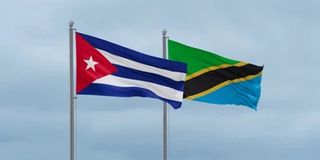
Dar es Salaam. Cuba has called on Tanzanian media to play a more assertive role in shaping global narratives, arguing that voices from the Global South remain marginalised at a time of rising geopolitical tensions and intensifying economic pressure on the island nation.
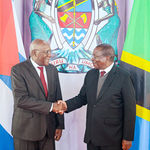
Speaking during a meeting with local journalists in Dar es Salaam last week, Cuba’s ambassador to Tanzania, Mr Yordenis Despaigne Vera, said strengthening ties with national media was critical in countering what he described as dominant international narratives that often misrepresent countries like Cuba.
“In a world where major international media outlets hold a hegemonic view of the news, access to local media in countries where we have diplomatic representation is of vital importance,” he said, pointing to the growing influence of digital platforms and algorithms in shaping public opinion.
The remarks come against the backdrop of renewed friction between Havana and Washington, with Cuba accusing the United States of escalating economic pressure through fresh sanctions and a tightening oil blockade.
The Cuban government has condemned recent measures introduced under Donald Trump, including a January 2026 executive order targeting countries that supply fuel to Cuba.
Havana says the move effectively extends a decades-long economic blockade by threatening third-party trade relations.
Cuban officials argue that the restrictions are already having far-reaching humanitarian consequences, from prolonged electricity outages to disruptions in healthcare and transport systems.
According to the ambassador, fuel shortages have affected the functioning of hospitals, limiting the ability to carry out surgeries and provide critical services such as dialysis.
Water supply systems have also been impacted due to lack of power, while food distribution has become increasingly difficult.
“These are not abstract measures. They have real consequences for ordinary people,” he told journalists.
At the same time, Cuba is seeking to frame its situation within a broader Global South context, drawing parallels with countries such as Tanzania that have historically navigated external political and economic pressures.
“The world, especially Third World nations like Tanzania and Cuba, is living through very dangerous times,” the ambassador said, calling for stronger international solidarity to resist what he described as coercive and unilateral actions.
In remarks shared by the ambassador, President Miguel Díaz-Canel Bermúdez confirmed that Cuban and US officials have recently held talks aimed at addressing longstanding bilateral differences.
He described the process as sensitive and ongoing, stressing that Cuba is engaging on the basis of equality, respect for sovereignty and adherence to international law.
The President noted that the objective of the dialogue is to identify key areas of concern, explore possible solutions and assess the willingness of both sides to take concrete steps that could benefit their respective populations, while also contributing to regional stability.
Complementing this position, statements from Cuba’s Ministry of Foreign Affairs reiterated the country’s readiness to cooperate with the United States and other nations on shared security concerns. The ministry emphasised Cuba’s zero-tolerance stance on terrorism and expressed openness to expanding technical cooperation in areas such as counterte-rrorism, anti-money laundering, drug trafficking prevention and cybersecurity.
At the same time, Havana has rejected its continued inclusion on US lists of state sponsors of terrorism, describing the designation as politically motivated and damaging to its economy.
Despite the sharp rhetoric, Cuban leaders have maintained that dialogue remains possible and necessary. This dual approach—denouncing sanctions while pursuing engagement—underscores what analysts see as a pragmatic effort to navigate a complex geopolitical environment.
In a separate gesture that could be interpreted as part of this broader positioning, the Cuban government has announced plans to release 51 prisoners in the coming days. The Ministry of Foreign Affairs said the decision, coordinated with the Vatican and timed to coincide with Holy Week, reflects the country’s longstanding practice of granting pardons on humanitarian grounds.
While Havana insists that such measures are routine within its legal framework, the timing has drawn attention as Cuba seeks to project openness amid heightened scrutiny of its domestic and international policies.
Beyond its dispute with the United States, Cuba is also grappling with shifting diplomatic dynamics elsewhere.
Earlier this month, it withdrew its diplomatic presence from Ecuador following a decision by authorities in Quito to expel Cuban officials, a move Havana described as unfriendly and unjustified.