Customs hinder women’s land ownership despite legal rights
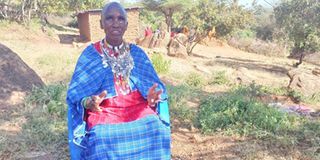
A resident of Murara Village in Longido District, Arusha Region, Emily Kakanya, speaks about efforts by women in pastoralist communities to own land. PHOTO | NASRA ABDALLAH
Dar es Salaam. Tanzania’s Constitution and land laws guarantee women and men equal rights to own land, but customs and traditions continue to prevent some women from fully exercising those rights.
Legal and Human Rights Centre (LHRC) Executive Director Anna Henga says the Land Act No. 4 and Village Land Act No. 5, both enacted in 1999, recognise women’s rights to acquire and own land.
Under the laws, a woman can buy land, register it in her own name and exercise ownership rights without needing permission or justification.
However, Ms Henga says customary practices remain a major obstacle, particularly in communities where men are traditionally regarded as the primary landowners.
“In some clans or families, men have greater authority, making it difficult for women to own land,” she says.
She called on the government and communities to ensure existing laws are implemented, particularly because public authorities play a key role in managing and allocating land.
She also urges communities to recognise women in inheritance arrangements instead of giving them gifts that do not provide permanent ownership.
Ms Henga says changing attitudes has been easier in some parts of Arusha Region, particularly among pastoralist communities, where men often move in search of pasture while women remain at home caring for children and managing household activities.
Women’s experiences
In Longido District, Arusha Region, some women interviewed by Mwananchi said land rights education has helped them secure ownership and increase their contribution to their families.
Nanyori Andrea, a resident of Mundarara Village and one of three wives in her marriage, says her husband owned a 10-acre farm when she married him in 1999.
The three wives initially cultivated the farm together. After receiving training from organisations on women’s land rights, Ms Andrea began persuading her husband to divide the farm so each wife could have her own portion.
She says her husband initially rejected the idea, accusing the women of wanting to become heads of the family.
But she continued persuading him for about three years, using livestock ownership as an example.
“I told him land was like livestock, and he could give me two or three cows,” she says.
She also encouraged him to attend land rights awareness sessions, which helped change his attitude towards women owning land.
Ms Andrea says land ownership has enabled her to contribute more to household needs, including paying for her children’s education.
She calls for more education on women’s land rights, including for traditional leaders, to help change attitudes that prevent women from owning land.
Kakanyi Lukumay, from Engarenaibor in Longido, says she secured land ownership after her plot was surveyed by village authorities in 2024 and she was issued with a customary right of occupancy.
Before then, she says, women faced discrimination because land was largely controlled by men.
After obtaining the customary title, Ms Lukumay says she gained greater control over her crops, with her husband no longer interfering when she harvested or sold them.
She says her husband also transferred land to her before his death, which she considers important in protecting the family’s ownership.
She calls on the government to increase women’s participation in decision-making bodies so they can have a stronger voice on issues affecting their rights.
Jopha Lukumay, a member of the Pastoralist Women’s Council (PWC) in Arusha, says awareness campaigns by organisations, including PWC, have contributed to increased women’s land ownership.
She says the programmes target both women and men, with husbands encouraged to attend alongside their wives.
According to Ms Jopha, involving men has helped change attitudes and encouraged some husbands to accept women’s ownership of land.
However, she says fewer organisations are now providing land rights education and calls on the government to allocate funds for such programmes.
Laws guarantee equality
Lawyer Peter Majanjara says the Constitution establishes equality before the law and requires public institutions to uphold that principle.
He says land institutions must therefore provide equal opportunities for women and men to own land.
The Village Land Act also recognises women’s land rights, although Mr Majanjara says customary practices remain a challenge, particularly in rural areas where traditions can take precedence over formal law.
He calls for continued education targeting households and traditional leaders to ensure they understand women’s rights to land ownership.
Section 3(2) of the Land Act 1999 provides that an adult woman has the same rights as a man to acquire, own, use, transfer and inherit land under the same conditions.
The Village Land Act No. 5 similarly provides for women to acquire and transfer land and obtain it through a will on an equal basis with men.
Article 13 of the Constitution establishes equality before the law and prohibits discrimination, including on the basis of sex.
Inheritance remains a challenge
Lawyer Jebra Kambole says although significant progress has been made in recognising women’s land rights, inheritance remains a major challenge.
He says disputes are particularly common when a father dies, and calls for comprehensive inheritance laws, arguing that the current legal framework is outdated.
To be continued tomorrow
Register to begin your journey to our premium contentSubscribe for full access to premium content