Demands for a new constitution top Tanzania youth agenda on International Youth Day

Dar es Salaam. Young people across the country have voiced an urgent demand for a new Constitution, targeted job creation, and market-responsive education, framing these reforms as essential prerequisites for dismantling structural barriers that impede their meaningful contribution to national socio-economic advancement.

The call coincides with the annual global observance of International Youth Day on August 12, established to acknowledge young people’s role as drivers of societal transformation while confronting systemic obstacles.
The United Nations General Assembly officially designated the day in 1999 following a formal resolution aimed at raising global awareness around youth-related development priorities.

This year’s theme, "Different Contexts, Common Aspirations," highlights the shared realities of youth populations globally despite varying economic, geographical, and cultural landscapes.

Regardless of regional disparities, young people globally share fundamental requirements: quality educational institutions, dignified employment opportunities, economic self-determination, and active participation in civic governance.

National demographic data from the 2022 Population and Housing Census reveals that mainland Tanzania accommodates 20.6 million citizens aged between 15 and 35, representing 34.4 percent of the entire population.

Furthermore, figures from the 2020/21 Integrated Labour Force Survey demonstrate that young citizens constitute over 55 percent of the nation’s total active workforce, underscoring their vital importance in driving economic productivity.

Despite holding such a pivotal demographic position, young Tanzanians continue to encounter daunting structural hurdles, chief among them being widespread unemployment and underemployment.

According to the 2021 Integrated Labour Force Survey, youth unemployment stood at 12.2 percent nationally, with young women experiencing a significantly higher rate of 16.1 percent compared to 8.1 percent for young men.

While tertiary institutions graduate thousands annually, available employment remains overwhelmingly concentrated in low-productivity activities and informal, precarious enterprises.

Speaking to The Citizen’s sister publication Mwananchi, political analysts, youth advocates, and economic stakeholders outlined key strategic interventions required to help young citizens transition academic qualifications, technical talents, and entrepreneurial concepts into sustainable livelihoods.

A Dar es Salaam-based youth affairs advisor, Dr Hamisi Tumbo, noted that a deepening mismatch exists between institutional skill preparation and the actual absorptive capacity of the national labour market.

His observations come against a backdrop where Tanzania’s higher education system admitted over 170,000 students into university degree programmes during the 2025/26 academic year alone.

"A university degree cannot guarantee economic independence if the underlying economic architecture fails to expand job creation at an equivalent pace," explained Dr Tumbo.

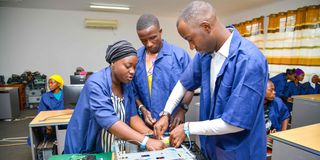
The International Labour Organisation (ILO) has reiterated the urgency of structured apprenticeship and practical internship schemes, noting that workplace learning aligns youth competency directly with dynamic industry demands.

Youth advocate, Mr John Mmari, highlighted the transformative potential of digital technology, while warning against treating connectivity as a complete economic remedy.

"Young people are increasingly entering digital entrepreneurship, content creation, remote freelance work, and tech-enabled micro-enterprises; however, internet connectivity alone cannot generate living wages," noted Mr Mmari.

"Young entrepreneurs require digital literacy, hardware access, seed capital, dependable electrical power, digital payment gateways, market access, and regulatory protection against online labour exploitation," he added.

The National Association of Small Scale Traders (Machinga) Vice Chairman, Mr Steven Lusinde, stressed that young people represent the nation's present strength and must be actively consulted by leadership.

"As we observe this international day, young people must safeguard national solidarity, while national leaders must actively heed youth perspectives to ensure unified progress," stated Mr Lusinde.

Similarly, former Youth Chairman for the Eastern and Coastal Diocese of the Evangelical Lutheran Church in Tanzania (ECD-ELCT), Mr William Shechambo, urged institutions to view International Youth Day as a catalyst for practical empowerment.

"Youth commemorations should move beyond ceremonial gatherings to become actionable platforms for building capacity, practical entrepreneurship, and digital innovation, backed by faith organisations and society investing directly in sustainable youth projects," urged Mr Shechambo.

Youth and political engagement

Chadema Youth Wing (Bavicha) national chairman, Mr Deogratius Mahinyila, asserted that constitutional reform remains the essential foundation for resolving systemic youth grievances.

"A new Constitution would unlock broad structural reforms across economic policy, public governance, health delivery, employment creation, and technological advancement, enabling young citizens to solve pressing socioeconomic challenges," said Mr Mahinyila.

He contended that the nation lacks a cohesive leadership apparatus capable of addressing youth priorities through structured policy mechanisms.

"While 77 percent of Tanzania’s population is under 35 years old, there is no comprehensive strategy to capitalise on this demographic dividend, making constitutional overhaul indispensable," he emphasised.

Mr Mahinyila further identified curriculum misalignment as a primary driver of skill deficits, adding that even youths receiving government tertiary loans face severe repayment hurdles due to joblessness.

The Civic United Front (CUF) Youth Wing Chairman, Mr Shukuru Zouma, highlighted the necessity of constitutional amendments to expand youth representation within governance structures.

He argued that democratic frameworks require substantial enhancement to enable meaningful youth participation in state decision-making bodies.

"We urgently need a new constitutional framework that opens access to decision-making roles. Current constitutional provisions impose restrictive age qualifications for presidential candidates that arbitrarily exclude capable young leaders," remarked Mr Zouma.

In contrast, the CCM Dar es Salaam Regional Chairperson, Ms Nasra Ramadhani, called on young people to leverage existing government initiatives for self-development regardless of political affiliations.

"Regardless of our political ideological differences, young citizens have a collective obligation to protect national stability and actively utilise state-sponsored economic opportunities," said Ms Ramadhani.

However, the ACT-Wazalendo Youth Wing Chairman, Mr Abdul Nondo, countered that young people remain sidelined from executive decisions, leaving labour rights in informal sectors largely unprotected.

"Constitutional reform is necessary so youth voices are heard. Across various economic sectors, young people work without formal employment contracts or legal protections," noted Mr Nondo.

He also pointed out that despite existing statutory provisions, administrative hurdles have delayed the operationalisation of the National Youth Council, an institutional body meant to unify youth advocacy.

"Unemployment and marginalisation persist precisely because we lack robust institutional accountability mechanisms," observed Mr Nondo.

He added that unequal access to public policy information continues to hamper youth progress, reinforcing the demand for constitutional safeguards grounded in transparent governance.

Government interventions and policy frameworks

Responding to these concerns, the Deputy Permanent Secretary in the President’s Office responsible for Youth Development, Dr Kedmon Mapana, affirmed that the government is actively establishing policies, financing mechanisms, and technical training systems to connect young people with economic opportunities.

Dr Mapana explained that through the Youth Development Fund, the government provides capital access, machinery, business advisory services, financial literacy, and market linkages.

He further noted that local government authorities continue to reserve 10 percent of their internal revenue for youth, women, and persons with disabilities, alongside a 30 percent ring-fenced quota for these groups in public procurement contracts.

"In addition, the government continues expanding formal apprenticeships, skill certification, internships, and vocational life-skills programmes to enhance youth employability and entrepreneurial competitiveness," stated Dr Mapana.

Labour force skill gaps and broader challenges

Despite these official initiatives, significant structural gaps remain within the national human capital pool.

Official workforce assessments indicate that 76.9 percent of Tanzania's labour force possesses low skill levels, compared to an average of 54 percent in middle-income economies.

Medium-level skills account for 19.9 percent of the workforce against a 34 percent benchmark in middle-income peer nations, while high-level technical skills stand at just 3.2 percent compared to the recommended 12 percent threshold.

Furthermore, many young entrepreneurs struggle to satisfy stringent commercial bank lending criteria, limiting their access to credit and capital expansion.

Beyond economic hurdles, young Tanzanians increasingly face complex social challenges, including substance abuse, inadequate mentorship, peer pressure, digital misinformation, and escalating mental health pressures.