Discipline and impact: How Dr Zainabu Bungwa climbed the TFS ladder
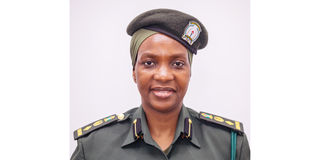
The Assistant Commissioner for Conservation and the Acting Director overseeing Forest Resources at the Tanzania Forest Services Agency, Dr Zainabu Bungwa. PHOTO | SALOME GREGORY
Dr Zainabu Bungwa’s career has been shaped by leading by example. Her philosophy is that women can about positive results in conservation
“Which department are you in?” It was the question she was asked by a colleague at the beginning of her career journey due to her involvement in different activities at her workplace twenty years ago.
This reflects her personality as someone who loves to learn and take action, values teamwork and maintains discipline in her work. She is driven by a strong desire to learn, understand and act. She is self motivated and results oriented.
I am talking about the Assistant Commissioner for Conservation and the Acting Director overseeing Forest Resources at the Tanzania Forest Services Agency, Dr Zainabu Bungwa, in the forest and environmental conservation sector.
“My journey began as an officer passionate about commitment and always at the forefront of every institutional or departmental task, as guided by my leaders. I performed various responsibilities, ranging from planning and supervision to seeking partnerships with stakeholders, all aimed at promoting conservation,” says Dr Bungwa.
Dr Bungwa holds a Bachelor’s Degree in Forest Management, a Master’s Degree in Natural Resources Management and a PhD in Climate Change and Sustainable Development in Forest Resources. She is an expert in conservation project proposal writing and stakeholder and community engagement.
She has coordinated conflict resolution processes among forest and beekeeping resource users, led resource assessments and forest management planning and is a leading figure in promoting partnerships at regional, national and international levels in natural resource management, a positive legacy she has built over the years.
Her career has been shaped by leading by example, teamwork and good manners. Her philosophy is that women’s contribution through rights and equal opportunities in productive conservation partnerships brings significant and positive results.
“My philosophy helps me to maintain people’s rights, equality and inclusion. With this, I am always fair when making decisions, considering women as family nurturers while promoting professional collaborations within and outside TFS,” she says.
Adding to that, she says despite the fact that TFS operates under a paramilitary system, she ensures they interact closely with communities and stakeholders in a friendly way. She acknowledged President Samia Suluhu Hassan for strengthening women’s confidence in leadership, attributing her as a women’s role model who has created space for women to thrive.
“If we continue at this pace, representation will increase further. For me, rights must translate into responsiveness and action. Without strengthening collaboration among women, success is difficult. In my department, women represent about 40 percent and men 60 percent and we have achieved strong results through inclusion,” says Dr Bungwa.
She says the national leadership under President Samia Suluhu Hassan and the Commissioner Prof Dos Santos ensures women are represented in key decision making roles. In addition, the Constitution of the United Republic of Tanzania of 1977 promotes rights and equality. The laws and regulations provide the framework. Our responsibility as women is to implement them through action and creativity.
The department she is overseeing has 32 staff members, including young professionals. Thirteen are women and 20 are men, working across two divisions, forestry and beekeeping, comprising nine units with highly skilled professionals specialized in forestry, beekeeping, modern technologies, apiary management and value chain development of bee products.
When asked about the projects that have demonstrated an increase in women’s participation and benefits in forestry and beekeeping, she says Miombo forest management projects have ensured that over 30 percent of customary land certificates for communities bordering reserves are issued to women. Tree nursery projects are more than 90 percent led by women, while beekeeping projects show strong participation of women across the entire value chain.
“Generally, women are rarely involved in destructive forest activities. Instead, they are more engaged in sustainable and income generating activities, as forest degradation affects them the most,” she says.
In resolving conflicts among forest and beekeeping resource users and ensuring women’s voices are heard and protected, she makes sure women are included in every conflict resolution committee. During reconciliation processes and the issuance of customary land certificates, women must be present and involved. She also ensures they participate in capacity building training.
Commenting on how her advanced education in forestry management, natural resources and climate change has strengthened women’s position in sustainable development, she says her education has inspired other women, as she has been at the forefront of coordinating project proposals and climate resilience initiatives such as ecosystem restoration and sustainable forest management.
She says having women leaders in the forestry sector is important as it helps dismantle harmful cultural norms, since women naturally resist discrimination and often prioritize environmental protection.
“It increases community participation since women are both primary beneficiaries and the most affected by ecosystem services. It promotes accountability and transparency and strengthens policy implementation, as forestry policies emphasize participatory approaches, especially gender inclusion,” says Dr Bungwa.
Addressing the policies or strategies that should be changed to ensure women become key stakeholders and primary beneficiaries in forest conservation, she says each sector has to focus on Strategic Plan IV, which prioritizes women’s inclusion to enable a conducive environment for women in this field.
She cites an example in beekeeping. Instead of women climbing trees to hang hives, cages should be introduced for safer access. Land ownership for women should be made more accessible and women should be empowered through on the job training without considering their previous work experience as a limitation.
Explaining how regional, national and international partnerships have opened opportunities for women, Dr Bungwa says TFS strongly practices gender responsiveness and many major partnerships are coordinated by women, including those in the value chains of forestry and bee products. However, some activities remain male dominated.
On the challenges she faces as a woman leader, she says the natural responsibilities of being a mother and a wife require prayers and wisdom to create balance with field visits to assess conservation conditions and engage with communities.
Her advice to young girls and women aspiring to join forestry and environmental conservation, especially in decision making roles, is to pray and work hard, maintain discipline and respect for leadership, family and colleagues to minimize obstacles, be consistent, innovative, self-motivated and self-disciplined, be willing to learn and be teachable, desire positive success for your institution and your country and maintain a positive mindset.