East Africa turns to AI and youth innovators as regional ebola cases surge
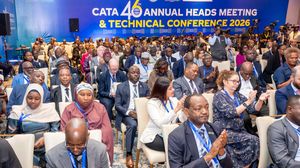
East African Community (EAC) Deputy Secretary-General in charge of Infrastructure, Productive, Social and Political Sectors, Mr Aguer Ariik Malueth, speaks during the launch in Arusha on Wednesday, August 12, 2026. PHOTO | BERTHA ISMAIL

Arusha. The East African Community (EAC) has turned to artificial intelligence (AI) to help tackle the growing ebola threat in the region, with more than 20,000 young people expected to participate in an innovation programme.
The initiative, launched on Wednesday, August 12, 2026, by the EAC Secretariat and the Government of Germany through the EAC AI Alliance, will challenge young innovators, researchers and students to develop AI-powered solutions for ebola detection, preparedness and response.
The programme comes as the ebola outbreak in the Democratic Republic of Congo (DRC) and Uganda continues to raise concern, with reported cases approaching 5,000 and deaths exceeding 2,000.
The World Health Organisation (WHO) has described the current outbreak as the second largest and fastest-growing ebola outbreak on record.
Speaking during the launch in Arusha, EAC Deputy Secretary-General in charge of Infrastructure, Productive, Social and Political Sectors, Mr Aguer Ariik Malueth, said the initiative would equip East Africans with skills to use AI in addressing regional challenges.
“Our priority is to ensure East Africans have the skills, knowledge and partnerships to harness AI to solve problems, create jobs, improve public services and develop solutions to our region’s challenges,” he said.
He said the EAC AI Alliance was investing in people while creating a regional innovation ecosystem that would position East Africa to compete in the global digital economy.
Under the special challenge, which carries $50,000 (about Sh130 million) in prize funding, participants will be encouraged to develop practical digital solutions to health and other challenges facing the region.
A new Ebola Response Challenge will specifically invite researchers, students and innovators to develop AI models that can support disease outbreak detection, preparedness and response.
The initiative is part of the second edition of the EAC Artificial Intelligence Challenge (AI4EAC), which seeks to expand opportunities for young people, researchers and entrepreneurs to acquire AI skills and develop solutions to regional problems.
The programme aims to reach 20,000 East Africans through AI training across all eight EAC partner states.
The EAC AI Alliance has also welcomed Equity Group Holdings and Karlsruhe Institute of Technology (KIT) as new strategic partners to strengthen collaboration in AI research, digital skills development and innovation.
Equity Group director of innovation and technology, Ms Winnie Mangeni, said the partnership would encourage young people to develop practical and inclusive AI solutions for the financial sector.
“We want participants to work on real-world challenges, benefit from the experience and develop solutions that can progress beyond the competition,” she said.
The second edition was officially launched following a high-level AI roundtable held at the EAC headquarters in Arusha.
The meeting brought together representatives from the EAC Secretariat, Inter-University Council for East Africa (IUCEA), East African Science and Technology Commission (EASTECO), Germany’s Federal Ministry for Economic Cooperation and Development (BMZ), German Foreign Office, German Embassy, development partners, academia and private sector players.
Speaking at the event, Head of the East and Central Africa Division at BMZ, Mr Joachim Schmitt, said Germany’s support for the EAC AI Alliance reflected the need for a coordinated regional approach to AI development.
He said Africa had attracted $1.25 billion in AI investment since 2019, but about 80 percent of the investment had gone to only four countries.
He added that Africa has less than one percent of the world’s data-centre capacity despite being home to about 18 percent of the global population.
“No single country can close this gap alone. Through the EAC AI Alliance, Germany is supporting a regional approach that builds practical AI skills, applied research and AI policy shaped by the needs of the people of East Africa,” he said.
The first AI4EAC Innovation Challenge, held in 2025 and delivered by Zindi in partnership with IUCEA, EASTECO, GIZ, UNESCO Campus Africa and JICA, attracted 3,891 participants from 57 universities in Burundi, DRC, Kenya, Rwanda, Somalia, South Sudan, Tanzania and Uganda.
Through a six-month programme of courses, webinars and practical training, participants developed AI solutions in health, agriculture, finance and education.