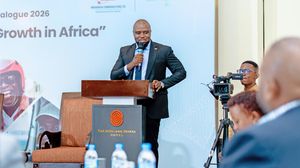
As Acting Head of the Northern Zone at the Cereal and Other Produce Regulatory Authority, Fahmia Selemani oversees a vast operational area spanning seven zones and 14 regions
Dar es Salaam. In Tanzania’s evolving agricultural landscape, where food security and market efficiency remain central to economic stability, a new generation of leaders is quietly redefining the rules.
Among them is Fahmia Amiri Selemani, whose work in food systems regulation is steadily shaping how the country safeguards its cereal and produce markets.
As Acting Head of the Northern Zone at the Cereal and Other Produce Regulatory Authority (Copra), Fahmia oversees a vast operational area spanning seven zones and 14 regions.
Her mandate is both technical and strategic: to ensure that agricultural markets operate efficiently, that standards are upheld and that farmers and traders are equipped to compete in an increasingly structured marketplace.
Colleagues describe her as a meticulous regulator and an advocate for systemic reform—qualities that have come to define her 15-year career across agricultural education, academia and regulatory management.
Her approach, however, extends beyond enforcement.
“I see regulation not just as compliance, but as a tool for empowerment,” she says in an interview.
“When farmers and traders understand standards and market dynamics, they are better positioned to improve quality, increase productivity and access better opportunities.”
This philosophy aligns closely with broader efforts to modernise Tanzania’s agricultural value chains, particularly in cereals and other produce where post-harvest losses, informal trading and inconsistent quality have historically undermined growth.
Blending agriculture and nutrition
Fahmia’s academic grounding in both agriculture and human nutrition has been instrumental in shaping her outlook.
The intersection of these disciplines, she explains, offers a more holistic understanding of food systems—linking production, safety, consumption and public health.
“The combination allows for a broader perspective on sustainability,” she notes. “It sharpens analytical thinking and strengthens the ability to design systems that deliver long-term results.”
This dual expertise is increasingly relevant as Tanzania, like many countries in the region, grapples with the twin challenges of ensuring food availability while improving nutritional outcomes.
Her leadership style reflects this integrated thinking. It is defined by structured planning, data-informed decision-making and an emphasis on clear communication—attributes she believes are critical in managing complex, multi-stakeholder environments.
Coordinating a complex ecosystem
At Copra, Fahmia’s role centres on coordination. She works across multiple layers of the agricultural ecosystem, bringing together regulators, farmers, traders and policymakers to ensure seamless operations.
Her responsibilities include overseeing training programmes for growers and dealers, inspecting strategic crops and enforcing compliance with established guidelines.
Yet, beyond these technical duties lies a broader objective: strengthening resilience within the sector.
“My role is to catalyse growth, resilience and food security by facilitating efficient production, processing and marketing services that promote competitiveness and innovation in the cereal and produce industry,” she notes.
In practical terms, this means addressing bottlenecks along the value chain—whether in storage, transportation or market access—while also promoting innovation and adherence to quality standards.
Such efforts are critical as Tanzania seeks to position itself as a reliable supplier within regional markets, particularly under frameworks such as the African Continental Free Trade Area (AfCFTA).
Leadership shaped by experience
Fahmia’s career trajectory reflects a steady accumulation of experience across diverse facets of agriculture.
From academic oversight and research coordination to frontline regulatory work, she has developed a comprehensive understanding of the sector’s operational and policy dimensions.
“Experience has helped me understand not only the technical side of agriculture, but also the laws, regulations and institutional frameworks that guide it,” she says.
This depth of knowledge, she adds, is essential for effective leadership in a sector where decisions often carry far-reaching implications for livelihoods, trade and national food security.
Her leadership philosophy is anchored in a set of core principles: integrity, transparency, teamwork and a solution-driven mindset.
While she adapts her approach depending on circumstances, these values remain constant.
Her own journey underscores both the progress made and the challenges that persist. Like many women in leadership, she has had to navigate the demands of professional responsibilities alongside family life.
“Balancing my roles as a wife, mother and leader—especially during field assignments—was not easy,” she recalls. “Support from my family made a significant difference. Shared responsibilities allowed me to focus on my work without compromise.”
Mentorship and legacy
Beyond her official duties, Fahmia is deeply invested in nurturing the next generation of leaders, particularly women entering agriculture and regulatory fields.
Through mentorship initiatives and succession planning within Copra, she supports capacity-building programmes that equip young professionals with both technical skills and leadership competencies.
“Mentorship and inclusion in decision-making processes are critical,” she says. “They help women build confidence and gain the experience needed to take on leadership roles.”
Her efforts extend to advocating for on-the-job training, which she describes as a vital tool for strengthening women’s participation in food security and policy development.
Such initiatives, she believes, are key to creating a more inclusive and dynamic agricultural sector—one that reflects the diversity of its workforce and beneficiaries.
On a broader scale, her work directly contributes to Tanzania’s agricultural transformation goals, emphasising women’s participation in food security, policy development and market regulation.
“On-the-job training is vital because it equips women with practical skills, strengthens their role in food security and enables them to influence policy and regulatory frameworks effectively,” she adds.
Inspiring the next generation
For young girls aspiring to leadership, Fahmia offers a message grounded in discipline and purpose.
“Set clear goals, be courageous and remain disciplined,” she advises. “Leadership is about impact, not titles. It is about resilience and the ability to uplift others.”
Her own journey, marked by persistence and continuous learning, reflects this ethos. She credits much of her growth to mentorship, professional training and a willingness to learn from others.
“Identifying my purpose and learning from successful individuals has been crucial,” she says. “It has helped me navigate challenges and stay focused on my goals.”