Beyond injuries and trauma, victims struggle with medical bills, lost income, and depleted savings while waiting for insurance compensation.
For others, the challenge begins with a lack of knowledge about their rights, while those who file claims can face lengthy follow-ups, additional document requests, and delays.
Under Section 131 of the Insurance Act, 2023 (Cap 394), insurers are required to pay claims within 45 days once a claim has been properly submitted, verified, and liability established.
The provision is intended to prevent unnecessary delays.
However, a three-month investigation by The Citizen between May and August found many accident survivors frustrated by procedural problems.
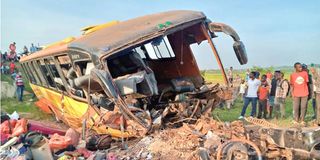
A resident of Mbeya, Mr Jafari Athumani*, illustrates the human cost of the struggle after being involved in the February 2025 crash that killed five people.
He said the vehicle had eight occupants of whom five died, while he and two others survived with serious injuries.
Mr Athumani suffered a right-leg fracture and had a metal inserted to support the injured limb.
“Each of us three sustained different injuries. The accident left me disabled,” he said.
More than a year later, he still walks with difficulty, with experts telling him recovery could take until 2027.
Physical injury is only part of the damage. A professional journalist, Mr Athumani has lost opportunities requiring him to move quickly between assignments.
Under normal circumstances, he could travel 10 to 20 kilometres to gather information before filing a story.
“My life has completely changed after the accident. The accident has affected not only my mobility but also my ability to earn income,” he said.
He has had to change how he works.
“It creates a gap because there are stories I would have followed myself, but now I cannot,” he said.
Mr Athumani had no health insurance when the accident occurred, worsening the strain.
“Failure to have health insurance affected the flow of treatment in the hospitals I was attending as I was supposed to dig deeper in my pockets,” he said.
His problems continued after leaving hospital. He began pursuing compensation from the insurer of the private vehicle that collided with the government vehicle in which he was travelling.
He submitted medical records, court documents and a written application to the insurer. He waited without a response until he and others were told some documents were incomplete.
“It becomes discouraging when you have submitted information for more than five months, without feedback, just to be told that there were some incomplete documents,” he lamented.
He eventually took the matter to the Tanzania Insurance Regulatory Authority (Tira), whose intervention, he said, restored communication with the insurer and prompted requests for additional documents.
He also raised losses of work equipment and income during recovery.
“The insurer informed me that I would only be compensated for medical expenses but not for losses such as work equipment or income lost during the recovery period,” he said.
He said the insurer maintained that assessment would begin after he completed treatment.
“That means another wait for a man whose recovery is already expected to extend into 2027,” he lamented.
Mr Athumani believes many survivors do not know what they are entitled to claim.
“I believe there are thousands of people who are suffering at home because they do not know where they can get help, yet they may have a right to medical assistance,” he said.
He wants Tira and other stakeholders to educate the public about what victims and families can claim, where to submit claims and which documents are required.
“If Tira provides education, it will help people understand what to do after an accident. You cannot know how much the people left behind are suffering,” he said.
Another survivor, Mr Abdul Katundu, says he is still paying for treatment while waiting for his employer and insurance procedures.
Mr Katundu, who worked for Chavama Investment, was injured on June 2, 2026, while transporting cargo to the Coast Region in a head-on collision with a fuel tanker.
“I have a wife and one child. I was involved in the accident on June 2, 2026,” he said from his hospital bed in the Muhimbili Orthopaedic Institute (Moi).
His employer has committed to cover his medical expenses, but delayed reimbursement has forced him to use savings.
“I just found myself in that hospital with a broken leg. I was told to pay Sh800,000 to be operated on, and later the company would reimburse me. The problem is that the payments take too long,” he said.
“The Sh800,000 I had saved was meant to help me buy medicines and meet other hospital expenses. I have already used it all, but I have not yet been refunded,” he said.
He has also paid for a second operation. Asked whether he understood his insurance rights, he said he had never received such information: “I do not know how it works.”
Another survivor, Mr Tuma Dandi, remembers how a June 2, 1994 crash in Kigoma Region left him paralysed.
He knew nothing about insurance claims or compensation at 20 years old, noting that he has yet to receive financial support.
His thoracic 9 (T9) spinal injury altered his life, forcing him to rely on his family.
“Had I known about insurance claims, I would have taken action,” he says, wiping away tears.
He urges policymakers to simplify the claims process and ensure accident sufferers receive the support they need.
A source at one of the hospitals, who requested anonymity, said many road accident victims are left without compensation because of limited awareness, bureaucratic hurdles and complex insurance policies.
“The problem of compensation for accident victims is bigger than can be explained because when someone is injured, recovery can take a long time. For people with limited means, this can push entire families into poverty,” the source said.
The source said insurers collect premiums from motorists, while public awareness about compensation remains limited.
“Insurance companies do not provide enough education to passengers that if someone dies or is injured in an accident, they or their relatives may be entitled to compensation,” the source said.
For road crash victims, survival can mark the beginning of another difficult journey requiring medical treatment, timely financial support and clear information about their rights.
The struggle extends beyond physical injuries and medical expenses.
Lost property can also leave crash victims fighting for compensation. In 2020, Mr John Isaya was travelling by bus from Dar es Salaam to Musoma when a suitcase in the luggage compartment went missing.
He reported the matter to the police but says he was repeatedly asked to return another day.
“I was told that the bus owner would compensate me. I followed up from one place to another, including the Land Transport Regulation Authority (latra). I followed up until I became tired, but I never recovered my bag no compensation,” he said.
The experiences of the victims point to a common concern: compensation can become a second struggle after an accident, particularly for people who lack savings or knowledge about insurance rights.
Register to begin your journey to our premium contentSubscribe for full access to premium content