Former commuter bus driver turns plastic waste into millions
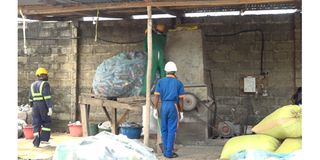
Said Issa with members of his group at their waste recycling machine in Duga, Tanga City. The processed materials are transported to markets in Dar es Salaam. PHOTO |MBONEA HERMAN
Tanga. When Said Issa parked his driving licence and quit working as a daladala driver, he never imagined that discarded plastic bottles would become the source of his livelihood.
Today, the former public transport driver is making a living from collecting and recycling plastic waste, a venture that has increased his income, created jobs for young people and opened his eyes to the economic opportunities hidden in waste.
Said is part of ZASMIBA, a group operating a small plastic recycling plant in Duga Ward, Tanga City. He says his journey into the business began after encouragement from a friend who is also the group’s chairperson.
At the time, Said was still driving a commuter bus (daladala) and did not understand why anyone would invest in plastic waste.
“My friend explained the importance of this business and its benefits. At first, I did not understand it well, but after researching and seeing the available opportunities, I decided to look for capital and join him,” he says.
The group started with a small capital base before securing a Sh25 million loan through Tanga City Council’s 10 percent funding programme, which enabled them to expand operations and increase their ability to purchase plastic waste.
“The funds helped us grow. Initially, we bought plastic in small quantities, but now we can buy it in tonnes. This has completely changed our business,” Said says.
He says his life has improved significantly compared with his days as a daladala driver.
Apart from increased income, the business has helped him build a wider network of contacts across and beyond Tanga Region, while gaining experience in running and expanding a business.
“When I was a driver, I only moved around Tanga City, but today I travel to different areas looking for markets and raw materials. The business has broadened my thinking and introduced me to many people,” he says.
The group buys plastic from individual collectors and collection centres known as Taka Banks, established in different parts of Tanga City.
After processing the plastic into raw materials, the group sells it to buyers in Dar es Salaam.
Said says the plant can process between one and 1.5 tonnes of plastic daily, depending on the capacity of their machine.
“We cannot operate the machine continuously for a long time because it may get damaged. The blades and bolts become very hot and can cause accidents if they break due to excessive rotation,” he says.
The group, which has five members, plans to expand by purchasing a modern plastic washing machine to improve the quality and value of its products.
Said says the machine will enable them to produce better-quality raw materials and increase their earnings.
He has urged young people to take advantage of council loans, including the four percent allocation for youth, four percent for women and two percent for people with disabilities.
“Many young people want to work but lack information about these opportunities. They should visit their wards and ask about council loans because they can transform lives, just as they have transformed ours,” he says.
The group has created temporary employment opportunities for about 12 people and hopes to increase the number as the business expands.
For Sifaeli Rajabu, who has worked in waste recycling for six years, the business has changed his life.
He says the work has enabled him to educate his child up to Form Four, buy household furniture and acquire a plot of land in Amboni, on the outskirts of Tanga City, where he plans to build a house.
“Many people may look down on us when they see us working with waste, but the truth is that this waste is what feeds us. We can process one tonne of plastic a day and earn enough to meet our daily needs, just like people in any other profession,” he says.
For Said and his colleagues, plastic waste is no longer rubbish. It has become a source of income, employment and hope for a better future, while also contributing to a cleaner Tanga.
Register to begin your journey to our premium contentSubscribe for full access to premium content