Girls demand a stake in Tanzania’s digital economy by 2050
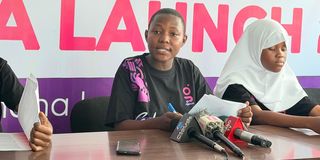
Makongo Juu Secondary School student Jenifa Tuji speaks during the launch of the 2026 Girl Agenda Forum in Dar es Salaam on Tuesday, September 8, 2026. PHOTO | COURTESY
Dar es Salaam. Girls have called on the government and development partners to ensure equal access to digital devices, the internet and digital skills, warning that they risk being left behind as Tanzania moves towards a technology-driven economy by 2050.
They said early investment in girls’ digital education and skills was essential to prevent technological advancement from widening the gender gap and limiting their access to future jobs, businesses, and other economic opportunities.
The call was made on Tuesday, September 8, 2026, during the launch of the Girl Agenda 2026.
The platform aims to increase girls’ participation in discussions and decisions affecting their lives, while ensuring their views are heard and translated into concrete action.
Data presented at the event shows that Tanzania has about 20.2 million internet users, equivalent to 29.1 percent of the population.
The number has risen sharply from 11.4 million users in 2014 to 21.8 million in 2024.
Despite this growth, challenges remain in ensuring women and girls have equal access to digital opportunities and skills.
Form Three student at Makongo Juu Secondary School, Ms Jenifa Tuji, said the rapid growth of technology in Tanzania required girls to be prepared early if they were to participate fully in the emerging digital economy.
“In the coming years, the use of technology in Tanzania is expected to grow rapidly and become an important part of education, employment, business, healthcare and economic participation,” she said.
Ms Tuji said digital education for girls should therefore not be treated as an additional skill, but as a strategic investment to prepare them to participate in Tanzania’s economy by 2050.
Her argument is in line with the National Development Vision 2050, which places digital transformation, science and technology among the drivers of a modern, knowledge-based and innovation-led economy.
Ms Tuji said preparing girls not only to use technology, but also to create and lead in the technology sector, was critical to ensuring they became active participants rather than merely consumers of digital products.
She said digital skills could help girls secure employment, start businesses, and participate in technology leadership and development.
However, girls continue to face challenges that can disrupt their education and limit their ability to become economically independent.
These include teenage pregnancy and early marriage, school dropout, poverty, violence, limited access to digital opportunities, as well as harmful social attitudes and practices.
A pupil at Msasani Primary School, Experience Kobelo, said such challenges affected girls’ education, safety, confidence, skills development, decision-making and economic independence.
She said giving girls an opportunity to speak about the challenges they face was an important part of preparing them to participate in decisions affecting their lives.
“Raising girls’ voices does not mean inviting them to attend events or take part in exhibitions. It means giving them space to explain their challenges, make recommendations and participate in decision-making on issues that affect them,” Experience said.
Turning girls’ voices into action
Msichana Initiative board member, Ms Leticia Mswaki, said the platform had been created to give girls an opportunity to lead discussions, define sustainable development from their perspective and use technology to amplify their voices.
She said the climax of the Girl Agenda 2026 was expected to bring together more than 5,000 girls, following preparatory activities to be held in schools and communities in different areas.
“The girls will have an opportunity to discuss the challenges and opportunities they face, make recommendations, showcase their talents and innovations, learn from their peers and mentors, and explain the kind of support they need from society and other stakeholders,” she said.
Ms Mswaki said the most important issue was ensuring that girls’ ideas did not remain confined to meetings and events, but were translated into actions capable of improving their lives.
“More importantly, the platform seeks to ensure that these ideas are not simply heard and left in meetings, but are turned into concrete actions and real change,” she said.