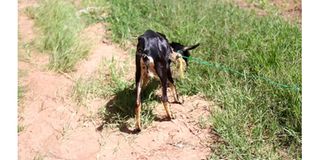
Geita. A resident of Nyantorotoro B Street in Nyankumbu Ward, Geita Municipality, Ms Catherine Kachwele, has been forced to abandon her goat for more than two months at the home of a ten-cell leader after discovering that it has both male and female reproductive organs—an occurrence she describes as rare and unprecedented in her experience.
Speaking to The Citizen's sister paper, Mwananchi, on April 4, 2026, Ms Kachwele, a traditional healer, said she acquired the goat several months ago while on a work assignment in Kigoma Region.
She explained that after providing treatment services to a client, the latter informed her that he did not have sufficient funds to settle the bill. They subsequently agreed that the goat would be offered as part of the payment, as well as a token of appreciation.
Ms Kachwele said she did not inspect the animal thoroughly at the time, as she departed Kigoma late at night, having only seen it briefly during the handover earlier in the day.
However, upon arriving at her home in Geita, she was surprised to find children and neighbours gathered around the goat in apparent astonishment. This prompted her to examine it more closely, leading to the discovery that it possessed both male and female characteristics.
“When I realised its condition, I sought advice from various people. Some suggested I leave it as it is, claiming that such goats exist and can sometimes reproduce, although they said this one had previously given birth but the offspring died,” she said.
Efforts to reach the client in Kigoma proved unsuccessful. However, through a neighbour who had connected them, she later managed to establish contact and was informed that the goat was not unusual, but had been born with the condition.
Commenting on the incident, the ten-cell leader of Nyantorotoro B, Mr Damian Mosha, said he received a phone call at around 11pm while travelling, informing him that a goat had been found tied in a bush.
In line with his leadership responsibilities, he directed that the animal be taken to his residence as efforts to trace its owner continued.
He said that upon inspecting the goat the following day, he discovered that it had both sexes and began the process of identifying its owner, who was later confirmed to be Ms Kachwele.
However, she declined to reclaim the animal and requested that it remain under his care.
“She initially said she would send people to collect it, but later advised that I should simply pray for it to become normal,” said Mr Mosha.
He noted that this was the first such incident in the area and urged residents to avoid superstition, pointing out that similar conditions can also occur in humans.
Geita Municipal veterinary officer, Dr Jackson Mutayaba, said the condition is not uncommon in animals and is scientifically referred to as a congenital anomaly, where certain body parts develop abnormally.
He attributed such occurrences partly to limited knowledge among livestock keepers on proper breeding practices, particularly the risks associated with inbreeding.
“There are several contributing factors, including breeding among closely related animals. Farmers are advised to introduce breeding males from different lineages, or to castrate or sell animals to minimise such cases,” he said.
Dr Mutayaba added that the condition is not limited to goats, but also occurs in other livestock such as cattle and pigs.
He further advised farmers against allowing such animals to reproduce, recommending alternative uses in order to prevent the condition from persisting within herds.
Meanwhile, a resident of Nyantorotoro B, Mr Sijaona Kagosha, said he had long heard of such cases but had never witnessed one until now.
He called on the government, through livestock experts, to intensify public education to dispel fear and misconceptions surrounding such incidents.
Register to begin your journey to our premium contentSubscribe for full access to premium content