Dar es Salaam. Growing meat exports are opening up business opportunities for Tanzanian livestock keepers, traders and investors across the livestock value chain.
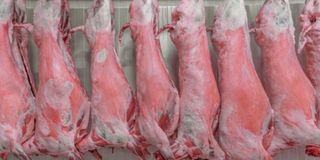
Data from the Tanzania Meat Board (TMB) shows that Tanzania exported meat worth Sh159.9 billion between July 2025 and June 2026, with goat and sheep meat accounting for 95 per cent of total export value.
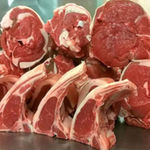
TMB Acting Registrar John Chassama said goat meat generated Sh111.9 billion, equivalent to 70 per cent of total exports, while sheep meat earned Sh40.5 billion, or 25.3 per cent.
Beef generated Sh6.4 billion, accounting for four per cent, while chicken meat brought in Sh423.3 million, or 0.3 per cent.
For livestock keepers, the figures point to a growing market that could increase incomes if production and meat quality are improved to meet international standards.
Secretary-General of the Tanzania Livestock Keepers Association, Matayo Daniel, attributed the growth to government efforts to strengthen livestock vaccination and identification systems, which he said had increased confidence among international buyers and opened new markets.
“Many countries cannot import meat without knowing where it came from and the health history of the livestock. The vaccination and identification system has increased confidence and opened many markets, particularly in the Arab world,” he said.
Daniel said demand for Tanzanian meat was growing in several markets, citing Comoros as an example, while diplomatic efforts by President Samia Suluhu Hassan had also helped open new markets, including France.
Oman leads export markets
Oman was Tanzania’s largest meat export market during the period, importing meat worth Sh82.8 billion, equivalent to 51.8 per cent of total exports.
The UAE followed with Sh43.7 billion (27.3 per cent), Saudi Arabia with Sh11.7 billion (7.3 per cent), Kuwait with Sh6.5 billion (4.1 per cent) and Bahrain with Sh6.1 billion (3.8 per cent).
Vietnam, Comoros, Hong Kong, Kenya and Seychelles were among other markets.
Economic analyst Oscar Mkude said the sector could make a greater contribution to the economy if productivity and livestock quality were improved.
“The priority should be to increase productivity, strengthen production and protect existing markets while seeking new ones,” he said.
He called for better animal nutrition, improved breeds and measures to help livestock keepers cope with climate change.
Value addition
Economic analyst Magabilo Masambu said Tanzania could gain more by investing in meat processing, cold storage and transport infrastructure.
“Instead of exporting raw meat alone, Tanzania can benefit more from exporting value-added meat products,” he said.
According to the Ministry of Livestock and Fisheries’ 2026/27 budget, the Government plans to increase meat exports through the second phase of rehabilitation of the National Ranching Company (NARCO) abattoir in Dodoma. It also plans to improve livestock breeds through modern laboratory equipment and six breeding bulls at the National Artificial Insemination Centre (NAIC).
Other measures include strengthening 127 Livestock Multiplication Units, acquiring 120 breeding animals and improving access to water and pasture.
Masambu cautioned against overreliance on Middle Eastern markets, urging Tanzania to pursue markets in Europe, Asia and Africa while maintaining animal health, traceability and food safety standards.
Register to begin your journey to our premium contentSubscribe for full access to premium content