Tanzania banks on BBT, loans to transform livestock, fisheries
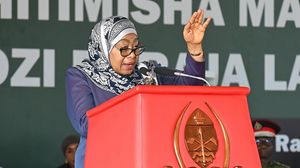
The minister for Livestock and Fisheries, Dr Bashiru Ally, tables the ministry’s revenue and expenditure estimates for the 2026/27 financial year in Parliament May 14, 2026. PHOTO | SAID KHAMIS
Building a Better Tomorrow-Youth Initiative for Agribusiness (BBT-YIA) (2022-2030), is a flagship initiative to transform the agricultural sector by engaging youth and women
Dodoma. The government is banking on its investments under the Building a Better Tomorrow (BBT) programme, coupled with concessional loans and infrastructure expansion, to transform Tanzania’s livestock and fisheries sectors through job creation, value addition and export growth.
Presenting his ministry’s Sh433.38 billion budget estimates for the 2026/27 financial year in Parliament yesterday, Livestock and Fisheries Development minister, Dr Bashiru Ally Kakurwa said the initiatives are designed to increase youth and women participation in productive economic activities.
Among the flagship initiatives is the BBT Project I at TALIRI Kongwa, financed by the African Development Bank (AfDB) at a cost of $32.3 million (about Sh82 billion).
The five-year project is expected to empower 2,175 youths through commercial goat fattening, irrigated pasture farming and livestock feed processing.
Dr Kakurwa said the project will involve the construction of 23 livestock sheds capable of accommodating 23,000 goats and sheep at once, 12 deep water wells, dipping facilities, warehouses and hostels for 218 youths.
The project will also establish a livestock feed processing factory with capacity to process 40 tonnes per day and introduce centre pivot irrigation technology expected to increase hay production from 150 to 450 bales per acre annually.
“The project is intended to enable youths and women to create self-employment opportunities through livestock value chains while improving productivity and value addition,” he said.
The minister said the government would continue implementing concessional loan schemes for fishing boats, fish cages and livestock fattening in collaboration with the President’s Office, regional authorities and the Tanzania Agricultural Development Bank (TADB).
Under President Hassan’s youth empowerment initiative, the ministry has so far received Sh23.69 billion to provide concessional loans to young people investing in livestock and fisheries ventures.
Of the amount, Sh9.55 billion was allocated for fishing boats and equipment, Sh9.38 billion for cage fish farming and Sh4.75 billion for livestock-related BBT activities.
The loans target youth-led investments in fish farming, fishing gear, poultry, piggery, goat and sheep keeping, seaweed farming and fisheries processing.
According to Dr Kakurwa, the ministry had by April 2026 received 3,004 applications from youths seeking financing opportunities in livestock and fisheries value chains.
Commercial banks are also increasing financing to the two sectors.
The minister said the ministry, through its Investment and Capital Desk, facilitated loans worth Sh698.14 billion during the 2025/26 financial year through partnerships with CRDB, NMB, TADB and TCB banks.
Of the total amount, Sh417.69 billion was disbursed to fisheries projects benefiting 27,214 people, while Sh280.45 billion went to livestock ventures benefiting 5,356 people.
The fisheries loans supported investments in fish cages, fishing boats, fish ponds and processing industries, while livestock financing targeted dairy production, feed manufacturing, pasture farming, poultry keeping and livestock processing.
The minister said the investments were already contributing to growth in production and exports.
Fish production increased by 7.4 percent to 526,763 tonnes valued at Sh4.9 trillion in 2025/26, up from 490,372 tonnes in the previous year.
Meanwhile, meat production rose by 4.4 percent to 1.1 million tonnes valued at Sh10.84 trillion.
Dr Kakurwa also said meat exports increased by 22.3 percent, with Tanzanian products reaching markets in Bahrain, Oman, Qatar, Saudi Arabia, the United Arab Emirates and Vietnam.
To strengthen value addition and trade, the government is also investing in fisheries infrastructure, including the near-complete Kilwa Masoko Fishing Port, the planned Bagamoyo Fishing Port and several fish markets and landing sites across the country.
According to the minister, the livestock sector contributes 6.2 percent to Tanzania’s Gross Domestic Product (GDP), while the fisheries sector contributes 1.6 percent and supports about six million Tanzanians through various value chains.
Tanzania’s cattle population increased by 3.4 percent from 39.24 million during the 2025/26 fiscal year to 40.57 million as of April this year while goats increased by 3.5 percent from 28.59 million to 29.59 million and sheep increased by 3.0 percent from 9.66 million to 9.94 million.
Similarly, the number of chickens increased by 4.7 percent from 108.22 million to 113.36 million, of which indigenous chickens rose from 47.39 million to 49.75 million, while improved breeds increased from 55.69 million to 58.47 million.
Meanwhile, the number of pigs increased by 5.6 percent from 4.13 million to 4.36 million.