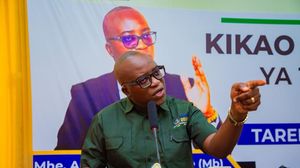
Dar es Salaam. As Tanzania’s leading opposition party, Chadema, marked 33 years since its founding on January 21, it has described itself as a breeding ground for leaders who later go on to serve in government.
Chadema was registered in 1992, a few months after the reintroduction of multiparty politics during the Second Phase Government, a period characterised by major political and economic reforms.
Over the years, the party has grown steadily to become the country’s main opposition force and has produced the largest number of opposition Members of Parliament.
Beyond Parliament, Chadema has also produced leaders who later crossed over to the ruling Chama cha Mapinduzi (CCM) and were subsequently appointed to senior government positions, including ministers, deputy ministers, district commissioners and other public officials.
Such appointments have been made under different administrations, including during the Fifth Phase Government led by the late President John Magufuli.
Under the Sixth Phase Government, President Samia Suluhu Hassan has appointed three former Chadema members as ministers and three others as deputy ministers, a move seen by observers as reflecting confidence in their leadership abilities.
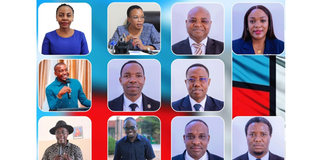
Former Chadema members currently serving as ministers are Prof Kitila Mkumbo (Planning and Investment), Mr Patrobas Katambi (Home Affairs) and Mr Joel Nanauka (President’s Office – Youth).
While in Chadema, Mr Katambi served as chairperson of the party’s youth wing, Bavicha, Prof Mkumbo was a member of the Central Committee, and Mr Nanauka was the party’s parliamentary candidate for Mtwara Urban during the 2015 General Election.
Former Chadema members now serving as deputy ministers include Mr James Ole Millya (Foreign Affairs and East African Cooperation), Ms Salome Makamba (Energy) and Mr David Silinde (Agriculture).
Others who previously served as deputy ministers include Dr Godwin Mollel (Health), Mr Mwita Waitara (Regional Administration and Local Government), Ms Juliana Shonza (Information, Arts, Culture and Sports) and Ms Pauline Gekul (Constitutional and Legal Affairs).
Dr Mollel is currently the Member of Parliament for Siha, Mr Waitara represents Tarime Rural, while Ms Shonza is a Special Seats MP.
Several former Chadema leaders have also been appointed district commissioners, representing the President in various districts. They include former party secretary general Dr Vincent Mashinji (Manyoni), former Arusha mayor Mr Kalist Lazaro (Lushoto), former MP Mr Peter Lijualikali (Nkasi) and former Chadema MP Mr Joshua Nassari, who previously served as Magu district commissioner and is now the MP for Arumeru East.
However, Chadema’s Deputy Secretary General for Mainland Tanzania, Mr Amani Golugwa, said the party does not take pride in leaders who abandon its ideology before taking up government appointments elsewhere.
He said leaders genuinely shaped by Chadema’s principles would not act in the manner demonstrated by some former members.
“Leadership is about ideology and conviction. Intelligence alone is not enough without firm principles and a clear philosophy.Those you mention are not people we can take pride in,” Mr Golugwa said.
He added that Chadema has produced many leaders through its leadership academy who are capable of serving as ministers.
Mr Golugwa also said the party offers opportunities to university graduates to conduct research, resulting in the production of extensive policy documents and studies.
Analysts weigh in
Political scientist Dr Richard Mbunda said the primary role of political parties is to nurture leaders, noting that multiparty democracy has expanded opportunities for leadership development.
“Before the introduction of multiparty politics in 1992, CCM dominated leadership grooming. Today, the presence of multiple parties allows for broader participation and talent development,” he said.
He added that Chadema has performed well in identifying and nurturing new leadership talent.
Political analyst Mr Samson Sombi said Chadema has played a significant role in grooming politicians, adding that the movement of leaders to other parties reflects their capacity rather than favouritism.
"The presence of former Chadema members in senior government positions demonstrates the quality of political training they received while in the opposition,” he said.
However, he noted that one of the party’s key challenges remains retaining its leaders.
Another analyst, Dr Sabatho Nyamsenda, said Chadema’s greatest contribution over its 33 years has been the expansion of democratic space rather than the production of individual leaders.
He said the party has played a key role in strengthening public debate, advocating constitutional reforms and enhancing parliamentary oversight.
According to Dr Nyamsenda, Chadema’s leadership under former chairperson Mr Freeman Mbowe strengthened Parliament’s role in holding the government accountable, while under the current leadership of Mr Tundu Lissu the party has adopted a firmer stance on governance reforms.
Analyst Mr Tumaini Munale said Chadema’s major achievement has been empowering young people, particularly those from disadvantaged backgrounds, to enter politics and develop leadership skills.
He said the party has emerged as an important platform for nurturing youth leadership while maintaining public trust by consistently addressing citizens’ concerns.