How govt-backed initiatives aim to make cotton a pillar of economy
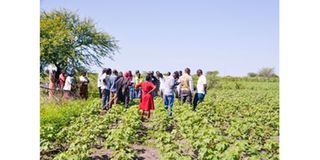
Cotton inspector from the Tanzania Cotton Board (TCB) in Mwanza Region, Mr Joachimu John Gabanya (wearing a yellow reflector), speaks with farmers from Mwamashele and Lagana Wards on how to monitor the progress of the crop. PHOTO | HELLEN MDINDA
Shinyanga. The government has provided agricultural inputs to farmers who follow good agricultural practices, alongside close monitoring, to boost productivity and crop development in the region.
The Tanzania Cotton Board says Shinyanga Region accounts for 40 to 60 percent of the country’s cotton output in various seasons.
On average, Tanzania produces between 150,000 and 300,000 tonnes annually, depending on weather, availability of farm inputs, and global market trends.
Kishapu District alone contributes an estimated 20 to 30 percent of the region’s production, depending on the season.
This success is attributed to the large number of farmers, expansion of cultivated land, and adoption of improved farming techniques.
Kishapu District Commissioner, Mr Peter Masindi, said on Thursday, February 19, 2026, that it is important to adhere to best practices, including planting in rows, proper use of pesticides, and careful field monitoring to enhance productivity and crop quality.
“The distribution of farm inputs targets farmers who follow good practices. This strategy ensures government investment yields meaningful results for individual farmers and the nation, while allowing close monitoring of cotton farming progress,” said Mr Masindi, noting that 1,000 solo pumps had been distributed.
“Engage in the Build Better Tomorrow (BBT) initiative to support productive farming. Youth involvement increases manpower and knowledge in the fields,” he added.
Cotton Inspector from Mwanza Region, Mr Joachimu Gabanya, urged farmers to properly maintain the equipment to ensure long-term benefits and improved efficiency.
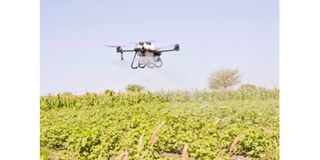
Equipment for spraying pesticides on a cotton field in Kishapu District. PHOTO | HELLEN MDINDA
“The 19 farmers in Mihama Village must take good care of the tools so they remain beneficial and enhance cotton production. The government is committed to strengthening cotton as a key pillar of the economy,” said Mr Gabanya.
A beneficiary, Mr Juma Njile, who owns 37 hectares in Mwamashele Ward, shared the challenges he faced and the success achieved by following proper cotton farming practices.
“I conducted an experiment to test mixed cropping effects. I chose a certain area where mixed cropping was involved, while another was planted with cotton only. The mixed farm yielded less, but the farm with cotton alone produced significant profits. This season, I expect to harvest 3,700 kilogrammes,” said Mr Njile.
“A major challenge in cotton farming is the lack of capital to acquire modern equipment, which limits production. These tools will help us increase productivity,” he added.
The visit highlighted hope, showing the government’s commitment to strengthening cotton as a key pillar of both farmers’ livelihoods and the national economy.
In recent seasons, cotton prices have ranged between Sh1,200 and Sh1,800 per kilogramme depending on quality.
However, the sector continues to face challenges, including limited capital for modern equipment and the impacts of climate change.