How long will businesses suffer from protest fears?
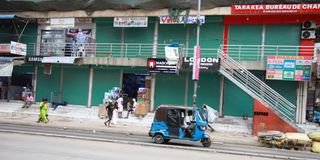
Many shops remained closed along in Kariakoo, Dar es Salaam, on Tuesday after opting not to open for business amid fears of planned demos. PHOTO | MICHAEL MATEMANGA
Dar es Salaam. Tanzania continues to bear the economic consequences of the post-election violence, with recurring fears of protests disrupting business activities, reducing productivity and undermining investor confidence.
The unrest, which erupted in several parts of the country on October 29, 2025, resulted in loss of life, destruction of property and significant economic damage.
A Commission of Inquiry chaired by retired Chief Justice Mohamed Chande Othman estimated the total economic loss at Sh125 billion.
According to the commission, 518 people died during the violence, most from gunshot wounds. Private sector losses accounted for the largest share, estimated at Sh89 billion, affecting businesses, commercial banks and fuel stations.
Public sector losses were estimated at Sh36 billion, affecting institutions including schools, the Tanzania Revenue Authority (TRA), courts, police infrastructure, Tanzania Electric Supply Company (Tanesco), Tanzania Telecommunications Corporation (TTCL), Dar Rapid Transit Agency (DART) and Tanzania National Roads Agency (TanRoads).
The commission also recorded losses among small traders, with goods and property worth about Sh1.6 billion destroyed or looted. It noted that the actual losses could be higher because many incidents, especially in the informal sector, went unreported.
Although the violence is now part of Tanzania’s recent history, its impact continues to influence public confidence and economic activity.
Since then, calls for demonstrations, whether genuine or otherwise, have triggered anxiety among businesses and citizens. Similar fears surrounded planned protests on December 9 and December 25, 2025, as well as July 7, 2026.
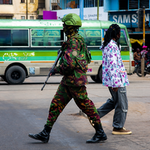
While the anticipated protests largely did not take place, authorities deployed security personnel in major urban centres as a precaution.
Such measures come with costs to taxpayers and divert resources that could otherwise support development priorities.
The economic impact, however, extends beyond security operations. Fear of unrest affects travel, consumer spending, supply chains and business operations.
Retailers, transport operators, restaurants and other service providers often suffer immediate losses when uncertainty spreads.
At Kariakoo, Tanzania’s busiest commercial district, many traders kept their businesses closed on July 7 as memories of previous unrest remained fresh.
Kariakoo Traders Association Chairman Severine Mushi said many traders stayed away voluntarily despite there being no official directive to close businesses.
“Kariakoo is a major commercial hub. More than four banks have branches here and depend on daily business activity. Continued threats are unhealthy for businesses. Traders lose income and the government loses revenue,” he said.
Mr Mushi said authorities should rely more on intelligence gathering than repeated public warnings, arguing that a heavy security presence can itself create fear among citizens.
Transport
The transport sector also felt the impact. Tanzania Bus Owners Association (Taboa) Secretary General Priscus Joseph said companies suffered losses because their operations depend on daily movement while fixed costs continue regardless of whether buses operate.
“If buses do not operate for even one day, the financial impact is immediate,” he said.
Mr Joseph said uncertainty also affects long-term planning, with businesses postponing meetings, investments and expansion plans.
A representative of the Dar es Salaam Commuter Bus Owners Association (Darcoboa), Kisimat Dhalla, said many buses remained parked or operated with very few passengers.
He said he personally kept his buses off the road on July 7 due to fears they could be vandalised, costing him about Sh1 million in lost income.
“When people fear travelling, transport, trade and many other sectors are affected. It is important that differences are resolved peacefully so people can continue with their normal lives,” he said.
The logistics sector has also warned that prolonged uncertainty could affect Tanzania’s ambition of becoming a regional trade and transport hub that handles imports and exports for the Democratic Republic of Congo (DRC), Zambia, Malawi, Rwanda, Burundi, Uganda and parts of Mozambique as well as Zimbabwe.
Lasting peace and political stability remain critical foundations for investment, business confidence and sustainable growth, vital for Tanzania to strengthen its position as a regional economic hub.
Tanzania Freight Forwarders Association (Taffa) President Edward Urio said more than 60 percent of cargo handled at the port is destined for neighbouring countries.
“If incidents like these continue, they could damage Tanzania’s reputation as a reliable trade and logistics hub. Traders may become reluctant to route their cargo through our ports,” he said.
He called for strengthened security along ports and major transport corridors to maintain confidence among cargo owners and regional traders.
Addressing the root causes
Stakeholders say the solution lies beyond managing individual incidents and requires addressing the underlying causes of political tensions.
Mr Mushi called for dialogue, saying traders would rather close businesses temporarily than risk losing property built over many years.
“People would rather close for a day and suffer losses than risk losing everything. Starting again is extremely difficult,” he said.
Political analyst at the University of Dodoma, Dr Paul Loisule, said previous commissions and reports, including the Nyalali Commission, Samatta Commission, Mkandala Task Force and Chande Commission, have repeatedly highlighted the need for constitutional and legal reforms.
He said the government should revisit those recommendations and consider a broader reconciliation process similar to ongoing efforts in Zanzibar.
“What we need is reconciliation. There are many misunderstandings that need to be resolved. Unless those concerns are addressed, these tensions will continue,” he said.
Dr Loisule warned that continued uncertainty could damage Tanzania’s reputation as a stable investment destination and slow economic growth.
Foreign policy and governance expert at the University of Dodoma, Justine Kajerero, said Tanzania needs to undertake self-assessment, identify the sources of tension and return to dialogue.
He said confrontation between political actors and other stakeholders would not provide a lasting solution.
“We need to assess ourselves and correct what needs to be corrected. That is the most important thing,” he said.
Reported by Gadiosa Lamtey, Hellen Nachilongo and Josephine Christopher
Register to begin your journey to our premium contentSubscribe for full access to premium content