How Morogoro is poised to earn billions from carbon trade through agroforestry
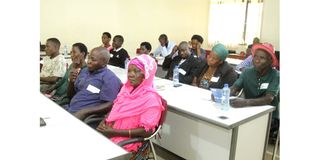
Participants in agroforestry training for farmers, livestock keepers, and environmental committee members follow proceedings during a week-long training at Sokoine University of Agriculture (SUA) in Morogoro Region. PHOTO | JUMA MTANDA
Morogoro. Efforts to scale up agroforestry in Morogoro Region are opening new prospects for communities to benefit from carbon trading, environmental conservation, and improved household incomes, as non-governmental organisations step up climate-focused interventions.
The initiatives are being spearheaded by Community Empowerment and Environmental Sustainability and the Agripastoral Climate Resilience Alliance (AGRA), in collaboration with the government and other local stakeholders, to promote sustainable land use practices.
The programme aligns with Morogoro Region’s target of planting two million spice and fruit trees by 2030, with more than 200,000 seedlings already planted across Kilosa, Kilombero, Mvomero, and Mlimba councils.
The development was unveiled on Tuesday, May 19, 2026, during training sessions for farmers, livestock keepers, and local leaders aimed at strengthening awareness on agroforestry and carbon markets.
Stakeholders said agroforestry offers dual benefits of cutting carbon emissions that drive global warming while enabling communities to earn income from timber, fruits, and emerging carbon markets.
Morogoro Regional Agriculture Officer Peter Gama said the government is prioritising agroforestry to protect the environment and improve livelihoods.
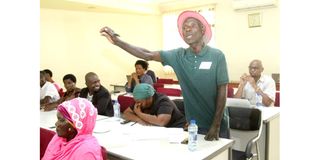
A resident of Nakatimbu village in Kilombero District, Mr Zakaria Kayombo, speaks during the opening of a week-long training held on Tuesday, May 19, 2026, at Sokoine University of Agriculture (SUA) in Morogoro Region. PHOTO | JUMA MTANDA
He said promoted species include cloves, cocoa, oil palm, avocado, cashew, and cinnamon, designed to integrate commercial farming with conservation.
Mr Gama said agroforestry allows farmers to gain short and long-term yields while continuing to grow crops such as maize, cardamom, and cocoa beneath tree cover.
“Over 200,000 seedlings have been planted through collaboration between the government, Tanzania Forest Services, and development partners across councils,” he said.
He said the government is also distributing clove, cinnamon, and cocoa seedlings under the ‘Educate Yourself with Cloves’ campaign, encouraging students to plant trees on family farms.
He said agroforestry reduces environmental degradation as fruit and spice trees remain in the soil for long periods while generating economic returns.
“This helps farmers avoid tree cutting and bush burning, which contribute to environmental destruction and rising carbon emissions,” he said.
Director of Actors in Community Empowerment and Environmental Sustainability, Ms Victoria John, said many farmers are already practising agroforestry without realising its full potential in carbon markets.
She said a development partner-supported project in Kilombero District is educating communities on sustainable land use, gender equality, and access to carbon trading opportunities.
“Agroforestry combines crops and trees simultaneously, increasing income while protecting the environment and addressing climate change impacts,” said Ms John.
AGRA executive director, Dr Rachel Zakayo, said Morogoro has strong potential to become a hub for carbon projects due to its ecological conditions and agricultural base.
She said agroforestry is globally recognised as a sustainable land-use system enabling food production alongside environmental conservation.
According to Dr Zakayo, the system helps absorb carbon emissions, restore vegetation cover, increase household incomes, and strengthen climate resilience.
She said farmers benefit through crop production, fruit sales, and participation in global carbon markets while contributing to reducing global warming.
Furthermore, she said agroforestry aligns with the Paris Agreement and United Nations goals on land degradation and biodiversity loss.
“We want communities to directly benefit from environmental projects while women and youth are given greater opportunities in the green economy,” she said.
She added that the project is implemented by AGRA with Actors in Community Empowerment and Environmental Sustainability, funded by Global Affairs Canada under climate action, sustainable development, and gender equality programmes.
According to her, focus group discussions form part of a technical assistance programme promoting agroforestry for climate adaptation, improved livelihoods, and community resilience.
AGRA monitoring and evaluation officer, Ms Neema Mbunda, said many farmers still rely on traditional farming methods that contribute to low productivity and environmental degradation.
She said agroforestry enables farmers to earn from crops, timber, livestock fodder, and carbon trading while also contributing to oxygen production and climate regulation.
“As trees grow, they absorb carbon emissions and help reduce climate change impacts. This is why the world is focusing on tree planting,” she said.
A participant from Nakatimbu village, Kilombero District, Mr Zakaria Kayombo, said the training helped him understand agroforestry as both an income-generating activity and environmental conservation tool.
Another participant from Sagamaganga village, Ms Felister Bonice, said communities are encouraged to plant trees as they protect land from erosion, increase land value, and create long-term economic opportunities.
The week-long training is being conducted at Sokoine University of Agriculture (SUA), involving farmers, livestock keepers, and environmental committee members in collaboration with the National Carbon Monitoring Centre