Iringa farmers adopt ultrasound tech to boost cattle reproduction
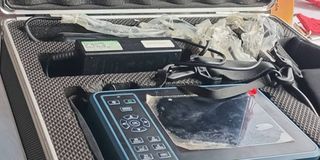
The appearance of the ultrasound device used to test cow pregnancy to help livestock farmers avoid incurring high costs on breeding without achieving results. PHOTO | HAWA MATHIAS
Mbeya. Livestock keepers in Iringa Region have begun benefiting from modern technology utilising ultrasound equipment to test cattle pregnancies and identify health challenges that could affect the reproductive system.
The technology aims to help livestock farmers abandon the practice of breeding cattle without certainty regarding their capacity to conceive, a situation that has been costing them time and money.
Speaking to The Citizen’s sister newspaper, Mwananchi, on Tuesday, August 11, 2026, Urasi Tanzania company expert, Dr Agrey Julius, said the system is user-friendly for farmers in bringing productivity to guarantee increased livestock numbers.
Dr Julius is among participants showcasing modern livestock farming technologies at the Southern Highlands Zone Nane Nane Farmers’ Exhibition, representing Iringa Region.
Dr Julius said the use of ultrasound is among methods deployed to improve livestock production, including ensuring farmers use improved semen breeds and identify reproductive challenges early.
“This is a new reproductive technology in Tanzania, including improving cattle genetics by using superior bull semen researched across three countries: Brazil, Canada, and the United States,” he said.
He said besides using ultrasound, they perform artificial insemination through expert methods while also using embryo transfer technology from high-quality cattle for farmers wishing to upgrade their herds.
Minimising guesswork, Dr Julius said using ultrasound aims to eliminate the issue where farmers breed cows without knowing if they are already pregnant or facing challenges preventing them from conceiving.
“When a cow is serviced but fails to conceive, it becomes a major problem for farmers. That is why we saw the solution in using this device to conduct thorough examinations and diagnose the issue,” he said.
He said the technology helps detect and identify various diseases and challenges capable of affecting the bovine reproductive system, including problems related to the oestrus cycle.
“Following these challenges, we introduced this technology to conduct in-depth research into these conditions. There are also congenital challenges, particularly heifers born with incomplete reproductive anatomy or fallopian tube disorders,” he said.
According to Dr Julius, some cows with reproductive tract problems may fail to conceive, meaning early diagnosis helps the farmer make informed decisions rather than incurring continuous costs servicing an unproductive animal.
“The goal is to prevent farmers from harbouring hopes without certainty. When a cow is tested, it will show if it is pregnant, unlike traditional haphazard breeding methods,” he said.
Professional artificial insemination
Speaking on artificial insemination technology, Dr Julius said they use bulls with high milk or meat production potential, whose semen is selected to upgrade future cattle generations.
He said in another phase, they use embryos obtained through professional scientific procedures, which can be transferred into another cow capable of carrying a pregnancy to term.
“We harvest a young embryo after seven days, preserve it, and later transfer it for a farmer who requests it. This helps accelerate the acquisition of superior quality livestock,” he said.
A livestock expert from Urasi Tanzania Company, Dr Agrey Julius, explains the best ways for livestock keepers to adopt modern technology by using an ultrasound machine to determine whether cows are pregnant after heat detection. PHOTO | HAWA MATHIAS
Farmer impressed
A cattle farmer and resident of Mbozi District in Songwe Region, Mr Fred Ambele, said the technology opened his eyes and helped him realise the importance of modern livestock farming practices.
He said previously he conducted artificial insemination through guesswork without knowing whether the cow was capable of conceiving.
“This exhibition has enlightened us. Personally, I used to service cows through trial and error, but now I know there are more professional methods yielding greater results in the livestock sector,” he said.
Mr Ambele appealed to the government and livestock sector stakeholders to ensure this technology reaches more farmers, especially in rural areas, to enable them to test livestock and choose better production methods.
He said using this technology will help farmers abandon guesswork livestock keeping and boost productivity, milk and meat yields, and household income.