Co-production allows filmmakers from different countries to combine resources, including financing to produce films for wider markets
Dar es Salaam. Tanzania needs to strengthen its film industry systems and professional capacity to fully benefit from co-production opportunities that can open access to financing, skills and international markets, stakeholders have said.
The call comes as discussions on regional film collaboration gain momentum and Tanzanian films and filmmakers continue to attract attention through international festivals, nominations and awards.
Co-production allows filmmakers from different countries to combine resources, including financing, technical expertise, equipment and distribution networks, to produce films for wider markets.
Film producer Rasul Swaleh said Tanzania already had the key ingredients for successful co-productions, including stories, filmmakers and filming locations, but the systems supporting the industry needed to improve.
“I think that is the foundation, we need to make sure our systems are in place and allow this readiness. Once that is done, everything else can move as it should,” he said.
Mr Swaleh said co-production could also help address financing challenges facing local filmmakers by allowing them to share production costs with partners from other countries.
“If production financing is one of the challenges here, co-production can help our producers make bigger films and reach more stakeholders and audiences around the world,” he said.
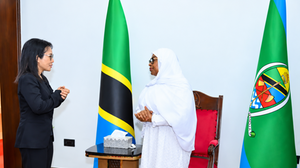
The need to strengthen local capacity was echoed by Tanzania Film Board chairperson Dr Mona Mwakalinga, who urged local filmmakers to embrace regional partnerships and learn from other markets.
“We need to take this seriously and move with it because we stand to benefit greatly. We produce many films, but Kenya has had major strategies in place for a long time,” she said.
Dr Mwakalinga said collaboration should not only be viewed as a way of raising money, but also as an opportunity for filmmakers to share knowledge and improve their professional standards.
“The important thing is for people to be willing to teach one another and move together. We will benefit by being able to showcase our films in different places, while East Africa as a whole will also benefit,” she said.
She said filmmakers also needed to make continuous learning part of their careers as production standards and technology continued to change.
“When I talk about competing in professionalism, I do not necessarily mean going to college. You need to have a personal desire to keep learning. Every day you should be thinking about it. I am a teacher, but I also learn every day,” she said.
For actress and scriptwriter Janeth Abel, the priority should also be to help local producers understand how to develop stories for larger markets.
“I think if we continue to have more initiatives here, it will greatly help local producers learn how best to take their stories to the bigger markets around the world,” she said.
Ms Abel said co-production could create new opportunities for the country’s creative industry if filmmakers were willing to learn and improve the quality of their work.
“It is now time for artists and filmmakers to use these opportunities to learn new things, be ready to produce quality work and come up with compelling stories,” she said.
A film enthusiast, Witty Mligo said Tanzania already had a strong creative base but needed to address some gaps to make its productions more competitive.
“Our industry has many good things and a lot of quality. We only need to address a few areas and produce stories that reflect real life and can appeal to more people,” she said.
Ms Mligo said co-production could also give Tanzania an opportunity to turn its history and important national stories into films capable of reaching international audiences.
“We can make films about our history, the lives of our leaders and other prominent people. I think this can help introduce our stories to the world,” she said.
The discussions come as Tanzania explores greater regional and international cooperation in the film sector.
The East African Community Film Co-production Treaty was among the issues discussed at the Mashariki Creative Economy Expo, providing a platform to consider how filmmakers and production companies in the region can work together.
The Tanzania Film Board has also held bilateral discussions with the High Commission of India on technical capacity building, pointing to opportunities for international cooperation in strengthening skills within the sector.
However, stakeholders say such initiatives need to be supported by practical measures that strengthen the local industry.
These include improving access to production financing, developing professional skills and strengthening systems that enable Tanzanian producers to enter partnerships with international companies.