Dar es Salaam. While many modern societies have traded traditional ecological knowledge for rapid industrialisation, the Maasai people of East Africa remain one of the most culturally resilient communities on the planet.
This comes even amid reports from human rights organisations and Indigenous advocates warning that their traditional pastoral lifestyle and ancestral culture face an unprecedented existential threat, primarily driven by forced displacements, state-led conservation policies, and climate change.
Further, governments argue that human and livestock populations create environmental pressure on vital wildlife and UNESCO World Heritage ecosystems.
Conversely, advocates state that displacing pastoralists severs their spiritual and economic reliance on cattle, summarizing the process as "killing culture"
But even so, the Maasai’s ability to withstand the encroaching pressures of climate change and land loss is not a matter of luck, but the result of a "sophisticated system" of living that treats the environment and human existence as a single, inseparable unit.
At the heart of this resilience are three fundamental pillars or "legs" as explained in an exclusive interview by one of the renowned elders, defining the Maasai philosophy of being, belonging, and becoming.
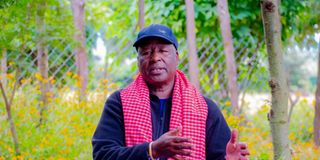
According to an adjunct faculty member at the Arusha Climate and Environmental Research Centre (ACER), Mr Alais Morindat and a respected Maasai elder, the community’s life is balanced on three vital legs.
The first pillar is Natural Resources, encompassing the trees, water, pasture, and the diverse landscapes of the highlands and lowlands.
“This pillar is viewed as a divine gift, maintained through a deep understanding of the relationship between the sky and the ground,” he said.
The second pillar is Livestock, the primary livelihood and symbol of wealth that depends entirely on the health of the rangelands.
The third pillar, he said, is Society and Culture, the human element that interprets and manages the other two.
The resilience of the Maasai stems from the absolute interdependency of these pillars. Mr Morindat warns that if the pillar of natural resources collapses due to factors like climate change or land grabbing, the livestock pillar will inevitably fall, leading to the total collapse of Maasai society, history, and culture.
“Unlike communities that have abandoned their traditional roots, we the Maasai recognise that our survival is tied to the physical land we occupy; to lose the land is to lose the very "mark" that makes us a distinct people,” he explained.
The sacred bond with the land
A key reason the Maasai believe so fiercely in their specific land—and not "anywhere else"—is their spiritual interpretation of the ecosystem, often described as "God above and God below".
In this worldview, the sky (God above) is the source of influence, while the ground (God below) is where the divine responds through moisture and rain.
“This philosophy creates a closed loop of accountability and reverence; we do not see the land as a commodity to be traded, but as the literal manifestation of God’s response to our needs. This spiritual connection fosters a "conserving community" by nature,” he said.
Director of ACER, Dr Emmanuel Sulle, notes that the Maasai protect trees and natural resources because they know their entire livelihood depends on them. “They have even developed scientific methods for cutting trees and managing pastures through oral knowledge passed down through generations,” he told The Citizen. This, the researcher said, is why mobility was historically their key strategy; “if rain failed in one area, they moved to another, always following the "response" of God on the ground.”
Today, however, as borders and land laws restrict movement, their resilience has shifted toward restoration and "staying put" to heal the land they still hold.
Many outsiders have historically viewed the Maasai as "rigid" or "people of the bush" who are difficult to change. However, Mr Morindat insisted, the reality is that they are "intelligent creatures" who use their three-pillar system to survive under "huge constraints" that would break less organised societies.
“Our resilience is not about refusing to change, but about changing in a way that preserves our core,” insisted Mr Morindat.
Working with ACER, the Maasai are now bridging the gap between indigenous knowledge and modern science. They are adopting more resilient livestock breeds, such as the Sahiwal, which can thrive in smaller geographical areas while providing higher yields.